


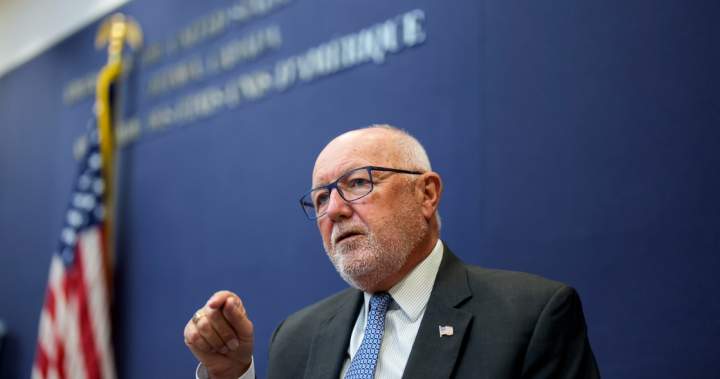
In a significant statement that could shape the future of North American energy relations, U.S. Ambassador to Canada Pete Hoekstra declared that Canada remains “one of the best places in the world” for the United States to purchase oil. The comments came during the Pacific Northwest Economic Region annual summit on July 20, 2026, offering a more nuanced perspective on the complex trade relationship between the two neighboring nations.
Clarifying Presidential Remarks on Canadian Energy
Ambassador Hoekstra addressed previous statements made by U.S. President Donald Trump suggesting that America does not need Canadian oil. The diplomat provided important context to these remarks, explaining the administration’s position in more detail during the regional summit.
“When the president says, ‘We don’t need your oil,’ we need oil but we don’t necessarily need it from Canada. We have found over the last couple of decades that one of the best places in the world to get oil from is Canada. It’s close by. The people that we have to work with in Alberta are great business partners. They’re good business people.”
The ambassador’s comments represent a diplomatic balancing act, acknowledging U.S. energy independence while recognizing the practical benefits of maintaining strong energy trade ties with Canada. This clarification comes at a crucial time when additional forced-labor tariffs are scheduled to impact Canadian exports, adding to sectoral tariffs that have been in effect for over a year.
Western Provinces Positioned as Key Energy Partners
Hoekstra specifically highlighted the western Canadian provinces as prime candidates for expanded energy cooperation with the United States. His endorsement of the region’s business environment could have significant implications for future trade negotiations and investment decisions.
The ambassador identified Saskatchewan and Alberta as the regions best positioned to increase their oil supply to American markets. This recognition acknowledges the substantial energy infrastructure and resources concentrated in these provinces, which have long served as the backbone of Canadian oil exports to the United States.
Key factors making Canada an attractive oil supplier include:
- Geographic proximity reducing transportation costs and delivery times
- Established infrastructure connecting Canadian producers to American refineries
- Strong business relationships built over decades of trade
- Reliable supply chains and consistent quality standards
- Shared regulatory frameworks and environmental standards
CUSMA Renewal Remains Uncertain
Despite the positive remarks about Canadian oil, the broader trade relationship faces significant challenges. On July 1, 2026, the U.S. Trade Representative announced that Washington would not renew the Canada-United States-Mexico Agreement (known as CUSMA in Canada and USMCA in the United States) in its current form.
Ambassador Hoekstra acknowledged that the administration has clearly indicated it does not see extending the trade agreement in its present state as being in America’s best interest. However, he noted that discussions continue, and some form of framework agreement will need to be established.
The negotiation landscape appears uneven between the two U.S. trading partners. According to Hoekstra, American trade representatives are making progress “knocking down the issues with Mexico,” while talks with Canada remain “at a different level.” This distinction suggests that Canadian negotiators may face more challenging discussions in the months ahead.
Historical Context of Trade Tensions
President Trump has consistently maintained that American self-sufficiency reduces dependence on Canadian products across multiple sectors. During the World Economic Forum in Davos earlier this year, Trump stated that the United States does not need Canadian automobiles, lumber, or energy resources, pointing to domestic production capabilities.
These statements have created uncertainty for Canadian businesses and provincial governments that depend heavily on American markets. The energy sector, in particular, has watched these developments closely, as the United States remains by far the largest destination for Canadian oil exports.
For the Latin community in Canada, many of whom work in industries affected by trade policies, these developments carry significant economic implications. Workers in Alberta and Saskatchewan’s energy sector, as well as those in manufacturing and forestry, continue to monitor the evolving trade relationship between the two nations.
As negotiations continue and new tariffs loom, Ambassador Hoekstra’s comments provide a glimmer of optimism for Canadian energy producers while the broader trade framework remains subject to ongoing discussions between Ottawa, Washington, and Mexico City.
