


The Canadian government is firmly pushing back against the Trump administration’s proposed tariffs, arguing that new measures to combat forced labour in supply chains eliminate any justification for additional duties on Canadian goods.
In an official submission to the United States Trade Representative’s office, Ottawa emphasized its ongoing commitment to working alongside the United States to eliminate forced labour from global supply chains. The government highlighted that recently introduced legislation, including Bill C-35, demonstrates Canada’s serious approach to addressing this issue through concrete action rather than punitive trade measures.
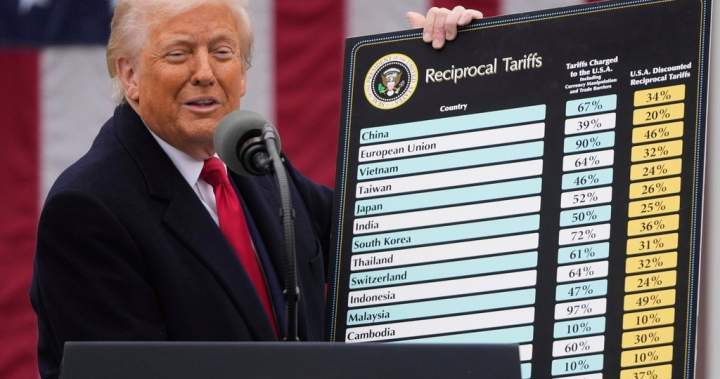
The proposed 10 percent tariff on Canadian goods is part of a broader investigation by U.S. Trade Representative Jamieson Greer into 60 countries, with accusations that they are not doing enough to enforce bans on forced labour. The Canadian Chamber of Commerce has also weighed in, urging American officials to evaluate Canada separately and consider suspending any tariff considerations while new enforcement reforms are implemented and assessed.
Bill C-35, tabled last month by the federal government, would create a public registry of products linked to forced labour in specific regions. Importers would be required to prove that goods from listed areas were not produced through exploitation. This builds upon existing Canadian legislation that already requires annual reporting to the federal government on supply chain practices.
The dispute comes as the Trump administration seeks new avenues to impose duties following a Supreme Court decision that struck down his preferred tariff mechanism. Business groups on both sides of the border argue that targeted bilateral cooperation would be far more effective than broad tariffs, especially given the deeply integrated nature of the North American market.
