


What the Broadway Subway Project Is
Vancouver’s Broadway corridor is home to one of the densest concentrations of jobs, patients, and students anywhere in Canada, and for years it’s been served almost entirely by buses. The Broadway Subway Project is the SkyTrain extension meant to change that — a multi-year, multi-billion-dollar effort to bring rapid transit to one of the city’s busiest east-west routes.
In this article
The Broadway Subway is a $2.83 billion, 5.7-kilometer extension of the Millennium Line, adding six new stations and expected to serve roughly 50,000 daily riders.
The Route and New Stations
The extension runs beneath Broadway from the existing VCC-Clark Station to a new western terminus at Arbutus Street, adding six stations along the way, including stops serving Mount Pleasant and the Broadway-City Hall area. Once open, it will extend the Millennium Line rather than create an entirely new route, meaning trains already running through the existing SkyTrain network will simply continue further west.
Cost and Timeline
The project represents a $2.83 billion investment, making it one of the largest transit infrastructure commitments in British Columbia’s history. Tunnel boring is substantially complete, station excavation continues at multiple sites along the route, and track installation has been underway, with system testing planned for 2026 and passenger service targeted for 2027. Officials have credited coordination between the multiple government agencies involved — the province, TransLink, and the City of Vancouver — with keeping the project broadly on schedule despite the scale of the undertaking.
How the Tunnel Gets Built
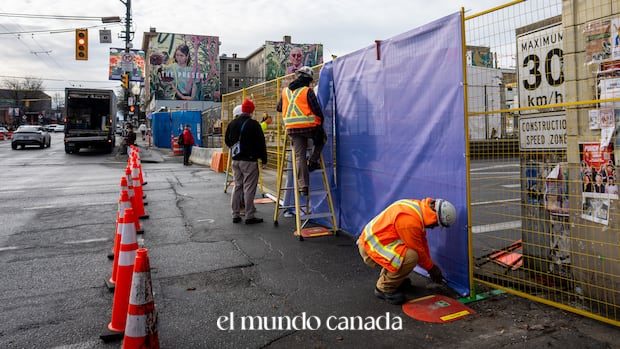
Building rapid transit under one of Vancouver’s busiest streets requires more than digging. Crews first need to relocate underground utilities — water, sewer, gas, and telecommunications lines that predate the subway by decades — before tunnel boring machines can excavate the actual guideway. Each station site also needs its own excavation, structural work, and safety inspections before the corridor above can be restored to normal use. This sequencing is why sections of Broadway have faced extended construction closures at different points as the project has progressed: underground work of this scale simply can’t happen while a busy arterial road stays fully open above it.
Why This Corridor Needed Rapid Transit
Broadway is one of the most densely used corridors in Canada, connecting major employment centers, Vancouver General Hospital, post-secondary institutions, and dense residential neighborhoods along a single east-west line. Before the subway project, this demand was served primarily by buses, which struggled to keep pace with ridership even with high-frequency service. Transportation planners had studied rapid transit options for the corridor for years before the current SkyTrain extension moved into construction, largely because bus-only service had effectively reached its practical capacity limit for the volume of people trying to move along Broadway each day.
Expected Benefits Once Complete
Transportation economists project substantial benefits once the line enters passenger service. Estimated impacts include reduced commute times, in some cases by up to 30 minutes for riders who previously relied on buses; decreased vehicle traffic along the Broadway corridor as more trips shift to rail; improved access to Vancouver General Hospital, one of the busiest healthcare facilities in the province; and better connectivity toward the University of British Columbia, which is expected to be served by a future extension beyond Arbutus. The completed line is also expected to support Vancouver’s climate goals by encouraging transit ridership over single-occupancy vehicle trips, an outcome city planners point to as a key part of the project’s long-term value.
Living With Construction
Large tunneling projects inevitably disrupt the streets above them. Businesses along the corridor have had to adapt to periods of reduced foot traffic and detoured customers during active construction phases, while commuters have needed to reroute through neighboring streets such as 12th Avenue and Kingsway. Transit authorities have generally tried to offset these disruptions with modified bus service and advance notice of major closures, though the scale of a multi-year subway build means some disruption is effectively unavoidable until the line opens.
What Comes After Arbutus
Arbutus Street is the current planned western terminus, but it isn’t necessarily the corridor’s final destination. Extending SkyTrain further west toward UBC has long been discussed as a natural next phase, given the university’s status as one of the region’s largest trip generators. For now, the priority remains finishing the VCC-Clark to Arbutus segment on schedule, with the broader vision of a fully connected Broadway corridor serving as the long-term goal behind the project.
