


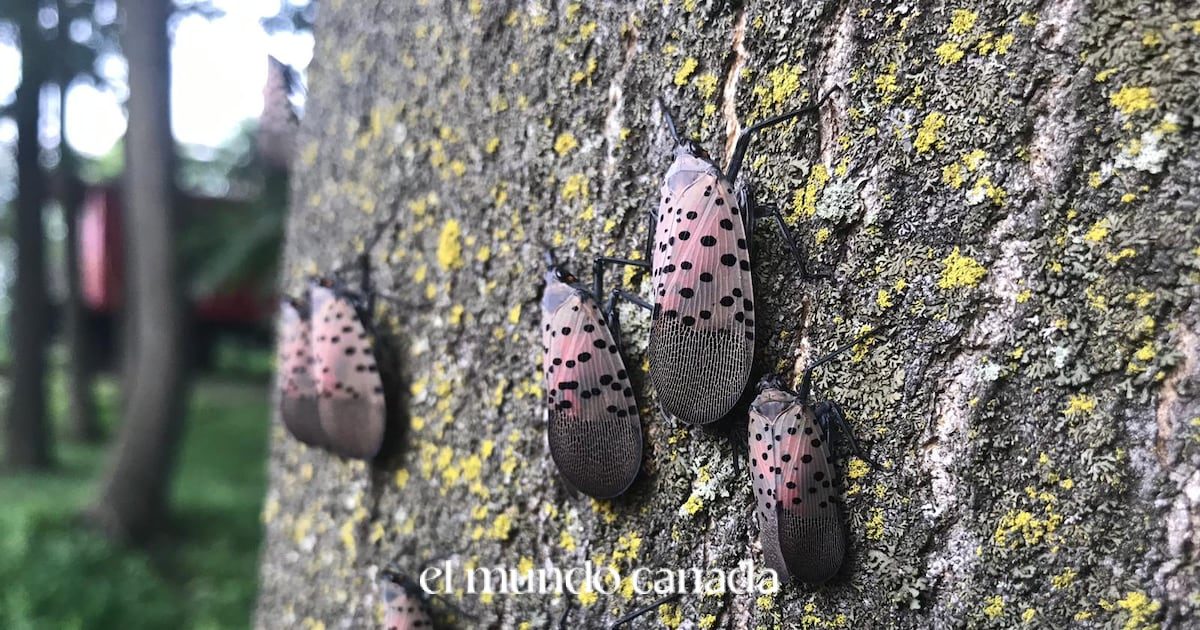
The spotted lanternfly has officially arrived in Canada, with the first confirmed sighting reported in Windsor, Ontario. This invasive insect, known for its destructive impact on agriculture and vegetation, has been spreading across the northeastern United States since its initial detection in Pennsylvania in 2014. The discovery in Windsor marks a significant milestone in the pest’s northward expansion and raises serious concerns for Canadian agriculture, vineyards, and natural ecosystems.
The spotted lanternfly (Lycorma delicatula) is native to China, India, and Vietnam. Despite its colorful and seemingly harmless appearance, this planthopper poses a serious threat to more than 70 plant species, including grapevines, fruit trees, hardwoods, and ornamental plants. The insect feeds by piercing plant tissue and consuming sap, which weakens plants and makes them vulnerable to disease and other environmental stressors.
“The detection of spotted lanternfly in Canada is a significant development that requires immediate attention from both agricultural producers and the general public. We are working closely with provincial authorities to assess the extent of this introduction and implement appropriate response measures.”
What Is the Spotted Lanternfly?
The spotted lanternfly is approximately one inch long with distinctive wings featuring black spots on a grayish background when closed. When the wings open, they reveal a striking red and black pattern that makes the insect easily identifiable. Despite having wings, adults are known more for their powerful jumping ability than their flight capabilities.
The insect’s lifecycle includes four nymph stages before reaching adulthood. Egg masses are laid in the fall on various surfaces, including trees, vehicles, outdoor furniture, and shipping containers. These egg masses have a grayish-brown, mud-like appearance and can contain between 30 to 50 eggs each. This characteristic makes the pest particularly adept at hitchhiking long distances through human transportation.
The preferred host plant for the spotted lanternfly is the tree of heaven (Ailanthus altissima), another invasive species common in urban areas across North America. However, the insect feeds on a wide variety of plants, making it a generalist threat to both agricultural operations and residential gardens.
Threat to Canadian Agriculture
The arrival of the spotted lanternfly in Canada poses significant risks to the country’s agricultural sector. Ontario’s wine industry, valued at over $1.2 billion annually, is particularly vulnerable. The pest’s appetite for grapevines can devastate vineyards, reducing grape yields and compromising wine quality.
Beyond grapes, the spotted lanternfly threatens apple orchards, peach farms, and maple syrup production. The insect excretes a sticky substance called honeydew as it feeds, which promotes the growth of sooty mold on plants. This mold blocks sunlight and further weakens affected vegetation, creating a compounding effect of damage.
In the United States, the pest has caused estimated economic losses exceeding $300 million annually in affected states. Pennsylvania’s agriculture department has spent millions on containment and eradication efforts since the initial detection. Canadian authorities are now faced with similar challenges as they work to prevent the pest from establishing permanent populations.
Read more: Fish Die-Off at Bruce Power: Nuclear Plant Risks
Windsor, Ontario: Ground Zero for Canadian Detection
Windsor’s proximity to Detroit, Michigan makes it a logical entry point for the invasive pest. The Ambassador Bridge and Detroit-Windsor Tunnel see millions of vehicle crossings annually, providing ample opportunity for spotted lanternflies or their egg masses to hitchhike across the border. The international flow of goods and people between these two cities creates ongoing biosecurity challenges.
The Canadian Food Inspection Agency (CFIA) has been monitoring for the pest’s arrival for several years, given its steady spread through Michigan, New York, New Jersey, and other border states. Windsor residents and businesses are now being asked to remain vigilant and report any sightings to help contain the infestation before it spreads further into Ontario and other provinces.
Local agricultural officials are conducting surveys to determine the extent of the infestation in the Windsor area. Early detection and rapid response are critical to preventing the spotted lanternfly from becoming established in Canadian ecosystems.
How to Identify and Report Spotted Lanternflies
Identifying the spotted lanternfly is crucial for containment efforts. Adult insects are most visible from July through December. Look for their distinctive spotted gray forewings and bright red hindwings with black spots. Nymphs appear earlier in the season, starting as small black insects with white spots before developing red coloring in later stages.
Egg masses are often the most important thing to identify and destroy. They appear as grayish-brown patches approximately one inch long and can be found on almost any outdoor surface. Common locations include tree bark, stone walls, vehicle wheel wells, camping equipment, and shipping pallets.
If you spot a spotted lanternfly or suspect egg mass in Canada, report it immediately to the CFIA. Take clear photographs if possible, noting the exact location. Killing adult insects and scraping egg masses into containers of alcohol or hand sanitizer are recommended immediate actions.
Residents who have recently traveled to or received packages from infested U.S. states should inspect their vehicles and belongings carefully. The pest spreads primarily through human activity, making public awareness the first line of defense against further spread.
Prevention and Control Measures for Residents
Preventing the spread of spotted lanternfly requires community-wide effort. Homeowners in affected or at-risk areas should regularly inspect their properties, especially trees and outdoor structures. Tree banding with sticky tape can trap nymphs as they climb, though bands should include a protective barrier to prevent capturing birds and other wildlife.
Removing tree of heaven from your property can reduce the attractiveness of your land to spotted lanternflies. However, female trees should be removed carefully, as the pest is particularly drawn to them. Consulting with local arborists or agricultural extension services before removal is recommended.
Businesses involved in shipping, landscaping, or outdoor recreation should implement inspection protocols for vehicles and equipment. The spotted lanternfly frequently hitchhikes on trucks, trains, and recreational vehicles, making transportation industries key partners in containment efforts. Following related environmental developments, the discovery echoes concerns similar to those raised in recent ecological incidents at Bruce Power.
Chemical control options exist but should be used judiciously. Systemic insecticides can protect high-value trees and crops, while contact sprays provide immediate knockdown of adult populations. Always follow label instructions and consider environmental impacts before applying pesticides.
What should I do if I see a spotted lanternfly in Canada?
If you spot a spotted lanternfly in Canada, photograph it immediately and note the exact location. Report the sighting to the Canadian Food Inspection Agency. If safe to do so, kill the insect by stepping on it or placing it in a container with alcohol or hand sanitizer. Your report helps authorities track the spread and respond quickly.
Can spotted lanternflies survive Canadian winters?
The spotted lanternfly can survive Canadian winters in the egg stage. Egg masses are remarkably cold-tolerant and can withstand temperatures well below freezing. This means the pest could potentially establish permanent populations in southern Ontario and other regions with suitable host plants.
What plants are most at risk from spotted lanternflies?
The spotted lanternfly feeds on more than 70 plant species. Most at risk are grapevines, apple trees, peach trees, maple trees, walnut trees, and hops. The insect’s preferred host is the tree of heaven, but it will feed on many common ornamental and agricultural plants.
How did the spotted lanternfly get to Canada?
The spotted lanternfly likely entered Canada through human transportation. The pest or its egg masses can hitchhike on vehicles, shipping containers, outdoor furniture, and camping equipment. Windsor’s location next to Detroit makes it a likely entry point given the high volume of cross-border traffic.
📘 Follow El Mundo Canada on our social networks: Facebook | Twitter | Instagram
The first detection of spotted lanternfly in Windsor, Ontario represents a pivotal moment for Canadian biosecurity. While the pest poses serious challenges, early detection provides an opportunity for effective response. Residents throughout southern Ontario and other border regions should remain alert as authorities work to assess and contain the infestation. The CFIA is expected to release updated guidance and establish quarantine protocols in the coming weeks, with public information sessions scheduled for late September 2026.
