


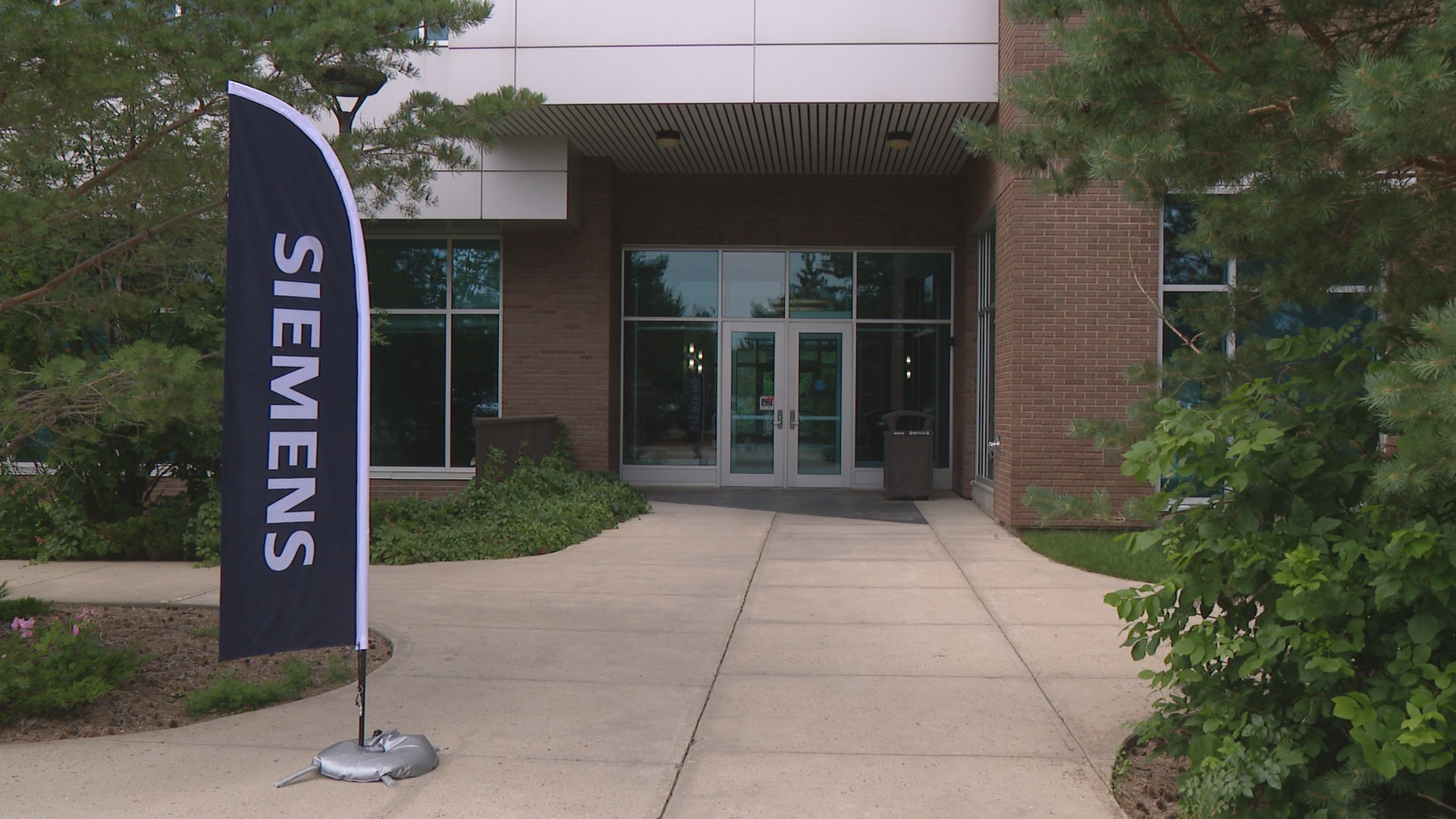
The multinational engineering giant Siemens has announced a significant expansion of its operations in Saskatoon, Saskatchewan, a move that promises to bring more than 100 new employment opportunities to the region over the next two years. The announcement, made on July 15, 2026, marks a substantial investment in Canada’s growing technology sector and reinforces Saskatchewan’s emerging role as a hub for innovation.
Major Investment in Research and Development
The expansion will add 10,000 square feet to Siemens’ existing research and development hub located at Innovation Saskatchewan’s research and technology park, situated adjacent to the University of Saskatchewan. This growth will bring the company’s total footprint in Saskatoon to an impressive 45,000 square feet, while increasing its workforce from approximately 300 employees to 400.
The expanded facilities will primarily support Siemens’ electronic design automation (EDA) operations, which develop sophisticated software used to design electronic chips. These chips are essential components powering everyday devices, from smartphones to modern vehicles.
“It’s going from 1.1 trillion to 1.5 trillion dollars by 2030, and chips are getting everywhere. So we do see that this global centre of confidence here in Saskatoon is growing,” stated Faisal Kazi, President and CEO of Siemens Canada.
Opportunities for Local Graduates
The new positions created through this expansion will focus primarily on technical roles, offering exciting career prospects for graduates from local educational institutions. Siemens has indicated it will be actively recruiting from the University of Saskatchewan’s programs to fill these positions.
The company is specifically seeking candidates with backgrounds in the following areas:
- Software development
- Engineering
- Computer science
- Physics
- Mathematics
- Customer application expertise
Amit Gupta, Siemens EDA Senior Vice-President, emphasized the importance of this expansion for keeping local talent in the province. Gupta has a unique perspective on Saskatchewan’s tech ecosystem, having founded chip design software company Solido in 2005, which Siemens acquired in 2017 when it had around 50 employees.
“It’s really an opportunity for people who are from Saskatchewan, who grew up in Saskatchewan, to not go and leave to work at another place, but they can have very rewarding careers right here in Saskatchewan,” Gupta explained, noting that approximately 80 percent of the company’s hires are graduates from the University of Saskatchewan.
A Made-in-Saskatchewan Success Story
Gupta’s journey from founding a small startup to seeing it become part of a global technology leader represents what he calls a “made-in-Saskatchewan” story. When Siemens acquired Solido, the multinational corporation chose to maintain and expand operations in Saskatoon rather than relocating to a traditional technology hub.
At a press conference and ribbon-cutting ceremony held at Siemens’ office on July 15, 2026, Gupta praised the decision to invest in the local ecosystem. He noted that this approach has proven successful, with the company’s presence continuing to grow substantially in the province.
Addressing Provincial Retention Challenges
Saskatchewan has faced ongoing challenges with retaining educated workers and graduates, with many leaving the province after completing their education or training. Premier Scott Moe addressed this issue during the announcement, expressing optimism that the Siemens expansion will help reverse this trend.
The provincial government has committed to collaborating with various stakeholders to develop the workforce needed for the technology sector. Key partners in this effort include:
- Siemens EDA
- University of Saskatchewan
- University of Regina
- Saskatchewan Polytechnic
- Other industry players
The Siemens expansion arrives at a strategic moment for Canada’s technology sector. The global semiconductor industry continues to experience rapid growth, driven largely by advancements in artificial intelligence and the increasing demand for electronic components across virtually every industry.
The EDA software developed in Saskatoon enables chip manufacturers to design, test, and verify their products in a virtual environment before physical production begins. This capability significantly reduces time to market and development costs, making it an invaluable tool in the competitive semiconductor industry.
For the Latin community in Canada and newcomers seeking opportunities in the technology sector, the Siemens expansion represents another encouraging sign of growth in Canadian cities beyond the traditional tech hubs of Toronto and Vancouver. Saskatoon’s emergence as a center for chip design software demonstrates that rewarding technology careers can be built across the country.
