


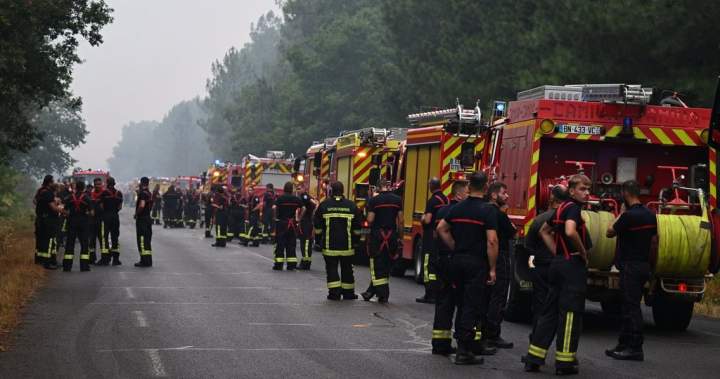
A devastating wildfire crisis has unfolded across southern Europe, with more than 250,000 people forced to abandon their homes as flames tear through regions of France and Spain. The unprecedented blazes, fueled by extreme heat and the lingering effects of climate change, have created scenes of panic and displacement not seen in recent memory.
France Deploys Military Aircraft to Combat Raging Fires
French authorities announced on July 25, 2026, that they would deploy a massive A400M cargo aircraft specially adapted to dump flame retardants on the wildfire threatening the Bordeaux wine region. This military-grade aircraft will join 18 other water- and retardant-dropping planes and helicopters in what officials described as a prolonged and extremely challenging battle against the Gironde region blaze.
French Interior Minister Laurent Nunez warned that shifting winds could potentially drive the fire closer to Bordeaux, prompting emergency crews to dig trenches and apply chemical retardants to create firebreaks. The wildfire was reported approximately 30 kilometers west of the city, though it lost some intensity overnight.
“Our priority is clear: protecting human lives. Evacuation orders must be respected without delay.” — French Prime Minister Sébastien Lecornu
The French government has taken extraordinary measures to protect citizens from the crisis. Soldiers have been mobilized to join firefighting efforts, and 1.5 million face masks are being rushed to affected areas to protect residents from hazardous smoke inhalation. Evacuation orders have been issued for communities between the fire and Bordeaux, including parts of the city’s western suburbs.
Spain Battles Fast-Moving Blazes Across Central Regions
In Spain, approximately 70,000 people have been evacuated from areas west of Madrid as wildfires spread with alarming speed and ferocity. Spanish firefighters reported that the blazes moved so rapidly and violently that direct confrontation was impossible, forcing crews to adopt alternative containment strategies.
Spanish Prime Minister Pedro Sánchez visited a command post on July 25 and shared sobering statistics about the wildfire season. Already in 2026, fires have consumed 130,000 hectares of forest across Spain, significantly exceeding the annual average of 100,000 hectares recorded over the past decade. However, he noted that improving weather conditions presented a crucial opportunity for firefighters to gain control.
Climate Change Drives Unprecedented Fire Conditions
Experts point to successive heat waves that arrived unusually early and with exceptional intensity this year as the primary catalyst for the wildfire crisis. Record-breaking temperatures have transformed forests and scrublands across Europe into tinderboxes, creating ideal conditions for fires to ignite and spread rapidly.
The Gironde fire became so powerful on July 24 that it began generating its own wind patterns, a phenomenon that significantly complicates firefighting efforts. This self-sustaining behavior demonstrates the extreme nature of these climate-fueled disasters.
What This Means for Canadians with Ties to Europe
For members of the Latin community in Canada who have family, friends, or travel plans in affected regions of France and Spain, monitoring this situation is crucial. Here are key points to consider:
- Contact loved ones in southwestern France and central Spain to ensure their safety
- Review travel advisories if you have upcoming trips to affected areas
- Understand that air quality may be compromised across broader regions due to smoke
- Follow official government channels for evacuation updates and safety information
- Consider postponing non-essential travel to fire-affected zones
Despite the chaos and destruction, no deaths have been reported in either country as of July 25, though dozens of French firefighters have sustained injuries. Some residents in coastal tourist towns along the Atlantic were forced to flee by boat when flames swept through their communities.
International Support Mobilizes for Fire-Stricken Nations
Other European nations have stepped forward to assist France and Spain in their firefighting efforts, demonstrating continental solidarity during this environmental emergency. The collaborative response highlights the growing recognition that extreme weather events and their consequences transcend national borders.
As Canada faces its own increasing wildfire challenges, the European crisis serves as a stark reminder of the global nature of climate-related disasters. The lessons learned from these massive evacuation efforts and firefighting strategies may prove valuable for emergency management officials worldwide, including those in Canadian provinces that regularly face similar threats during dry summer months.
