


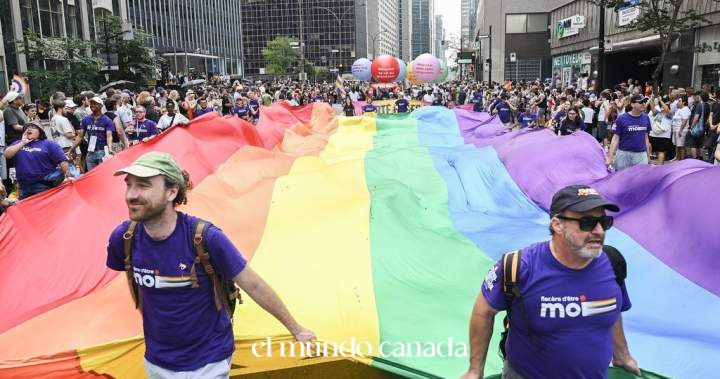
The Montreal LGBTQ+ community witnessed an unprecedented split on August 9, 2026, as two separate Pride events unfolded across the city. While the traditional Fierté Montréal parade drew thousands downtown, a rival march called Wild Pride attracted crowds to the Plateau Mont-Royal borough, highlighting deep divisions within the community over corporate involvement and political activism.
The competing Montreal Pride parades reflect tensions that have been simmering since last year, when several community organizations broke ties with the main event. For Latin families and LGBTQ+ individuals in Canada, understanding these developments matters as Pride celebrations continue evolving across the country.
Downtown Pride Parade Highlights
The main Fierté Montréal parade marched through downtown Montreal with thousands of participants, including drag queens, community organizations, and supporters covered in glitter. Blasting music accompanied the colorful procession as families and longtime attendees gathered to celebrate.
Geneviève Gagnon, who has attended the Montreal Pride parade with her children for many years, came to watch with her daughter Florence. Florence, wrapped in a Pride flag, came out as pansexual when she was 18.
“The most important thing is for Florence to be happy. People should just be happy and let people live. Love is love and nothing changes that.”
Marc Venne, 72, shared that he attended the very first Montreal Pride parade 20 years ago. Dressed in leather, he reflected on changes he has witnessed in the community over two decades of participation.
Rising Concerns About Homophobia
Longtime attendees of the Montreal Pride celebration have expressed growing concerns about safety and a perceived increase in hostility toward LGBTQ+ individuals. Venne noted that recent years have brought troubling changes to an event that once felt completely welcoming.
“I’ve known the good years, when everything was allowed. Everyone was beautiful, we had fun. Montreal is a fantastic city for that,” Venne explained. “But now we’re backsliding and it’s scary.”
Despite these concerns, Venne emphasized his commitment to attending the Montreal Pride parade every year. He refuses to feel intimidated by those he describes as aggressive toward LGBTQ+ people, viewing his presence as an act of resilience.
Organizers with Fierté Montréal responded to security concerns by increasing protective measures at this year’s parade. The decision came following a deadly attack at Berlin Pride the previous month, which sent shockwaves through LGBTQ+ communities worldwide.
Trans Rights and Provincial Legislation
Autumn Trainor, who walked in the parade with Gay and Gray Montreal, an organization serving queer people over 50, shared how recent events have affected community members. She noted that many felt shaken after the Berlin attack.
Trainor highlighted that attacks on the LGBTQ+ community extend beyond physical violence. She pointed to legislative changes in Canadian provinces that have restricted access to healthcare for transgender youth.
“With everything that’s going on, it is definitely important to be yourself and be out there and be visible,” Trainor stated. She mentioned provinces including Alberta, Saskatchewan, and British Columbia as having passed legislation restricting trans youths’ access to gender-affirming treatment.
“As a trans woman myself, I am not happy about the legislation. It makes my life more difficult and causes the death of a lot of my trans siblings.”
These policy changes have become a rallying point for activists across Canada, making Pride events more politically charged than in previous years. The intersection of celebration and protest defines much of the current LGBTQ+ landscape.
Wild Pride: The Alternative March
Approximately an hour after the main Montreal Pride parade concluded, a second event called Wild Pride began in the Plateau Mont-Royal borough. Organized by leftist LGBTQ+ groups, thousands marched while chanting slogans including “Pride is a riot” and “We won’t compromise on corporate Pride.”
Jonathan Grenier, who works with unions, explained why he chose the alternative march over the traditional parade. He believes Montreal Pride no longer reflects his values or those of many community members.
“If I look at the companies that invest a lot in Pride, it makes it more of a party, a ‘Wow,’ versus I’m fighting for rights,” Grenier said. His comments reflect a broader debate about corporate involvement in Pride celebrations across North America.
Wild Pride launched last year after community organizations, including pro-Palestinian group Helem Montreal, broke ties with Montreal Pride. These groups cited allegations of a “toxic organizational culture” as their reason for separation.
Samya Lemrini, a Wild Pride organizer, stated that despite changes in Pride leadership, nothing has fundamentally shifted. Organizers released a statement explaining their mission to bring Pride back to its roots.
The Wild Pride statement emphasized protesting three key issues: corporate sponsorship, police presence, and colonialism. Marchers chanted “no pride in genocide” while blasting music and dancing through the streets.
What This Means for LGBTQ+ Canadians
The split in Montreal’s Pride celebrations reflects broader conversations happening within LGBTQ+ communities across Canada. For Latin families and individuals, understanding these dynamics helps navigate an evolving cultural landscape.
Lady Sunshine, a parade participant dressed in yellow from head to toe, offered perspective on the community’s current state. “There’s always going to be tension, but we have to celebrate between us,” she said.
A spokesperson for Fierté Montréal acknowledged the alternative event, stating that the organization hears and understands the perspectives driving Wild Pride. This response suggests potential for dialogue between the two camps in future years.
For those planning to attend Pride events in Montreal or elsewhere in Canada, the competing celebrations offer different experiences. The main parade provides a family-friendly atmosphere with corporate participation, while Wild Pride emphasizes grassroots activism and political messaging.
Montreal’s reputation as a welcoming city for LGBTQ+ individuals remains strong despite these internal debates. Both events drew thousands of participants, demonstrating continued community engagement and visibility.
The evolution of Pride from purely celebratory to politically complex mirrors changes across North America. As legislation affecting transgender youth passes in multiple provinces, expect Pride events to continue blending celebration with advocacy.
Latin LGBTQ+ individuals and families in Canada can find community through organizations like Gay and Gray Montreal and various cultural groups that participate in both Pride events. These connections provide support networks beyond annual celebrations.
Why were there two Pride parades in Montreal in 2026?
Wild Pride launched last year after community organizations broke ties with Montreal Pride amid allegations of toxic organizational culture. The alternative march protests corporate sponsorship, police presence, and colonialism, seeking to return Pride to its activist roots.
What security measures were taken at Montreal Pride 2026?
Organizers with Fierté Montréal increased security at this year’s parade following a deadly attack at Berlin Pride the previous month. The enhanced measures aimed to protect participants amid rising concerns about safety at LGBTQ+ events.
Which Canadian provinces have passed legislation affecting trans youth?
📘 Follow El Mundo Canada on our social networks: Facebook | Twitter
According to participants at the parade, Alberta, Saskatchewan, and British Columbia have passed legislation restricting trans youths’ access to gender-affirming treatment, making these policy changes a significant concern for the LGBTQ+ community.
