


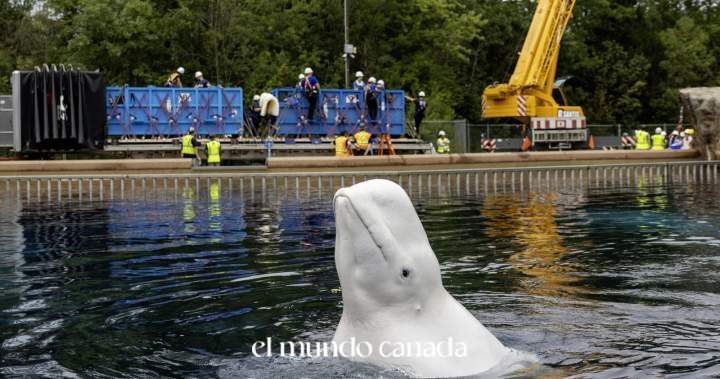
Six beluga whales departed Marineland in Niagara Falls, Ontario, on Wednesday, August 12, 2026, marking another crucial step in the largest collective transfer of captive whales ever undertaken in Canada. This third batch of marine mammals headed to Shedd Aquarium in Chicago and Georgia Aquarium in Atlanta, bringing the total number of rehomed whales to approximately two-thirds of the original population.
The Marineland whale transfer represents a pivotal moment for animal welfare in Canada. The shuttered Niagara Falls attraction has been working tirelessly to relocate its remaining marine animals after closing its doors to the public in 2024. Park officials confirmed they can no longer financially sustain the care these magnificent creatures require, prompting this unprecedented relocation effort.
How the Beluga Whale Transfer Unfolded
Under grey skies and light drizzle, a specialized team of veterinarians and whale experts carefully guided each beluga whale into custom-designed slings. The operation began at approximately 3:30 p.m. with the male whales, each one hoisted by crane into bright blue transport tanks. The meticulous process demonstrated the extraordinary care taken to ensure each animal’s safety.
The two male belugas transferred were named Zephyr and Balor. The four females included Caspian, Pikachu, Secord, and Rain (also known as Spurlock). Weather conditions posed potential challenges, with organizers closely monitoring for thunderstorms that could have halted the operation entirely.
By the time crews moved to the second pool for the female belugas, the clouds had largely dispersed. The female whales initially clung together, creating large sprays of water as specialists entered the pool to assist with the transfer process.
Last-Minute Medical Assessment Ensures Safety
The operation encountered a brief pause during the evening hours when the team of veterinarians and whale specialists gathered around the final beluga to examine a cut on her tail. This careful assessment determined whether she should remain at Marineland for a subsequent transfer or proceed with the group.
After thorough evaluation, the medical team treated the injury and cleared her for travel. Workers padded the back of her transport sling with foam material to prevent her from flailing her tail during the journey, demonstrating the personalized attention each animal receives.
“We’ve had really no substantial issues whatsoever. All the animals are safely in their new homes, they’re all adjusting well and everyone is just getting better and better, and the operation is getting smoother,” said Andrew Burns, Marineland’s adviser, during the transfer operation.
Police-Escorted Convoy to Toronto Pearson Airport
A police-escorted convoy departed Marineland at approximately 8:30 p.m. to transport the six beluga whales to Toronto’s Pearson International Airport. From there, the animals were loaded onto aircraft bound for their new permanent homes at Shedd Aquarium and Georgia Aquarium.
The slow-moving convoy ensured minimal stress on the marine mammals during ground transportation. Both U.S. aquariums have extensive experience caring for beluga whales and have prepared specialized habitats for their new residents.
Burns emphasized that whale health remains the absolute priority throughout every phase of the operation. The team maintains flexibility to hold back any animal for a later transfer if concerns arise about their wellbeing or safety.
Read more: Canada Wildlife Conservation Efforts 2026
Three More Transfers Still Ahead
With this latest transfer complete, Marineland has reduced its whale population to just 11 animals. Andrew Burns described this achievement as a “major milestone,” noting that two-thirds of the original population has now been successfully relocated and rehomed.
Three additional transfers are scheduled to complete the relocation effort:
- Two remaining beluga whale transfers to U.S. aquariums
- A “middle of the night” flight to Spain for the dolphins and two belugas
- Final transfers for any remaining marine mammals
The international coordination required for these transfers involves multiple aquariums, veterinary teams, transport specialists, and government agencies across several countries.
Marineland’s Legacy and Closure Impact
Marineland officially closed to the public in 2024, ending decades as one of Ontario’s most recognizable tourist attractions. The park’s sprawling property in Niagara Falls is currently listed for sale as the organization focuses its remaining resources on completing the animal relocations.
Park officials have stated that financial constraints made continued animal care impossible, accelerating the need for this historic transfer operation. The Marineland beluga whale relocation has become one of the most significant marine mammal conservation efforts in Canadian history.
Tom Western, a retired Marineland employee who spent 40 years working at the facility, was present during the transfer operation. His emotional connection to the animals spans decades of personal involvement with the beluga whale program.
“Marineland’s a big part of my life. I worked here for 40 years. I was here when all the adult belugas were put in this pool with the exception of the ones that were born here, and I’m so happy that they’re moving on to new homes,” Western shared in an interview.
His sentiment reflects the bittersweet nature of the closure for longtime staff members who developed deep bonds with the marine animals over the years.
What This Means for Animal Welfare in Canada
The Marineland whale transfer sets an important precedent for animal welfare standards in Canada. The successful relocation demonstrates that even complex marine mammal transfers can be accomplished safely when proper resources and expertise are deployed.
For the Latin community in Canada, many of whom visited Marineland as a family destination, this transition marks the end of an era. However, it also represents a positive step toward ensuring these intelligent marine mammals receive appropriate long-term care.
The receiving aquariums in Chicago and Atlanta offer modern facilities designed specifically for beluga whale populations. Both institutions participate in conservation research and educational programs that will give these animals meaningful roles in public awareness efforts.
Families interested in seeing beluga whales can now plan visits to Shedd Aquarium or Georgia Aquarium, both accessible destinations for Canadian travelers. These facilities offer comprehensive marine life exhibits and educational experiences for visitors of all ages.
The August 12, 2026 transfer brings Canada closer to completing this unprecedented relocation. With only 11 whales remaining at Marineland and three more transfers scheduled, the final chapter of this historic operation should conclude within the coming months.
How many beluga whales were transferred from Marineland on August 12, 2026?
Six beluga whales were transferred: two males named Zephyr and Balor, and four females named Caspian, Pikachu, Secord, and Rain (also known as Spurlock).
Where are the Marineland beluga whales being relocated?
The beluga whales from this transfer were sent to Shedd Aquarium in Chicago and Georgia Aquarium in Atlanta. Future transfers will include a flight to Spain for dolphins and two belugas.
How many whales remain at Marineland after this transfer?
Eleven whales remain at Marineland following this transfer. According to Andrew Burns, two-thirds of the original population has now been successfully rehomed.
Why did Marineland close and begin transferring its whales?
Marineland closed to the public in 2024 and stated it is running out of money and can no longer adequately care for the whales. The park and its property are currently listed for sale.
📘 Follow El Mundo Canada on our social networks: Facebook | Twitter
