


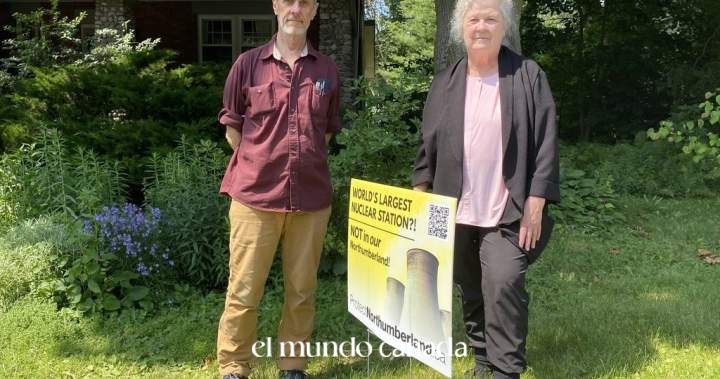
A proposed nuclear power plant in Port Hope, Ontario, is facing fierce opposition from residents who remember the community’s troubled radioactive contamination history. The Ontario government announced plans to build what could become one of the world’s largest nuclear power stations in this picturesque town of roughly 18,000 people, located about 100 kilometres east of Toronto.
While provincial officials celebrated the announcement as a step toward energy security, longtime residents are raising serious concerns. The community’s fraught history with the nuclear industry stretches back nearly a century, leaving a legacy of contamination that still affects backyards and public properties throughout the region.
Community Outrage Over Announcement
Faye More, a 75-year-old resident, has been rallying opposition to the project in her community. She expressed profound frustration with the celebratory tone of the official announcement.
“I personally was outraged when I heard this announcement, and elected officials of every level were lined up here making this announcement as if this was good news.”
More emphasized that the community has felt “invisible for about 80 years” regarding the operation of nuclear facilities. That sense of being overlooked persists as the province moves forward with this new nuclear project. The concerns are particularly acute among older residents who lived through the original contamination crisis.
Port Hope’s Radioactive History
The Eldorado mining company, which later became a Crown corporation, opened a radium refinery plant in Port Hope in the 1930s. When uranium became a prized commodity about a decade later, ore previously considered waste suddenly found itself in high demand.
The plant shifted to refining uranium, supplying material to the United States military during the Second World War. This uranium was used in the Manhattan Project, the U.S. government program that produced the first atomic bombs.
Over several decades, the plant dumped contaminated soil, rocks, and building materials across Port Hope. These materials were used primarily as backfill but also in constructing parks, roads, schools, and homes. This includes the home where More grew up and the one where she later raised her own family.
Federal Cleanup Efforts Underway
In 2001, the federal government signed an agreement with Port Hope and nearby Clarington. The agreement committed to cleaning up, isolating, and managing the historic low-level radioactive waste that contaminated the region over decades.
The cleanup project, known as the Port Hope Area Initiative, is being implemented by Canadian Nuclear Laboratories. This organization manages historic waste sites on behalf of the Crown corporation Atomic Energy of Canada Ltd. The ongoing remediation efforts highlight just how extensive the original contamination was.
For Latin community members in Canada working in construction or environmental sectors, understanding this history provides important context about nuclear industry regulations and cleanup protocols that continue to shape communities across Ontario.
Ontario Power Generation’s Response
Ontario Power Generation (OPG), the provincially owned company in charge of the new nuclear power project, is working to reassure residents. The company emphasizes that the nuclear sector operates very differently today than in its early years.
“Today’s nuclear industry operates under one of the world’s most rigorous regulatory frameworks, with stringent federal oversight governing every aspect of nuclear safety, environmental protection and waste management.”
OPG has owned the land for more than 50 years specifically for electricity generation purposes. The company projects significant economic benefits from the new facility, including support for more than 10,500 jobs across the province.
The new plant would contribute approximately $235 billion to Ontario’s GDP over its lifespan, according to OPG statements. These economic projections are being used to counter opposition from concerned residents and environmental groups.
Massive Project Scale and Timeline
Once operational, the site could provide up to 10,000 megawatts of power generating capacity, according to Ontario Power Generation’s project description. This capacity would make it the world’s largest nuclear power station, surpassing all existing facilities globally.
For comparison, Bruce Power’s eight reactors in Kincardine, Ontario, currently produce about 6,500 megawatts. The proposed Port Hope facility would exceed this by a significant margin, representing an unprecedented scale of nuclear energy development in Canada.
The province has outlined an extended timeline for the project. OPG hopes to receive construction and operation licences for the Port Hope project in the 2030s. Operations would then begin in the 2040s, meaning the full impact won’t be felt for decades.
Port Hope Mayor Olena Hankivsky has supported the project, emphasizing the potential benefits. She points to both the ongoing cleanup efforts and the new nuclear site in the municipality’s Wesleyville neighbourhood as part of the community’s evolving relationship with the nuclear industry.
Energy Minister Stephen Lecce hailed the project as “another positive step” toward a secure energy future. Meanwhile, the local mayor suggested it would help create a “stronger and more resilient future” not only for the community but for the entire province and country.
For members of the Latin community considering careers in Canada’s energy sector, this project represents both significant job opportunities and important questions about community consultation and environmental justice. The debate in Port Hope illustrates the complex balance between economic development and historical accountability that shapes Canadian energy policy.
What is the proposed capacity of the Port Hope nuclear plant?
The proposed Port Hope nuclear facility could provide up to 10,000 megawatts of power generating capacity, which would make it the world’s largest nuclear power station.
Why are Port Hope residents opposing the nuclear project?
Many longtime residents are concerned because of the community’s history with radioactive contamination dating back to the 1930s, when a radium and uranium refinery operated in the area and dumped contaminated materials throughout the town.
When would the Port Hope nuclear plant begin operating?
Ontario Power Generation hopes to receive construction and operation licences in the 2030s, with operations expected to begin in the 2040s.
How many jobs would the Port Hope nuclear project create?
According to Ontario Power Generation, the new plant would support more than 10,500 jobs across the province and contribute approximately $235 billion to Ontario’s GDP over its lifespan.
📘 Follow El Mundo Canada on our social networks: Facebook | Twitter
