


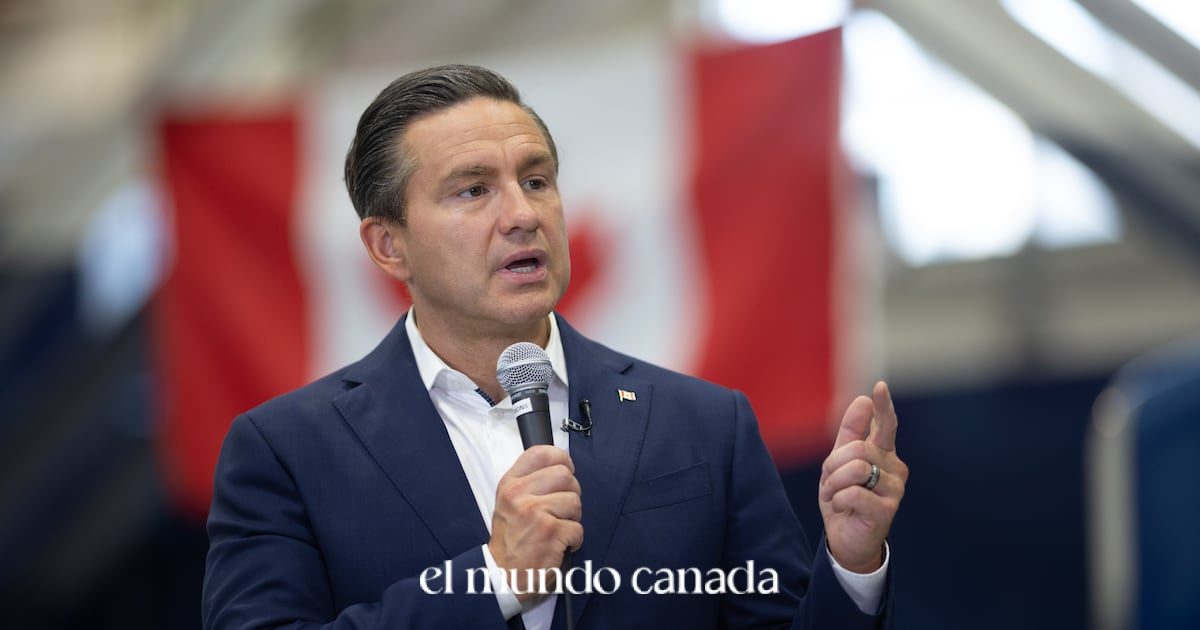
Conservative Leader Pierre Poilievre made headlines on September 10, 2026, when he told CNBC that he would not criticize Canada’s Prime Minister while on foreign soil during the ongoing trade fight. The declaration represents a significant moment in Canadian political discourse, with Poilievre choosing to present a united front internationally despite fierce domestic opposition to the current government’s policies.
The statement came during an interview where Poilievre was pressed on Canada-U.S. trade relations and his position on the Prime Minister’s handling of negotiations. Rather than seize the opportunity to score political points abroad, the Conservative leader drew a clear line, stating he would not attack “my PM” while representing Canadian interests outside the country’s borders.
Diplomatic Tradition Upheld by Conservative Leader
The decision by Poilievre to refrain from criticizing the Prime Minister on foreign soil reflects a longstanding diplomatic tradition in Canadian politics. This unwritten rule suggests that when Canadian politicians travel abroad, they should present a unified national front rather than air domestic grievances on the international stage.
This approach stands in contrast to political strategies seen in other countries, where opposition leaders sometimes use foreign media platforms to criticize sitting governments. Poilievre’s restraint suggests a prioritization of national interests over partisan advantage, at least in the context of international appearances.
The Conservative Party of Canada has historically maintained this tradition, with previous leaders also choosing to temper their criticism when speaking to foreign audiences. The calculation appears to be that undermining the sitting government abroad could weaken Canada’s negotiating position in trade disputes and other international matters.
Trade Tensions Between Canada and United States
The context of Poilievre’s remarks involves ongoing trade tensions between Canada and the United States. The White House has implemented various trade measures affecting Canadian exports, creating significant pressure on multiple industries across the country.
Canadian manufacturers, agricultural producers, and resource extraction companies have all felt the impact of these trade disputes. The softwood lumber dispute and dairy market access issues remain contentious points between the two nations, affecting communities throughout Canada.
For the Latin American community in Canada, these trade tensions carry particular significance. Many immigrants work in industries directly affected by U.S.-Canada trade relations, including manufacturing, agriculture, and food processing. Any disruption to trade flows can impact employment opportunities and economic stability for these communities.
Political Implications for Poilievre’s Strategy
The statement carries significant political weight as Poilievre continues to position himself as a potential future Prime Minister. By demonstrating restraint on the international stage, he signals to voters that he can be trusted to represent Canadian interests abroad with dignity and professionalism.
Political analysts note that this approach serves multiple strategic purposes. It portrays Poilievre as a statesman rather than merely an opposition critic. It also prevents footage of him criticizing Canada on foreign networks from being used against him in future campaigns.
The Conservative leader has been vocal in his domestic criticism of the government’s economic policies, housing strategies, and carbon tax implementation. However, drawing a distinction between domestic and international criticism allows him to maintain his aggressive opposition stance at home while appearing diplomatic abroad.
Read more: Toronto Teen Lawsuit: Speed Camera Removal Blamed
What This Means for Canadians
For everyday Canadians, including the Latin American diaspora, the political posturing around trade negotiations has real-world implications. Trade disputes can affect everything from grocery prices to job availability, particularly in sectors heavily dependent on cross-border commerce.
The principle of presenting a united Canadian front internationally, regardless of domestic political differences, has historically served the country well in negotiations. When foreign partners see a divided nation, they may attempt to exploit those divisions to gain negotiating advantages.
Immigration policies, work permit regulations, and economic opportunities for newcomers can all be influenced by the health of Canada-U.S. trade relations. A stable trade relationship generally supports job creation and economic growth that benefits all Canadian residents.
Looking Ahead: Future of Trade Negotiations
The Canada-United States-Mexico Agreement (CUSMA), also known as USMCA, faces its scheduled review in 2026, adding urgency to current trade discussions. Both the Canadian government and opposition parties are preparing their positions for what could be significant renegotiations.
Poilievre’s comments suggest that should he become Prime Minister, he would approach international trade discussions with a commitment to Canadian unity, even while pursuing different domestic policies than the current government. This bipartisan approach to foreign relations has been a hallmark of Canadian diplomacy for decades.
The Latin American community in Canada has a vested interest in stable North American trade relations, given the interconnected economies of Canada, the United States, and Mexico. Many businesses owned by Latino entrepreneurs depend on cross-border supply chains and market access.
The next major milestone in Canada-U.S. trade relations is expected during the CUSMA review discussions scheduled to continue through late 2026 and into 2027, when both governments will evaluate the agreement’s implementation and consider potential modifications.
Why did Poilievre refuse to criticize the Prime Minister abroad?
Poilievre followed a longstanding Canadian diplomatic tradition of presenting a united national front when on foreign soil. This approach prevents foreign powers from exploiting domestic political divisions during trade negotiations.
How do Canada-U.S. trade tensions affect the Latin community?
Many Latin American immigrants in Canada work in industries affected by trade disputes, including manufacturing, agriculture, and food processing. Trade tensions can impact job security and economic opportunities in these sectors.
What is the CUSMA review scheduled for 2026?
The Canada-United States-Mexico Agreement includes provisions for periodic reviews. The 2026 review will evaluate the agreement’s implementation and allow the three nations to discuss potential modifications to the trade framework.
Will Poilievre’s stance affect future trade policy?
If Poilievre becomes Prime Minister, his commitment to not attacking Canadian leadership abroad suggests he would maintain diplomatic decorum in international settings while potentially pursuing different domestic trade priorities.
📘 Follow El Mundo Canada on our social networks: Facebook | Twitter | Instagram
Poilievre’s next scheduled appearance to discuss trade policy is expected during the House of Commons session when parliamentarians return in October 2026, where debate on Canada’s negotiating position for the CUSMA review is anticipated to intensify.
