


Donald Trump reportedly offered to sell American weapons to China during President Xi Jinping’s visit to Washington last week, according to US Ambassador to China David Perdue. The stunning revelation came during a Fox News interview on Sunday, September 27, 2026, raising serious questions about US foreign policy and the future of Taiwan’s security.
The ambassador’s comments emerged amid growing concerns about a pending $14 billion arms sales package to Taiwan that has been stalled for months. Perdue stated that Trump told Xi: “Hey, we sell arms to other people around the world. He actually asked President Xi, would he like to buy some at one point.” This extraordinary claim has sent shockwaves through diplomatic circles and raised alarms among US allies in the Asia-Pacific region.
White House Response to Ambassador’s Claims
Following Ambassador Perdue’s televised remarks, the White House moved quickly to clarify the administration’s position. Officials told the New York Times that the United States has no plans to sell arms to China. The U.S. Department of State reinforced this position with a definitive statement.
The State Department declared: “US law prohibits arms sales to China and there is no offer or plan to sell arms to China.” This clarification underscores the significant gap between what Trump may have suggested during private discussions and what American law actually permits. Federal regulations have long prohibited weapons transfers to Beijing, making any such sale legally impossible under current statutes.
The incident highlights the unpredictable nature of Trump’s diplomatic approach, where off-the-cuff remarks during high-level meetings can create international confusion. For observers of Washington’s approach to international relations, this episode represents another example of unconventional diplomacy that leaves allies uncertain about American commitments.
Taiwan’s $14 Billion Arms Deal Remains in Limbo
The weapons offer controversy comes at a particularly sensitive time for Taiwan. The self-ruled island democracy has been waiting for months for Trump to approve a new $14 billion arms sales package. This follows a record multibillion-dollar deal announced in December of last year, demonstrating Taiwan’s urgent efforts to bolster its defenses.
At a meeting with Xi in Beijing during May 2026, Trump revealed he was keeping the Taiwan arms package in abeyance. He described the deal as a “very good negotiating chip” in dealings with China. This transactional approach to Taiwan’s security has alarmed defense analysts and Taiwanese officials who view the weapons as essential for their survival.
Under the decades-old Taiwan Relations Act, Washington is required to provide Taipei with sufficient military equipment to defend itself. The United States has long maintained a strategically ambiguous stance on whether it would directly defend Taiwan in the event of a Chinese invasion. However, the legal obligation to arm Taiwan remains clear.
Taiwan Warns of Severe Military Threat from Beijing
Taiwanese Deputy Foreign Minister Chen Ming-chi spoke about the gravity of the situation before Perdue’s interview aired. He emphasized the serious military threat that China poses to the island nation.
“Taiwan faces a severe situation in the Taiwan strait. Even though China’s economy is declining, it continues investing more resources into building military capacity. Under this context, the US very much understands our defence needs.”
Beijing has repeatedly stated it “resolutely opposes” Washington’s arms sales to Taiwan, which it considers a breakaway province despite never having ruled it. China has not renounced the use of force to take the island. During the Washington meeting last week, Xi urged Trump to oppose “Taiwan independence,” according to a readout from the official Chinese news agency Xinhua.
Taiwanese official Shen Yu-chung also pushed back on Sunday against what he described as Beijing’s attempt to “falsely claim that the Chinese Communist party and the US were allies.” This reflects Taiwan’s deep concern about being marginalized in US-China negotiations that directly affect its future.
Read more: How Canadian football (CFL) differs from the NFL: rules explained
China’s Declining Arms Imports and Military Growth
Ironically, China has little need for American weapons. The country is actually a net exporter of arms, selling military equipment to nations around the world. Most of the weapons China does import come from Russia, though even that volume has dropped dramatically in recent years.
According to data from the Stockholm International Peace Research Institute, China’s arms imports fell by 72% between 2021 and 2025 compared with the previous five years. This steep decline reflects significant advances in China’s own military manufacturing capacity. The country has invested heavily in developing indigenous defense technology, reducing its dependence on foreign suppliers.
This context makes Trump’s reported offer even more puzzling from a practical standpoint. Beijing has demonstrated it can produce most of the military equipment it needs domestically. The offer, whatever its intent, appears to have been more of a diplomatic gesture than a serious commercial proposition.
Diplomatic Implications and What Comes Next
Chinese state media praised the “extraordinary level of courtesy” that Trump showed Xi during the Chinese leader’s visit to Washington. This positive coverage in Beijing contrasts sharply with the concern expressed in Taipei and among some American lawmakers about the direction of US-China relations.
The incident raises fundamental questions about American foreign policy consistency and the reliability of US security commitments to partners like Taiwan. For decades, Washington has balanced relations with both Beijing and Taipei, providing Taiwan with defensive weapons while officially recognizing China.
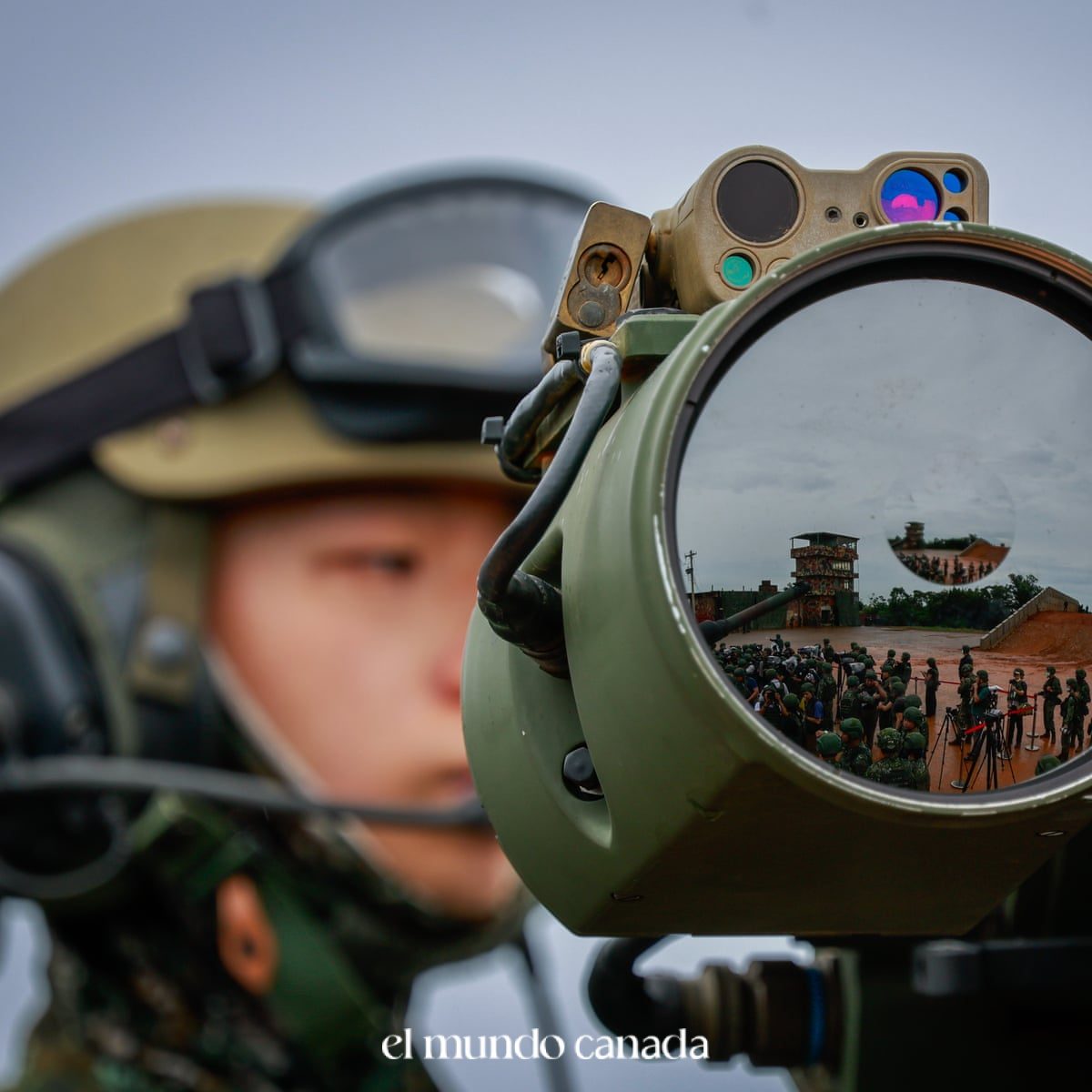
The contrast between Trump’s reported offer to sell weapons to China and the stalled $14 billion package for Taiwan could not be starker. Taiwanese soldiers used a variant of the US-made Abrams tanks during military drills in July 2025, demonstrating the importance of American military equipment to the island’s defense strategy.
For Canadians with ties to the Asia-Pacific region, these developments carry significant implications. Canada maintains important trade relationships with both China and Taiwan, and any destabilization in the Taiwan Strait would have ripple effects across the global economy. Canadian businesses and investors are watching these diplomatic developments closely.
Did Trump actually offer to sell weapons to China?
According to US Ambassador to China David Perdue, Trump did ask Xi Jinping if China would like to buy American weapons during the Washington meeting. However, the White House and State Department clarified that US law prohibits arms sales to China and there is no actual offer or plan to proceed with such sales.
What is the status of the Taiwan arms deal?
The $14 billion arms sales package for Taiwan has been pending for months. Trump described it as a “very good negotiating chip” in dealings with China during a May 2026 meeting with Xi in Beijing. The deal has not yet been approved.
Why does Taiwan need US weapons?
Under the Taiwan Relations Act, the United States is legally required to provide Taiwan with sufficient military equipment to defend itself. Beijing considers Taiwan a breakaway province and has not renounced the use of force to take the island, creating what Taiwanese officials describe as a “severe” military threat.
Does China actually need to import weapons?
China is a net exporter of weapons and has reduced its arms imports by 72% between 2021 and 2025 compared with the previous five years, according to the Stockholm International Peace Research Institute. China’s domestic military manufacturing capacity has advanced significantly.
📘 Follow El Mundo Canada on our social networks: Facebook | Twitter | Instagram
The situation remains fluid as Taiwan continues to press for approval of its $14 billion arms package. The next developments in this diplomatic saga will likely unfold as Trump’s administration responds to ongoing pressure from Congress and US allies regarding the stalled Taiwan weapons deal and the broader implications of the Xi Jinping summit.
