


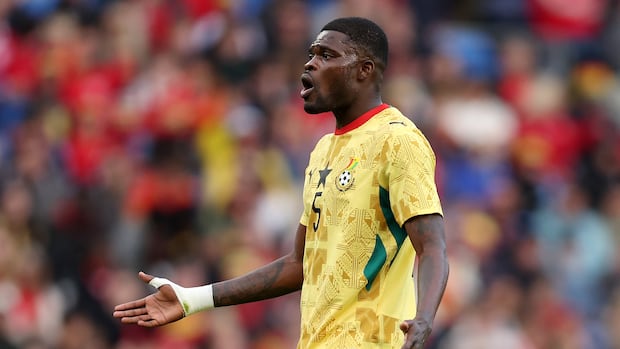
Ghana has escalated its legal battle against FIFA, bringing the Ghana Thomas Partey World Cup eligibility dispute directly to Canada’s Federal Court. The West African nation refuses to accept defeat after FIFA ruled that Arsenal midfielder Thomas Partey was ineligible to represent Ghana at the 2026 World Cup, hosted jointly by Canada, the United States, and Mexico.
This unprecedented move marks one of the most dramatic player eligibility conflicts in recent World Cup history. Ghana’s football federation argues that FIFA’s decision violated fundamental principles of fair play and proper procedure, setting the stage for a legal showdown that could reshape international football governance.
The Background of the Eligibility Dispute
How the Controversy Began
Thomas Partey, the 32-year-old Arsenal star, found himself at the center of an eligibility storm when questions arose about his qualification to represent Ghana at the upcoming 2026 FIFA World Cup. The Ghana Football Association (GFA) had included Partey in their squad, considering him essential to their tournament hopes.
FIFA’s Players’ Status Committee intervened and ruled against Partey’s eligibility. The governing body determined that certain procedural requirements had not been met regarding his international status. Ghana immediately appealed the decision but found no success through FIFA’s internal channels.
The GFA maintains that Partey completed all necessary documentation and followed established protocols. They argue that FIFA’s ruling came too late in the process and fundamentally undermined their World Cup preparations.
Why Ghana Chose Canadian Courts
Ghana’s decision to pursue legal action in Canada stems from the tournament’s co-hosting arrangement. With matches scheduled across North America, Canadian courts hold jurisdiction over matters related to the event’s conduct within their borders.
Legal experts suggest this strategy could prove effective. Canadian courts have previously demonstrated willingness to hear sports-related disputes involving international governing bodies. The Federal Court possesses authority to grant injunctions and remedies that could directly impact FIFA’s enforcement of its ruling.
Legal Arguments and Implications
Ghana’s Case Against FIFA
The Ghana Football Association has built its legal argument around several key points. First, they claim FIFA violated its own procedural guidelines when making the eligibility determination. Second, they argue the timing of the decision caused irreparable harm to their World Cup campaign.
Ghana’s lawyers assert that natural justice principles require FIFA to provide adequate notice and opportunity for response before issuing such significant rulings. They contend that the federation received insufficient time to address concerns raised by the Players’ Status Committee.
The case also raises questions about FIFA’s authority and the limits of its jurisdiction over player eligibility matters. Ghana seeks both a reversal of the ruling and damages for the disruption caused to their tournament preparations.
Potential Impact on International Football
This legal challenge could establish important precedents for future disputes between national federations and FIFA. If Ghana succeeds, other nations might pursue similar legal strategies when disagreeing with FIFA decisions.
Sports law specialists have noted that national courts increasingly assert jurisdiction over international sports governing bodies. This trend challenges the traditional autonomy that organizations like FIFA have enjoyed.
The Court of Arbitration for Sport (CAS) typically serves as the final arbiter for football disputes. Ghana’s decision to bypass CAS in favor of a national court represents a significant departure from established practice.
Thomas Partey’s Significance to Ghana
A Key Player for the Black Stars
Thomas Partey represents far more than just another squad member for Ghana’s national team. The defensive midfielder has established himself as one of Africa’s premier players during his career at Atletico Madrid and Arsenal.
His experience in top European competitions provides invaluable leadership for a Ghanaian side seeking to make an impact at the World Cup. Partey’s ability to control midfield tempo and break up opposition attacks makes him virtually irreplaceable in Ghana’s tactical setup.
What His Absence Would Mean
Without Partey, Ghana faces a significant tactical challenge. Coach Chris Hughton would need to completely restructure his midfield approach, potentially affecting the team’s entire playing philosophy.
The Black Stars qualified for the tournament with Partey as a central figure in their campaign. His potential absence raises questions about whether the team that qualified resembles the one that would actually compete.
The Road Ahead
Court Timeline and Expectations
The Federal Court has accepted Ghana’s application and scheduled preliminary hearings. Legal observers expect the process to move quickly given the tournament’s approaching start date.
Ghana has requested an expedited review, emphasizing the time-sensitive nature of their claim. The court must balance thorough consideration against the practical reality of the World Cup schedule.
Both FIFA and the Canadian organizing committee have been named as respondents. They must now prepare their defense while managing ongoing tournament preparations.
Possible Outcomes
Several scenarios could emerge from this legal battle. The court might grant an injunction allowing Partey to play while the full case proceeds. Alternatively, judges could rule they lack jurisdiction over FIFA’s internal decisions.
A complete victory for Ghana would force FIFA to reverse its eligibility ruling. This outcome would likely prompt the governing body to review its procedures for handling similar disputes.
Settlement remains possible if FIFA decides avoiding a potentially damaging legal precedent outweighs maintaining its original position.
Conclusion
Ghana’s Federal Court challenge against FIFA over Thomas Partey’s World Cup eligibility represents a watershed moment in international football governance. The case tests the boundaries of FIFA’s authority and could empower national federations to seek legal remedies outside traditional sports arbitration systems. As the 2026 World Cup approaches, football fans worldwide will watch this legal drama unfold, knowing its outcome could reshape how eligibility disputes are handled for generations.
