


What Are Oilsands Tailings Ponds?
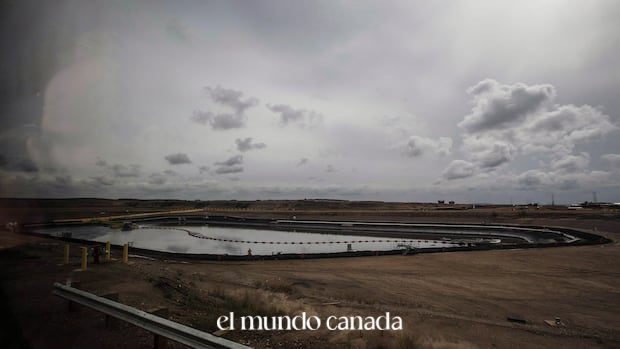
Tailings ponds are among the largest and most controversial pieces of industrial infrastructure in Canada. These artificial reservoirs, scattered across northern Alberta’s Athabasca oilsands region, store the leftover byproduct of bitumen extraction, and together they form one of the biggest environmental liabilities in the country’s energy sector.
In this article
Tailings ponds in northern Alberta cover approximately 1,400 square kilometers — an area larger than the city of Los Angeles.
When companies mine oilsands, they use hot water and chemicals to separate valuable bitumen from sand and clay. What’s left behind — a slurry of water, sand, clay, residual bitumen, and various chemical compounds — flows into vast containment areas rather than being safely disposed of. Decades of this process have produced a wastewater problem measured not in tanks or barrels, but in square kilometers.
How Bitumen Mining Creates Tailings
Oilsands bitumen doesn’t flow like conventional crude oil. Extracting it requires separating a sticky, viscous hydrocarbon from the sand and clay it’s naturally bound to, a process that uses enormous volumes of hot water and chemical solvents. The resulting slurry — often called fluid fine tailings — settles slowly, sometimes over decades, in ponds behind engineered dams.
The wastewater itself contains naphthenic acids, heavy metals, and residual hydrocarbons that can harm wildlife and, if they escape containment, contaminate groundwater. Birds that mistake tailings ponds for natural lakes and land on them often die from exposure to the toxic mixture, which is why oilsands operators deploy deterrent systems, including propane cannons and scarecrow-style devices, to keep waterfowl away.
The Scale of the Problem
The numbers involved are difficult to grasp. Alberta’s tailings ponds are estimated to hold more than 1.4 trillion litres of fluid tailings, spread across roughly 1,400 square kilometers of northern Alberta. No single technology has emerged as a definitive solution to processing that volume. Companies including Suncor, Syncrude, and Canadian Natural Resources have piloted approaches such as centrifugation, chemical treatment, and permanent aquatic storage, but the sheer scale of existing tailings means even successful technologies face massive scaling challenges.
The Rules That Govern Tailings Management
Alberta’s Tailings Management Framework requires oilsands operators to treat and reclaim tailings ponds within ten years of a mine’s closure. In practice, that means companies holding operating licences must post reclamation security deposits worth billions of dollars, funds meant to guarantee cleanup happens even if a company can’t or won’t pay for it later. Critics, including environmental groups and some Indigenous leaders, argue these financial guarantees may still prove insufficient to cover the full scope of remediation required, particularly as tailings volumes continue growing even at mines nearing the end of their operating life.
The Treated Water Question
One of the most contentious issues in tailings management is whether treated oilsands wastewater should eventually be released into the Athabasca River system. Industry representatives argue that properly treated water can be discharged safely, similar to how other industrial sectors release treated effluent under regulatory oversight. Environmental advocates and Indigenous leaders counter that current treatment technology may not adequately remove all harmful contaminants, and that any release framework needs rigorous, independently verified treatment standards before it proceeds. Any plan to permit discharge would also need to satisfy the federal Fisheries Act, adding another layer of regulatory scrutiny.
Indigenous Rights and the Peace-Athabasca Delta
First Nations downstream from oilsands operations, including the Athabasca Chipewyan First Nation and Mikisew Cree First Nation, hold treaty rights that require meaningful consultation on decisions affecting their traditional territories. These communities have long raised concerns about water quality and the cumulative impact of decades of industrial activity on the Peace-Athabasca Delta, a UNESCO World Heritage Site that sits downstream of the oilsands region. Health studies in communities like Fort Chipewyan have examined elevated cancer rates and changes in fish populations, though establishing direct causation between tailings and specific health outcomes remains scientifically complex. What’s not in dispute is that residents have reported real changes to the water quality and wildlife they’ve relied on for generations.
What Companies Are Doing About It
Industry has invested heavily in tailings reduction technology over the past decade, testing methods to speed up settling, extract more water for reuse, and convert fluid tailings into more stable, solid material that can eventually support reclaimed land. Industry representatives generally welcome clearer regulatory frameworks, arguing that unpredictable policy shifts make it harder to plan and finance the long-term investments tailings remediation requires.
Why It Matters Going Forward
Tailings ponds aren’t a temporary inconvenience of oilsands development — they’re a multi-generational environmental liability that will need to be managed long after individual mines stop producing bitumen. The scale of the ponds, the toxicity of their contents, and their proximity to a UNESCO World Heritage wetland make the issue one of the defining environmental questions facing Alberta’s energy sector. Whatever technical and regulatory solutions eventually emerge, they’ll need to satisfy an unusually wide set of stakeholders: oilsands operators managing enormous existing liabilities, Indigenous communities exercising treaty rights over the land and water, and a federal government responsible for enforcing fisheries and environmental protection law across a shared watershed.
