


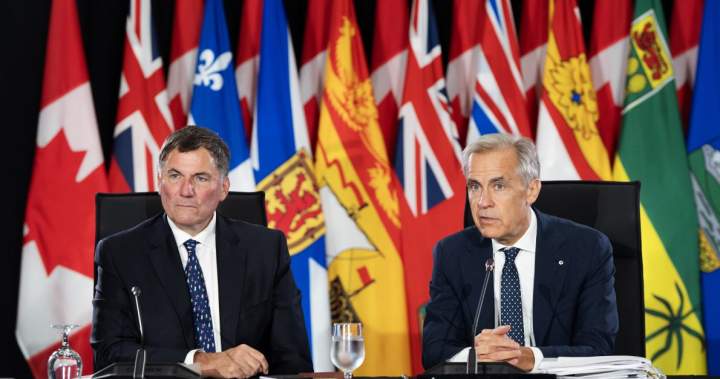
As the threat of 50 percent tariffs from U.S. President Donald Trump looms over Canada, provincial leaders and trade experts are actively debating the country’s options for leverage in ongoing trade negotiations. On July 24, 2026, the conversation intensified following a premiers’ meeting in Charlottetown, where strategies for protecting Canadian workers, families, and businesses took center stage.
For the Latin community in Canada, understanding these trade dynamics is essential. Many families work in industries directly affected by cross-border commerce, from manufacturing to agriculture. The outcome of this trade dispute could impact job security, consumer prices, and economic opportunities across the country.
What Options Does Canada Have in This Trade War?
Prime Minister Mark Carney emerged from the Charlottetown meeting with premiers stating that “everything is on the table” when it comes to responding to the American tariff threat. However, he declined to reveal specific retaliatory measures, suggesting that announcing strategies prematurely could be counterproductive to negotiations.
“We are united in direction and objective and purpose and seriousness about the response. We are going to support Canadian families, workers, businesses, full stop.” — Prime Minister Mark Carney
While the federal government maintains strategic ambiguity, several provincial leaders have been more vocal about potential countermeasures. Ontario Premier Doug Ford has advocated for “dollar for dollar” tariffs and renewed calls for restricting energy and potash exports to the United States. These products currently remain exempt from Trump’s executive orders, giving Canada potential leverage in the trade war.
Critical Minerals: Canada’s Trump Card?
One of the most significant areas where Canada holds trade leverage involves critical minerals. The United States, including Ambassador to Canada Pete Hoekstra, has expressed keen interest in securing access to Canadian mineral resources under any future economic agreement. This interest gives Canada a bargaining chip that could prove valuable in negotiations.
British Columbia Premier David Eby has suggested that any minerals deal should be contingent on the U.S. dropping its tariffs and ceasing attacks on Canadian interests. His position reflects a growing sentiment among provincial leaders that Canada should not offer concessions without receiving something substantial in return.
The strategy of using critical minerals as trade leverage is not without precedent. China successfully employed a similar approach, blocking exports of rare earth materials to the United States. Those restrictions were ultimately lifted in fall 2025 after President Trump agreed to reduce or suspend many tariffs on Beijing following negotiations with Chinese President Xi Jinping.
Can Canada Replicate China’s Success?
While the China model offers a potential blueprint, experts caution that Canada may not achieve the same results. Andreas Schotter, a professor of international business at Western University’s Ivy Business School, notes that China possesses significantly more trade leverage than Canada.
Key differences include:
- China controls a near-monopoly on rare earth materials and critical mineral processing
- Western nations, including Canada and the U.S., are still working to develop alternative supply chains
- G7 countries are scrambling to build resilient mineral supply networks for military hardware and semiconductors
- Canada is only beginning to expand development of its vast mineral resources
Despite these challenges, Canada is positioning itself as a key player in the global critical minerals supply chain. The country’s vast natural resources represent a long-term strategic asset that could gain importance as Western nations seek alternatives to Chinese-dominated supply networks.
What This Means for Canadian Families
For families across Canada, including the vibrant Latin community, the trade war carries real implications. Should the 50 percent tariffs take effect on August 19, 2026, consumers could face higher prices on imported goods, while workers in export-dependent industries might see reduced hours or job losses.
However, retaliatory measures also carry risks. Restricting energy exports or implementing counter-tariffs could escalate tensions further, potentially leading to prolonged economic uncertainty. Trade experts recommend that families:
- Stay informed about developments in the trade negotiations
- Consider how their employment might be affected by tariff changes
- Budget for potential price increases on consumer goods
- Support Canadian businesses and products when possible
The coming weeks will be critical as both nations navigate this complex trade dispute. Whether Canada can successfully leverage its natural resources and economic partnerships remains to be seen, but the united front displayed by premiers suggests a coordinated response is taking shape.
