


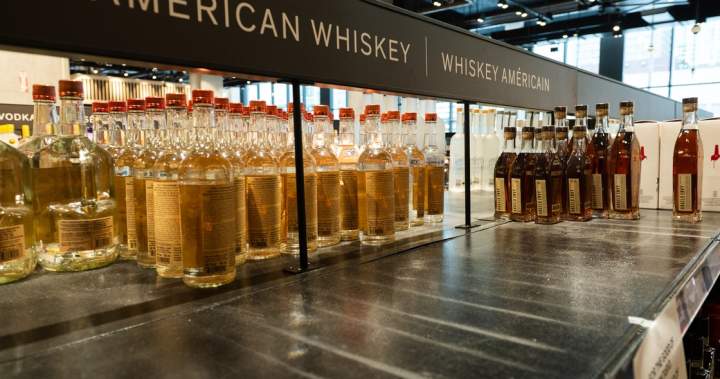
The ongoing trade dispute between Canada and the United States has reached a new boiling point following President Donald Trump’s announcement of 50 percent tariffs on the majority of Canadian goods. The decision, revealed on July 20, 2026, has triggered immediate reactions from both Canadian political leaders and American business groups, with the U.S. alcohol industry expressing particular concern about the potential consequences.
American Alcohol Industry Sounds the Alarm
The Distilled Spirits Council of the United States, a major industry body representing American liquor producers, has issued a stark warning about the implications of the new tariff measures. While acknowledging the Trump administration’s recognition of damages caused by Canadian provincial restrictions on U.S. alcohol products, the organization expressed disappointment at the escalatory approach.
“We had hoped, however, that this issue could be resolved without further escalation. Trump’s tariffs deepen trade tensions and raise the risk of further retaliation at a time when many U.S. hospitality businesses continue to face financial hardships.”
— Chris Swonger, President and CEO, Distilled Spirits Council of the United States
The industry group has called on policymakers from both nations to pursue diplomatic solutions that would restore market access for American spirits while avoiding additional harm to businesses already struggling in the hospitality sector.
Canada’s Response: All Options on the Table
Prime Minister Mark Carney addressed reporters in Ottawa on July 21, 2026, confirming that his government is examining every possible response should the tariffs take effect. The Prime Minister revealed he had spoken directly with President Trump about the latest threat, with both leaders agreeing to intensify ongoing discussions.
Carney emphasized that the decision by Canadian provinces to remove American alcohol from store shelves was made independently at the provincial level. These measures, he noted, came in response to earlier tariff implementations and what many Canadians viewed as threats to national sovereignty.
- Provincial governments independently decided to boycott U.S. alcohol products
- The measures have received strong support from citizens across provinces
- Consumer behavior has shifted, reflecting broader sentiment about trade relations
- Discussions with provincial premiers are ongoing to coordinate a national response
Provincial Leaders Take Firm Stance
British Columbia Premier David Eby delivered one of the most forceful responses to Trump’s tariff threat, making clear that his province would not back down under pressure. Speaking on July 21, 2026, Eby rejected any notion that American pressure tactics would succeed in changing Canadian provincial policies.
The Premier emphasized that Canada should avoid making decisions driven by fear or anxiety about potential American actions. His position reflects a growing consensus among some provincial leaders that maintaining firm boundaries is preferable to accepting unfavorable terms.
Not all provinces have taken identical approaches, however. Saskatchewan and Alberta have notably refrained from implementing prohibitions on the sale of American alcohol products, highlighting the varied responses across the country to the escalating trade tensions.
Understanding Trump’s Justifications
The Trump administration cited multiple reasons for the new tariff measures, signing three separate executive orders to implement them. Each order relied on a different justification for the 50 percent levy on Canadian imports:
- Provincial and territorial boycotts targeting American alcohol products
- Canadian retaliatory tariffs on U.S.-manufactured vehicles and automotive parts
- Quotas on American dairy imports under Canada’s supply management system
The administration characterized these Canadian measures as “discriminatory,” framing the new tariffs as a response to what it views as unfair trade practices by its northern neighbor.
What This Means for the Latin Community in Canada
For the Latin American community living in Canada, these trade developments carry significant implications. Many community members work in industries directly affected by cross-border trade, including manufacturing, agriculture, and hospitality. Higher tariffs could impact job security, consumer prices, and the overall economic environment.
Small business owners importing goods from the United States may face increased costs, while those working in export-oriented industries could see reduced demand for Canadian products in American markets. The hospitality sector, already mentioned as struggling by U.S. industry groups, employs significant numbers of Latin American workers on both sides of the border.
As both governments continue negotiations, residents are encouraged to stay informed about developments that could affect their livelihoods and communities. The coming weeks will be crucial in determining whether diplomatic solutions can be reached or whether the trade war will continue to escalate.
