


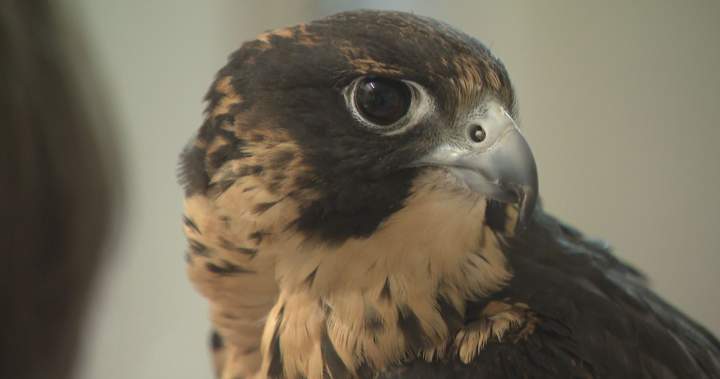
In the heart of Manitoba, a dedicated couple has transformed their lifelong passion into a mission of conservation and education. Robert and Nancy Wheeldon have devoted decades to protecting the peregrine falcon, one of nature’s most magnificent predators, while keeping alive the ancient tradition of falconry that dates back four millennia.
A Lifelong Bond with Birds of Prey
Robert Wheeldon’s connection with falcons began in childhood, blossoming into a full commitment that has defined his adult life. His first falcon came into his care in 1966, but his fascination with these remarkable birds started even earlier, around the age of five. This deep-rooted passion eventually led him and his wife Nancy to establish Parkland Mews Falconry & Bird of Prey Education Centre Inc., a facility that serves as both a conservation hub and an educational resource for the public.
The center focuses on three primary objectives: educating visitors about birds of prey, preserving the peregrine falcon species, and maintaining the traditional practice of falconry. This ancient hunting technique is built on the profound bond that develops between humans and these incredible birds.
“First and foremost, falconry is a hunting activity. It begins and ends in the field. It’s 4,000 years old and has a very, very rich history. They are very engaging. We have a relationship with them the same way people have a relationship with a dog and a horse. So they’re very unique.”
The Remarkable Peregrine Falcon
The peregrine falcon holds an extraordinary distinction in the animal kingdom. It is officially recognized as the fastest animal on the planet, capable of reaching speeds exceeding 320 kilometers per hour during its characteristic hunting dive. Beyond their incredible speed, these birds possess exceptional visual capabilities that allow them to see both long distances and close-up details with remarkable clarity.
The Wheeldons have developed a careful process for building trust with these wild creatures. The training begins with using food as an incentive to help the birds become comfortable with human presence. The falcons are gradually introduced to domestic environments, including sitting on perches while the family watches television, allowing them to acclimate to various surroundings and stimuli.
Nancy Wheeldon describes the experience as consistently rewarding despite the challenges each individual bird presents:
- Each falcon possesses its own distinct personality
- Some days prove more productive than others in training
- Building trust with a wild bird creates an unparalleled bond
- The relationship requires patience and consistent dedication
Conservation Challenges and the Role of Bio-Indicators
While peregrine falcons have been removed from the federal endangered species list, they remain classified as endangered within Manitoba. The Wheeldons emphasize that numerous threats continue to challenge the species’ survival and recovery in the region.
Current threats to peregrine falcon populations include:
- Climate change affecting habitats and prey availability
- Avian influenza outbreaks
- West Nile virus
- Pesticide contamination in the food chain
Robert Wheeldon explains that peregrine falcons serve as what scientists call a “bio-indicator species,” meaning their health and population numbers provide crucial information about the overall condition of the environment. As apex predators sitting at the top of the food chain, their decline signals problems affecting multiple species lower in the ecosystem.
Parkland Mews: A Conservation Lifeboat
When conservation experts developed the recovery plan for peregrine falcons over three decades ago, the path forward seemed relatively straightforward. However, the intervening years have brought new challenges through climate change and other environmental issues that have expanded the role of facilities like Parkland Mews.
The Wheeldons now describe their center as a “lifeboat” for the species, maintaining healthy populations while society works to address broader environmental concerns. Their work includes hatching and raising peregrine falcons at the facility, with birds either being trained in the art of falconry or released into the wild to support population recovery efforts in Manitoba and other Canadian provinces.
The facility has also incorporated modern technology into their conservation efforts, using tracking devices to monitor released birds and document their migration patterns and distances traveled. This data contributes valuable information to ongoing research about falcon behavior and survival rates in the wild.
For the Wheeldons, this work represents more than a hobby or even a profession—it embodies their commitment to environmental stewardship. Nancy Wheeldon describes their efforts as a “labour of love,” driven by a recognition of the critical need for responsible guardianship of wildlife and natural habitats. Their mandate centers on good stewardship, ensuring that future generations will continue to witness the spectacular sight of peregrine falcons soaring through Manitoba’s skies.
