


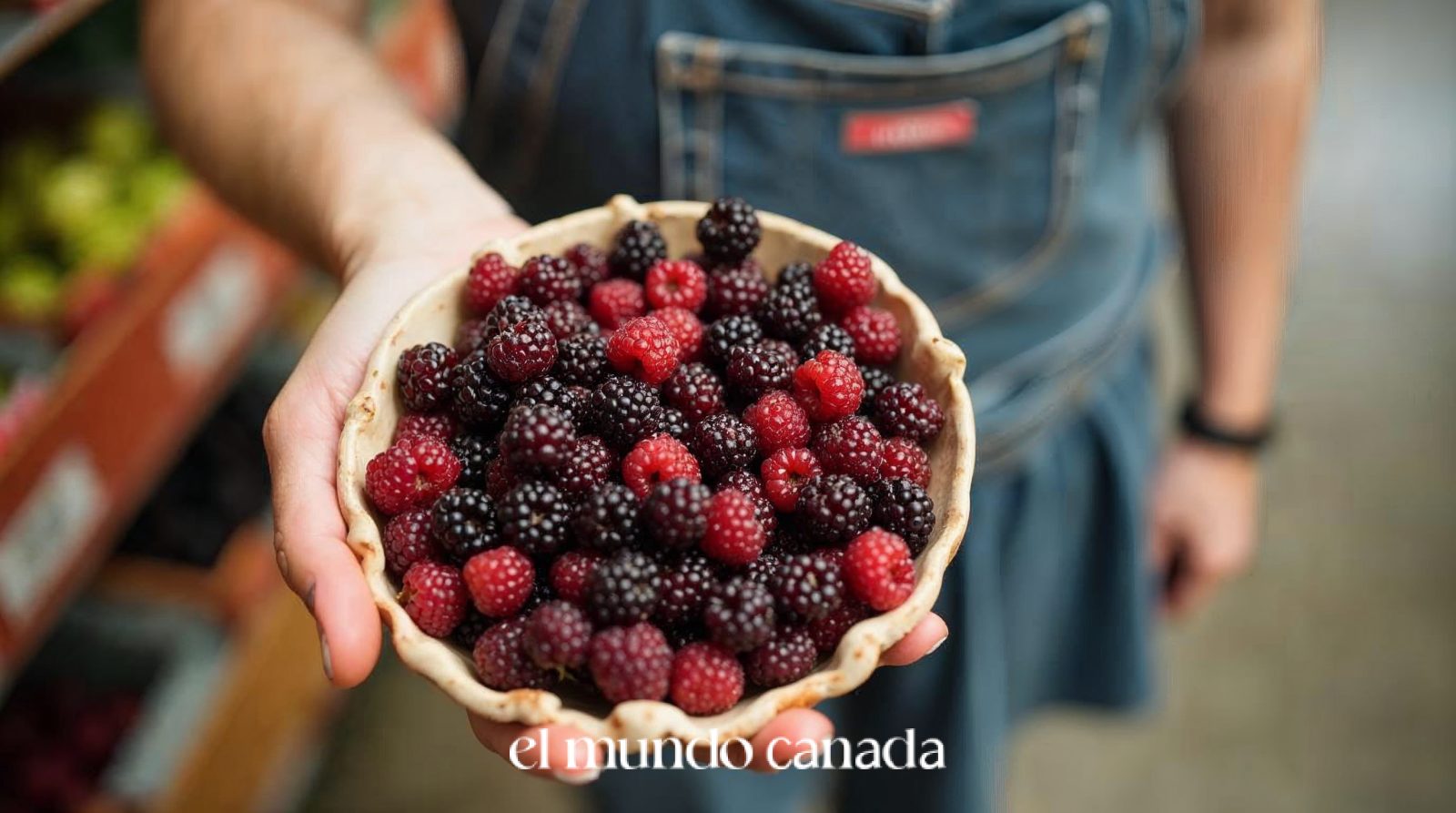
A Milton, Ontario resident has brought renewed attention to a troubling practice affecting Canadian grocery shoppers: products from the United States being falsely labeled as Canadian-made. Joanne Irvine discovered blackberries priced at $3.84 at her local Walmart with shelf tags claiming they were a “Product of Canada” — but the actual packaging clearly stated “Product of USA.”
This incident highlights a growing concern known as “maple washing,” where grocery stores mislead consumers through signs and imagery suggesting products are Canadian when they are not. With the ongoing trade war between Canada and the United States, many shoppers are making deliberate efforts to support domestic products, making accurate labeling more important than ever for the Latin community in Canada and all residents.
Ontario Shopper Makes Troubling Discovery at Walmart | ElMundoCanada
Joanne Irvine has always been careful about checking labels and prioritizing Canadian products in her shopping cart. During a recent trip to Walmart, she spotted what appeared to be a great deal: blackberries at $3.84 with a shelf tag proudly displaying “Product of Canada.”
However, upon closer inspection of the actual berry packaging, Irvine noticed a significant discrepancy. The container itself clearly indicated the blackberries were a “Product of USA.” This contradiction between the store signage and the product label prompted her to take immediate action.
“I saw blackberries for sale at $3.84. I thought, ‘Not a bad price and a product of Canada.’ That’s great.”
Irvine immediately approached the store’s produce manager to voice her concerns about the misleading signage. She emphasized that such labeling practices are fundamentally deceptive and unfair to consumers trying to make informed purchasing decisions.
What Is ‘Maple Washing’ and Why Should You Care?
While some labeling errors may be genuine mistakes, consumer advocates warn that many cases represent a deliberate practice called “maple washing.” This term describes situations where grocery retailers use signs, displays, and imagery to create the impression that products are Canadian when they actually originate from other countries.
The Consumers Council of Canada (CCC) has been receiving an increasing number of complaints about this practice from frustrated shoppers across the country. The organization argues that Canadian consumers should not need to conduct their own investigations to determine where their food comes from.
“Canadian consumers believe they have a right to be informed about what they are buying.”
For members of the Latin community in Canada who may be navigating Canadian grocery shopping customs, understanding maple washing is essential. Many newcomers actively seek Canadian products to support their new home country, and misleading labels undermine this effort.
A Pattern of Mislabeled Products Across Canada
The blackberry incident in Milton is far from an isolated case. CTV News has documented multiple similar instances of product mislabeling at Canadian grocery stores, revealing a troubling pattern that affects various produce items.
In one reported case, green beans were displayed with signage indicating they were a “Product of Canada,” yet the packaging clearly stated the beans came from Guatemala. Another investigation found red onions being sold as Canadian products when the bags actually indicated they were imported from Egypt.
“Canadians should not have to research where their food comes from. It’s up to the stores to correctly label the food and its sources.”
These documented cases demonstrate that maple washing extends beyond a single retailer or product category. Shoppers purchasing everything from berries to vegetables may encounter misleading country-of-origin information at the point of sale.
Walmart Responds to Labeling Concerns
Following the blackberry mislabeling incident, Walmart issued a statement to CTV News addressing the situation. The retail giant acknowledged the importance of accurate product origin information to its customer base.
Walmart stated that the company takes pride in offering domestically made and grown products in its stores, recognizing that Canadian products matter to shoppers. The retailer also emphasized its commitment to ensuring that country-of-origin details are accurate on store signage.
When errors are identified, Walmart claims to work quickly to correct them. The company advised customers that the most reliable product information, including country of origin, can be found directly on the product packaging rather than shelf tags.
This response places some responsibility back on consumers to verify packaging labels rather than trusting store displays. For busy shoppers, this adds an extra step to their grocery shopping experience.
How to Protect Yourself From Maple Washing
Understanding how to identify and report maple washing can help protect you and other Canadian consumers from misleading labeling practices. Here are essential steps every shopper should know:
- Always check the product packaging — not just the shelf tag — for country-of-origin information
- Compare shelf signage with the actual product label before purchasing
- Document discrepancies with photos of both the shelf tag and product packaging
- Report incidents to the Canadian Food Inspection Agency (CFIA)
- Keep your receipt as proof of purchase when filing complaints
If you discover a mislabeled product, you can contact the Canadian Food Inspection Agency to file a formal complaint. The agency may request photos, receipts, and other documentation to investigate your case thoroughly.
For Latin community members in Canada who want to support local producers and understand economic trends, staying informed about practices like maple washing is valuable. Similar to how US economic indicators affect cross-border trade, consumer awareness can influence how retailers approach product labeling.
Read more: Consumer Protection Rights in Canada
Joanne Irvine has vowed to remain vigilant in her grocery shopping habits moving forward, scrutinizing labels even more carefully than before.
“I just thought it’s not right. And how many other products are they doing this to?”
Her question resonates with many Canadian consumers who now wonder about the accuracy of product labeling throughout their local stores.
What is maple washing?
Maple washing is when grocery stores mislead consumers with signs and images that make products appear to be Canadian when they actually come from other countries. This can include shelf tags stating “Product of Canada” when the actual product packaging indicates a different country of origin.
How can I verify if a product is truly Canadian?
Always check the actual product packaging rather than relying solely on store shelf tags. The most accurate country-of-origin information appears on the product label itself. Compare this with any store signage to identify discrepancies.
Where can I report mislabeled products in Canada?
You can report mislabeled products to the Canadian Food Inspection Agency (CFIA). Be prepared to submit photos of both the shelf tag and product packaging, along with your receipt and other relevant information for investigation.
Why does product labeling matter during the trade war?
Many Canadian consumers are actively choosing to buy domestic products during the trade war with the United States. Misleading labels undermine their ability to make informed purchasing decisions and support Canadian producers.
📘 Follow El Mundo Canada on our social networks: Facebook | Twitter | Instagram
As Canadian consumers continue to navigate the complexities of grocery shopping during the trade war, incidents like the Milton blackberry case serve as important reminders to stay vigilant. Shoppers who encounter suspected maple washing can file complaints with the Canadian Food Inspection Agency, which investigates such cases on an ongoing basis throughout 2026.
🔵 Follow El Mundo Canada on social media for the latest updates affecting our community:
