


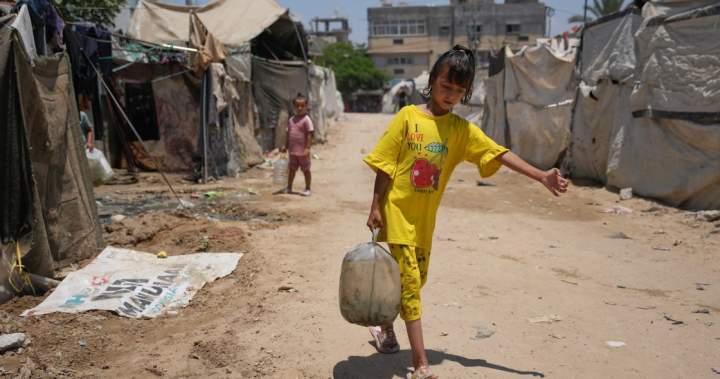
A senior United Nations official has raised serious concerns about the effectiveness of Canadian humanitarian assistance in the Gaza Strip, stating that Israeli military actions and stringent restrictions are significantly undermining relief efforts. Jonathan Veitch, who leads UNICEF operations for the Palestinian territories, delivered this sobering assessment during a visit to Ottawa in late July 2026, highlighting the dire conditions facing Palestinian families despite international aid efforts.
Canadian Aid Efforts Face Major Obstacles in Gaza
According to Veitch, Canada’s support for Palestinians has been commendable, but the reality on the ground tells a troubling story. Israeli attacks on critical water infrastructure, including the destruction of the Canada Well, have rendered much of the Canadian aid investment ineffective. The UNICEF official emphasized that those hired to deliver water services have also faced attacks, making survival increasingly difficult for displaced families.
“On the ground, the situation is pretty horrific. All we’re asking for is the basic humanitarian needs to be met through a recovery process and fixing some of these systems,” Veitch stated in an exclusive interview with The Canadian Press.
The timing of these revelations is particularly significant for Canadians of Latin American descent who maintain strong connections to humanitarian causes and international solidarity movements. Many community organizations across Canada have been actively involved in fundraising and advocacy efforts for Palestinian relief, making these findings especially relevant to their ongoing work.
Living Conditions Deteriorate Despite Ceasefire Agreement
Veitch spent five days in the Gaza Strip during early July 2026, just before traveling to Ottawa to share his observations. Despite a ceasefire agreement that took effect in October 2025, the humanitarian situation has shown little improvement. UNICEF reports that at least 200 children have been killed by ongoing hostilities since the ceasefire began, averaging approximately one child per day.
The 2.1 million residents of Gaza now find themselves confined to just 30 percent of the territory as the Israeli military has expanded its control since the ceasefire. This concentration of population has created catastrophic living conditions that Canadian aid workers and donors need to understand:
- Families are living in makeshift tents surrounded by massive accumulations of waste
- Nighttime temperatures have consistently remained above 25 degrees Celsius
- Rat populations have exploded into the millions, entering tents at night and biting sleeping children
- Skin infections and insect-borne diseases have become widespread
- Medical facilities lack essential antibiotics and testing reagents
Restrictions on Aid Supplies Create Additional Barriers
The Canadian aid effort in Gaza faces another significant challenge: Israel’s strict control over what materials can enter the territory. While tarps, plastic sheets, and basic survival supplies are permitted, generators, cement, and other reconstruction materials remain banned. Veitch explained that restoring water infrastructure requires navigating an extremely demanding approval process.
Israel requires extensive documentation for any imported materials, including exact specifications and photographs. This system, designed to prevent what the Israeli military calls “dual-use” items from reaching Hamas, has been criticized by humanitarian organizations as overly broad and obstructive to legitimate relief work.
Impact on Aid Organizations
International aid organizations, including those supported by Canadian donations, face additional hurdles. Israel has requested extensive personal data and sensitive information about staff and contractors working in Gaza. Organizations that fail to comply with these reporting requirements have been barred from operating in the territory, further limiting the reach of Canadian humanitarian assistance.
What This Means for Canadian Donors and Advocates
For members of Canada’s Latin community who have contributed to Palestinian relief efforts, these findings raise important questions about aid effectiveness. Understanding these challenges can help inform decisions about which organizations to support and how to advocate for policy changes that could improve humanitarian access.
UNICEF, as the UN’s child-protection agency, typically focuses on education, healthcare, and nutrition services. However, the organization has been forced to expand its mandate to include water, sanitation, and hygiene services due to the infrastructure collapse in Gaza. This shift demonstrates the severity of the crisis and the adaptability required of humanitarian agencies operating under such constraints.
The ongoing conflict, combined with reduced media attention due to the United States’ involvement with Iran and Israel’s operations in Lebanon, means that sustained advocacy from concerned Canadians remains crucial. Community organizations, religious groups, and individual citizens can play an important role in keeping these humanitarian concerns in the public discourse and pushing for diplomatic solutions that prioritize civilian welfare.
