


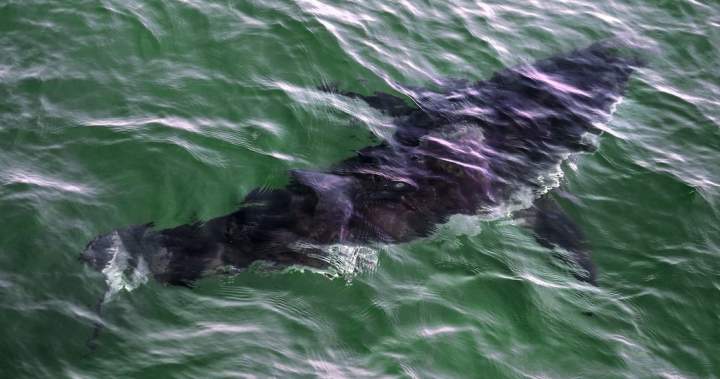
A massive great white shark washed ashore on a beach near Pictou, Nova Scotia, leaving marine researchers scrambling to determine what caused the death of this apex predator. The discovery of the 580-kilogram male shark on July 25, 2026, has sparked both scientific curiosity and community interest across Canada’s Atlantic coast.
The Marine Animal Response Society confirmed that the great white shark body was discovered on a local beach, prompting an immediate response from researchers who spent the following weekend conducting a thorough necropsy. For residents of Nova Scotia and the broader Latin community along Canada’s eastern shores, this unusual event offers a rare glimpse into the marine life that inhabits these northern waters.
Investigation Underway: No Clear Cause of Death Identified
Dr. Laura Bourque of the Canadian Wildlife Health Co-operative in Prince Edward Island led the examination of the deceased great white shark. Despite conducting extensive procedures over the weekend, the research team has not yet identified an obvious cause of death.
“No obvious cause of death was identified and additional testing is needed,” stated Dr. Laura Bourque of the Canadian Wildlife Health Co-operative regarding the great white shark found near Pictou.
The necropsy involved careful documentation of the shark’s physical condition, collection of tissue samples, and examination of internal organs. Scientists will now conduct laboratory analyses that could take several weeks to complete. These tests may reveal whether disease, environmental factors, or other circumstances contributed to the death of this great white shark specimen.
Great White Shark Recovery: A Conservation Success Story
The presence of great white sharks in Canadian waters actually represents a positive development for marine conservation efforts. Experts note that dedicated conservation measures have helped the great white shark population recover significantly from a dramatic decline experienced during the 1970s and 1980s.
Several factors have contributed to the increased presence of these magnificent predators in northern Atlantic waters:
- Strict fishing regulations protecting shark populations
- International conservation agreements limiting shark hunting
- Recovery of seal populations, which serve as primary prey
- Climate change causing warmer ocean temperatures
- Expanded marine protected areas along the Atlantic coast
The warming of ocean waters due to climate change has made it easier for certain marine species to expand their range northward. This means that sightings of great white sharks and other species previously uncommon in Canadian waters may become more frequent in coming years.
What This Means for Beachgoers and the Latin Community
For members of the Latin community who enjoy Canada’s beautiful Atlantic beaches during summer months, understanding shark behavior and safety is increasingly relevant. While the discovery of a dead great white shark might seem alarming, historical data provides reassuring context about actual risks.
According to the St. Lawrence Shark Observatory, shark attacks in Canadian waters are exceptionally rare. Key statistics worth noting include:
- The last shark-related fatality in Canadian waters occurred in July 1953
- That incident involved a shark ramming a lobster boat, causing it to capsize
- The fisherman who died actually drowned and was not bitten
- Only 30 shark incidents have been recorded since 1691
- Just four other fatality reports are considered plausible
- 24 recorded incidents resulted in no injuries whatsoever
These numbers demonstrate that while great white sharks do inhabit Canadian waters, encounters with humans remain extremely uncommon. Beachgoers can continue enjoying Nova Scotia’s stunning coastlines with appropriate awareness but without undue fear.
Nova Scotia’s Marine Wildlife: A Growing Attraction
The presence of great white sharks highlights Nova Scotia’s rich marine ecosystem, which increasingly attracts eco-tourists and wildlife enthusiasts. For Latin Canadian families looking for summer adventures, the province offers numerous opportunities to learn about ocean life safely from shore or through organized excursions.
Local marine research organizations often provide educational programs where community members can learn about shark conservation, whale watching, and the diverse species that call Atlantic Canada home. These experiences offer meaningful ways to connect with nature while supporting scientific research efforts.
As researchers continue investigating this great white shark death near Pictou, the scientific community hopes the findings will contribute valuable data about shark health and the changing marine environment. The mystery surrounding this particular shark’s demise underscores how much remains to be learned about these ancient predators that have roamed Earth’s oceans for millions of years.
Updates on the investigation are expected once laboratory testing is completed. In the meantime, this event serves as a powerful reminder of the incredible wildlife that shares Canada’s coastal waters and the importance of ongoing conservation efforts to protect these remarkable creatures for future generations.
