


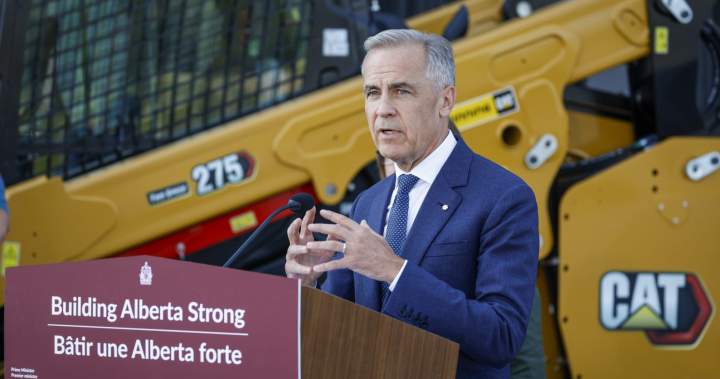
Prime Minister Mark Carney declined to reveal whether Canada would leverage its valuable energy sector as a bargaining tool in ongoing trade negotiations with the United States. The question came during a press conference on July 29, 2026, in Red Deer, Alberta, where Carney appeared alongside Premier Danielle Smith for a housing announcement.
With 50 percent tariffs on select Canadian imports scheduled to take effect on August 19, 2026, the pressure on the Canadian government to find solutions continues to mount. For the Latin community in Canada, many of whom work in industries directly affected by these trade tensions, understanding the implications of these negotiations is crucial for planning their economic futures.
What Prime Minister Carney Said About Trade Strategy
When pressed by reporters for a direct answer about using Canadian energy as a negotiating chip, the Prime Minister remained characteristically diplomatic but evasive. He emphasized that Canada is actively engaged in finding a solution that benefits both nations while protecting Canadian interests.
“We’re engaged in those negotiations to find a mutually beneficial solution. We’re only going to accept a solution that works for Canadians. We have lots of options of what we would do if that’s not there. But I’m not going to be drawn on what we’re going to do.”
Carney’s refusal to speculate on specific measures reflects a calculated approach to high-stakes US trade negotiations. By keeping options open, the government maintains leverage while avoiding commitments that could weaken Canada’s position at the bargaining table. This strategic ambiguity, however, leaves many Canadians uncertain about what lies ahead.
The August Tariff Deadline and Its Impact
The White House announced that the 50 percent tariffs would be implemented on August 19, 2026, citing what it called “retaliatory and discriminatory measures” that Canada has imposed against American interests. Several key industries face significant disruption, which could ripple through the Canadian economy and affect employment across multiple sectors.
Industries Facing Tariff Impacts
- Automotive sector: A major employer in Ontario and Quebec, where many Latin American immigrants have found stable manufacturing jobs
- Dairy industry: Canadian dairy products could face steep barriers to US market access
- Alcoholic beverages: Canadian breweries and distilleries may see reduced exports
- Related supply chains: Thousands of jobs in logistics, packaging, and distribution
For the Latin community in Canada, particularly those working in manufacturing hubs in Southern Ontario, these trade tensions represent more than abstract policy discussions. They could directly affect household incomes and job security in the coming months.
Canada’s International Trade Position
Despite the tensions with the United States, Prime Minister Carney highlighted Canada’s strong position in the global marketplace. His statement that “everybody wants to do more with Canada, except the United States” underscores a diplomatic strategy focused on diversifying trade partnerships while managing the crucial American relationship.
On July 21, 2026, Carney revealed that he and US President Donald Trump had “agreed to intensify discussions” regarding the trade dispute. This high-level engagement suggests both nations recognize the economic stakes involved in these US trade negotiations and the potential damage an extended trade war could cause.
What This Means for Canadian Workers
The uncertainty surrounding these trade discussions creates challenges for workers and businesses trying to plan for the future. Here are key considerations for those in affected industries:
- Monitor announcements from both governments as the August 19 deadline approaches
- Consider whether your employer has contingency plans for tariff impacts
- Stay informed about potential government support programs for affected workers
- Explore skills training opportunities that could provide flexibility in a changing job market
- Connect with community organizations that offer employment resources
The Energy Sector Question
Canada’s energy resources represent significant leverage in any trade negotiation with the United States. American refineries, particularly in the Midwest, depend heavily on Canadian crude oil, while Canadian natural gas exports play a crucial role in US energy supply chains. The question of whether to use this dependency as a bargaining chip touches on fundamental questions about the Canada-US relationship.
Carney’s non-answer regarding the energy sector suggests the government is keeping all options on the table. Environmental advocates might oppose using fossil fuel exports as leverage, while Alberta’s leadership has long argued that energy should be a tool for asserting Canadian interests. The political calculations involved make this one of the most sensitive aspects of the current trade negotiations.
As the August deadline approaches, Canadians from all backgrounds will be watching closely to see how these discussions unfold. For the Latin community, staying informed about these developments is essential for making sound decisions about employment, investment, and family planning in an uncertain economic environment. The coming weeks will reveal whether Canada and the United States can find the “mutually beneficial solution” that Prime Minister Carney seeks.
