


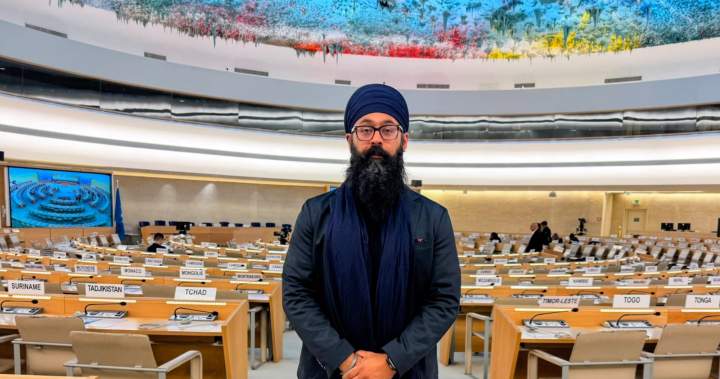
Five UN special rapporteurs have formally expressed serious concerns to the Canadian government regarding alleged threats against Moninder Singh, a British Columbia-based Sikh activist who has been repeatedly warned by police about credible murder plots. The letter, released by the UN Human Rights Office on August 3, 2026, urges Ottawa to accelerate investigations and take all feasible measures to protect Singh and his family from what experts describe as part of a broader pattern of transnational repression by Indian authorities.
The nine-page document raises alarming allegations that Singh may have been targeted directly before or after instances of cooperation with United Nations entities. This case highlights growing international attention on the safety of activists within Canada’s borders and the complex diplomatic tensions between Canada and India.
What the UN Letter Reveals About Threats to Singh
The joint communication, signed by rapporteurs Ben Saul, Gina Romero, Andrea Bolanos Vargas, George Katrougalos, and Nazila Ghanea, outlines concerning allegations of foreign intimidation and reprisals against Singh, a Canadian national. The experts noted that some of the plots to kill him detected by Canadian police coincided with his appearances before UN agencies.
“We are deeply concerned at the allegations that Mr. Moninder Singh appears to have been targeted directly before or after instances of cooperation with or reporting to United Nations entities in relation to the targeting of Sikh activists by Indian authorities.”
The rapporteurs emphasized that if these allegations prove true, they may constitute unlawful intimidation and reprisals in direct retaliation for Singh’s human rights advocacy and cooperation with UN mechanisms. The letter asks Canada to answer specific questions about how authorities are handling the matter.
Timeline of Threats Against the Sikh Activist
Canadian police have issued warnings to Moninder Singh on four separate occasions about credible threats to his life:
- July 2022: First warning issued on the same day police alerted his close friend Hardeep Singh Nijjar about similar threats
- August 2023: Second warning delivered shortly after Singh appeared at the UN Human Rights Council
- March 2025: Third warning following another UN appearance
- February 2026: Fourth warning issued just two days before he was scheduled to appear before the UN, this time including threats against his family
The pattern suggests a troubling connection between Singh’s international advocacy work and the timing of alleged plots against him. Singh serves as leader of the Sikh Federation of Canada and is an outspoken critic of human rights conditions in India, as well as a supporter of the Khalistan separatist movement.
The Broader Context of Transnational Repression
The UN experts expressed concern that these threats fall within a broader pattern of transnational repression by Indian authorities against Sikh activists in different countries, including Canada. This concern is heightened by the assassination of Hardeep Singh Nijjar, who was killed on June 18, 2023, as he was leaving the Surrey temple where he served as president. Canadian authorities suspect India was responsible for his death.
Additionally, the FBI disrupted a plot by a member of India’s intelligence service to kill another Canadian pro-Khalistan activist, Gurpatwant Singh Pannun. These incidents have created significant diplomatic friction between India and Western nations with large Sikh populations.
Canada’s Response and Ongoing Concerns
While acknowledging that law enforcement and intelligence operations may require secrecy, the UN experts expressed concern that Canadian authorities have taken no known further protective and monitoring measures to ensure the safety of Singh and his family since February 2026. They stressed the necessity of continuing vigilance.
The rapporteurs welcomed the steps Ottawa has taken to warn Singh about credible threats but urged more comprehensive action. Global Affairs Canada referred questions about the letter to Public Safety Canada, which had not responded as of the document’s release.
While UN special rapporteurs are not UN officials, they carry out mandates assigned by the organization and report on human rights issues worldwide, giving their concerns significant international weight.
What This Means for the Latin Community in Canada
For Latin Americans living in Canada, this case underscores important issues about safety, advocacy rights, and Canada’s commitment to protecting all residents from foreign interference. The situation raises questions about how Canada balances diplomatic relationships with its obligations to protect individuals within its borders.
Understanding these dynamics is particularly relevant for immigrant communities who may maintain connections to their home countries while engaging in political or advocacy work in Canada. The case serves as a reminder of both the protections Canada offers and the challenges that can arise when international politics intersect with domestic safety concerns.
