


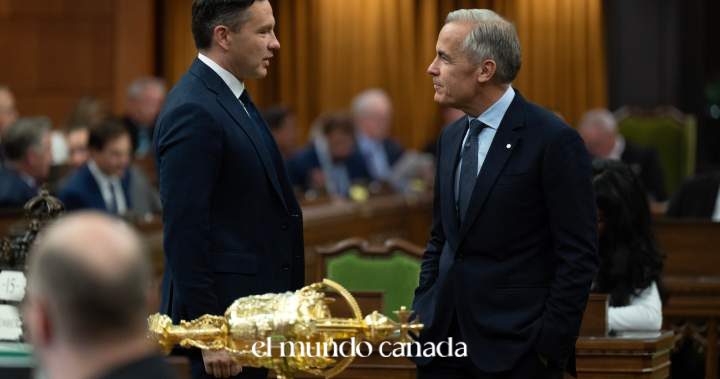
Conservative Leader Pierre Poilievre has issued a direct challenge to Prime Minister Mark Carney, demanding an end to what he describes as repeated concessions in ongoing Canada-U.S. trade negotiations. With sweeping 50 per cent tariffs set to take effect on August 19, 2026, the political pressure on Ottawa continues to mount as both parties stake out dramatically different positions on how Canada should approach the critical talks.
The letter, co-signed by Shuvaloy Majumdar, the Conservative critic for Canada-U.S. relations, arrived on August 9, 2026, just ten days before the tariff deadline. The Conservatives argue that the current government has given up too much ground without securing anything meaningful in return for Canadian workers and industries.
Conservative Criticism of Carney’s Approach
In their strongly worded letter, Poilievre and Majumdar accused the Carney government of a pattern of retreat in negotiations with the United States. They specifically pointed to several decisions they view as unnecessary concessions to American demands.
The Conservative leaders cited the removal of the digital services tax as one example of backing down. They also referenced the decision to drop retaliatory tariffs on most U.S. products under CUSMA, the Canada-United States-Mexico Agreement that governs North American trade.
Additionally, the letter mentioned the revenue-sharing agreement on the Gordie Howe bridge as another instance where Canada allegedly gave ground without receiving equivalent benefits. The Conservatives framed these moves as part of a troubling pattern spanning approximately eighteen months.
“For the past year and a half, you have backed down to one American demand after another while getting nothing in return, with concession after concession,” Poilievre and Majumdar wrote.
Trump Tariff Deadline Looms Large
The urgency of the Conservative intervention stems from President Donald Trump’s announcement of sweeping tariffs scheduled to take effect on August 19, 2026. These 50 per cent tariffs represent a significant escalation in trade tensions between the two neighboring nations.
Trump signed three executive orders last month, each providing different justifications for the new tariff measures. The first cited the provincial and territorial boycotts on American alcohol products that have spread across Canada.
The second executive order targeted Canada’s retaliatory tariffs on U.S.-made vehicles and auto parts, which were implemented as a response to earlier American trade actions. The third addressed quotas on American dairy imports under Canada’s supply management system.
Prime Minister Carney acknowledged the challenging timeline earlier in the week of August 9, 2026, stating that Ottawa was seeking a “win-win deal” covering critical sectors. However, he cautioned that success by the deadline remained uncertain.
Key Sectors at Stake in Negotiations
The trade negotiations involve several industries that employ thousands of Canadians and contribute significantly to the national economy. Prime Minister Carney has identified steel, aluminum, forestry, and automobile sectors as priorities in the discussions.
For the Latin community in Canada, many of whom work in manufacturing and resource industries, the outcome of these negotiations could directly impact job security and economic opportunities. The automobile sector alone represents a major employer in Ontario, where many Latin American immigrants have established their careers.
The Conservatives outlined their vision of what a successful deal should include:
- Zero tariffs on softwood lumber exports
- An end to duties on steel and aluminum exports
- A tariff-free auto pact with the United States
- Full exemption from “Buy America” rules on infrastructure projects at all levels of government
These demands represent an ambitious agenda that would require significant movement from American negotiators.
Supply Management Remains Untouchable
One of the most contentious issues in the trade talks involves Canada’s supply management system, which protects domestic dairy farmers through quotas and price controls. This system has long been a target of American trade negotiators seeking greater access to the Canadian market.
Canada’s dairy farmers have issued warnings to the federal government against making any concessions involving their sector. The industry benefits from significant protection under the current system, and any changes could fundamentally alter the economics of dairy farming in Canada.
Prime Minister Carney has attempted to reassure the agricultural sector, stating as recently as August 7, 2026, that his government remains “loyal” to the supply management system. This commitment suggests that dairy will remain a red line in negotiations.
For consumers, including the Latin community who often rely on dairy products as staples in their cuisine, any changes to supply management could affect prices and availability at grocery stores across the country.
Provincial Premiers Take Firm Stand
The federal government is not alone in facing pressure regarding trade negotiations. Several provincial premiers have also staked out strong positions, particularly regarding American alcohol bans and retaliatory measures.
Some premiers have called for aggressive responses to American trade actions, including dollar-for-dollar tariffs and threats to withhold energy and critical mineral exports. These resources represent significant leverage for Canada in any negotiations.
The provincial alcohol bans on American products have become a flashpoint in the trade dispute. Trump’s executive orders specifically cited these bans as justification for tariff action, elevating what began as provincial protest measures into a national trade issue.
Prime Minister Carney told premiers last month that retaliation remained a possibility but declined to specify exactly what the “full range” of options are. This ambiguity has frustrated some provincial leaders who want a more aggressive posture.
CUSMA’s Future Remains Uncertain
The broader framework of North American trade also hangs in the balance. Last month, both Canada and Mexico indicated they wanted to see CUSMA extended for another 16-year term, providing long-term stability for businesses operating across the continent.
However, the United States opted for a different approach, choosing to let the agreement move to rolling annual reviews. This decision creates ongoing uncertainty for companies that depend on predictable trade rules for investment planning.
The shift to annual reviews means that trade relationships could potentially be renegotiated or challenged more frequently, adding risk for businesses on both sides of the border.
Conservative Strategic Proposal
Beyond criticizing the current approach, the Conservatives reiterated their proposal to strengthen Canada’s negotiating position through the creation of a strategic reserve of critical minerals. This reserve would be made available to countries that provide tariff-free access to Canadian goods.
Canada possesses significant deposits of minerals essential for modern technology and clean energy production. The Conservatives argue that leveraging these resources could provide important negotiating currency in trade discussions.
This proposal represents a shift toward using Canada’s natural resource wealth as a strategic tool in international negotiations, rather than simply as an export commodity.
What This Means for the Latin Community
For Latin Americans living in Canada, the trade dispute carries significant implications. Many work in manufacturing sectors directly affected by tariffs, particularly in the automotive industry concentrated in Ontario and other provinces.
Small business owners in the Latin community who import goods from the United States or export products southward could face increased costs if tariffs take effect. Food importers, in particular, may need to adjust their business models.
The uncertainty also affects immigration decisions. Economic stability plays a crucial role in Canada’s attractiveness as a destination for Latin American immigrants. Prolonged trade tensions could impact job availability in key sectors.
Community members are encouraged to stay informed about developments and consider how potential changes might affect their employment, businesses, and daily expenses.
When do the new U.S. tariffs take effect?
The 50 per cent tariffs announced by President Trump are scheduled to take effect on August 19, 2026, giving negotiators approximately ten days from August 9 to reach an agreement.
What is Canada’s supply management system?
Supply management is a system that protects Canadian dairy farmers through quotas and price controls. It limits imports of American dairy products and has been a point of contention in U.S.-Canada trade negotiations.
What do the Conservatives want in a trade deal?
The Conservative Party is calling for zero tariffs on softwood lumber, an end to duties on steel and aluminum exports, a tariff-free auto pact, and full exemption from Buy America rules on infrastructure projects.
How might these tariffs affect jobs in Canada?
Tariffs could impact employment in steel, aluminum, forestry, and automobile sectors that Prime Minister Carney has identified as priorities in negotiations. Workers in manufacturing and resource industries could be particularly affected.
