


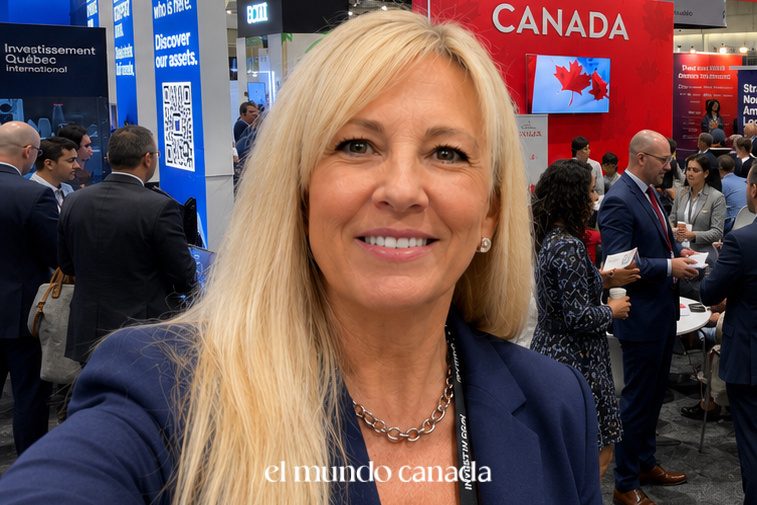
Saying no to a $1 million contract sounds like a business nightmare. But for Anik Forest, CEO of Archex, this bold decision became the catalyst for her company’s most successful period in its 50-year history. The Quebec-based exhibition stand company has transformed from producing generic displays into creating complex, multi-truck installations for major events in New York and Las Vegas.
The lesson? Turning down unprofitable work creates space for high-value projects. This counterintuitive approach to business growth strategy offers valuable insights for entrepreneurs and small business owners across Canada, including those in the Latin community building their ventures in a new country.
The Million-Dollar Rejection That Changed Everything
When a client approached Anik Forest with a project in Las Vegas worth $1 million, she did something unexpected. Instead of immediately accepting, she carefully analyzed the opportunity. The verdict? Too much stress, too tight deadlines, and insufficient value for her team.
She said no.
“It might seem irresponsible to say no. But I understood that saying yes to everything was actually the mistake.”
This business growth strategy proved correct. The same client continued working with Archex on other projects. The relationship survived because Forest prioritized quality delivery over revenue desperation.
From ‘Butter Boxes’ to Complex Technical Installations
Archex began as a company producing what Forest calls “butter boxes” — generic 20-foot exhibition stands with white panels, three lights, carpet, and stools. The company, founded by her father Jacques Forest, operated under a simple philosophy: every revenue matters, every client counts.
Anik Forest joined Archex at age 23. She witnessed firsthand how accepting every contract kept the company busy but stagnant. High storage costs and employee salaries meant the business couldn’t afford to be selective — or so they thought.
The transformation began approximately 20 years ago when Forest applied her banking industry experience to analyze an entire year of Archex contracts. The results were eye-opening.
“Before that, we didn’t know which contracts were profitable and which weren’t. This exercise opened our eyes. We realized it was a mistake to say yes to everyone.”
The 20% Rule: Strategic Client Elimination
Armed with data analysis, Forest made a decisive move. She eliminated the bottom 20% of contracts — the least profitable ones. Simultaneously, she doubled down on the top 20% — the most lucrative projects.
This wasn’t easy. The company had to tell existing clients: “Next year, we won’t be able to work with you.” To soften the blow, Archex helped these clients understand how to create requests for proposals to find new vendors.
The company also liquidated its inventory of carpets, stools, tables, and chairs. “We needed to make room,” Forest explains. This physical clearing mirrored the strategic clearing of low-value work from their portfolio.
How Saying No Liberates Your Team
Forest discovered an unexpected benefit of eliminating low-value contracts. Her team suddenly had more time. This freed capacity went directly into higher-value projects, creating a virtuous cycle of improvement.
With more time per project, the team could deliver better results. Better results attracted higher-paying clients. Higher-paying clients justified saying no to low-margin work. The company’s expertise deepened, and its reputation grew.
Today, Archex projects often require multiple 53-foot trucks for transportation. Installations include video walls and complex technical elements. The company serves commercial exhibitions in Toronto, Vancouver, New York, and Las Vegas.
“Our stands often need several 53-foot trucks to transport. There are video walls… These are very technical and complex achievements. That’s where our added value is best.”
Lessons for Canadian Entrepreneurs and Immigrants
For Latin entrepreneurs building businesses in Canada, Forest’s experience offers crucial insights. The instinct to accept every opportunity is strong, especially when establishing yourself in a new market. But strategic selectivity often produces better results than desperate acceptance.
Jacques Forest, who founded Archex and passed away in 2008, witnessed the beginning of his daughter’s strategic transformation. Anik Forest believes her father would approve of the changes if he could see the company today.
The business growth strategy of saying no requires courage. Forest describes it as “a leap into the void.” But the results speak for themselves: Archex is currently experiencing its strongest growth years in half a century of operation.
Read more: Small Business Success Guide for Immigrants in Canada
The key takeaways for entrepreneurs considering this approach include understanding your contract profitability through detailed analysis. Many businesses don’t know which clients make them money and which cost them resources.
Building relationships matters more than individual transactions. The client Forest rejected continued working with Archex because the relationship was built on mutual respect, not desperation.
Specialization drives premium pricing. By focusing on complex technical installations, Archex moved from commodity work to high-value expertise. This positioning protects against price competition.
Finally, freeing your team’s capacity creates compound benefits. When skilled workers aren’t stretched across too many projects, they deliver exceptional results that attract better opportunities.
Why would a company reject a $1 million contract?
Anik Forest rejected a $1 million Las Vegas project because it generated excessive stress, had tight deadlines, and didn’t maximize value for her team. She determined that accepting such contracts was actually an error that limited company growth.
How did Archex identify unprofitable contracts?
Forest used her banking industry experience to analyze an entire year of company contracts. Before this analysis, Archex didn’t know which projects were profitable versus which ones lost money.
What is the 20% rule for business profitability?
Archex eliminated the bottom 20% of least profitable contracts while doubling efforts on the top 20% most profitable ones. This strategic elimination freed team capacity for higher-value work.
Can you maintain client relationships after rejecting their projects?
Yes. The client whose $1 million project Forest rejected continued using Archex services for other projects. Professional honesty about capacity and fit can strengthen rather than damage business relationships.
What happened to Archex after implementing this strategy?
After 50 years in business, Archex is experiencing its strongest growth period. The company now creates complex technical installations requiring multiple 53-foot trucks and serves clients in Toronto, Vancouver, New York, and Las Vegas.
📘 Follow El Mundo Canada on our social networks: Facebook | Twitter
