


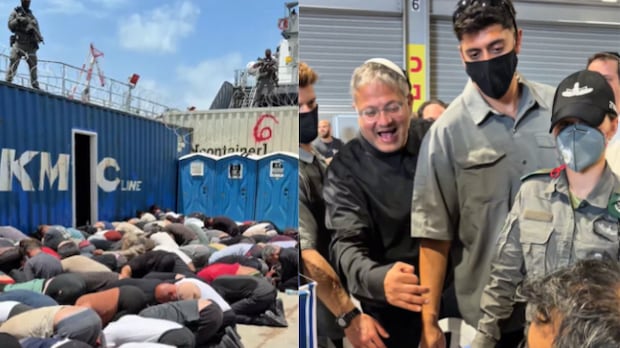
A newly released video shows Israeli National Security Minister Itamar Ben-Gvir confronting detained flotilla activists and declaring they should face lengthy prison sentences. The footage, which emerged this week, captures the controversial minister visiting the detention facility where international activists are being held after Israeli forces intercepted their Gaza-bound vessel.
The incident has sparked international condemnation and reignited debates over Israel’s naval blockade of Gaza. Human rights organizations and foreign governments have demanded the immediate release of the detained individuals, while Israeli officials maintain the interception was lawful and necessary for national security.
Ben-Gvir’s Confrontational Detention Facility Visit
The video footage shows Minister Ben-Gvir entering the detention area where the activists are being held. In the recording, the far-right minister can be heard telling the detainees they “should be jailed for a long time” for their attempt to breach Israel’s maritime blockade.
Ben-Gvir, who oversees Israel’s police and prison services, appeared to mock the activists during his visit. The minister has faced criticism for what opponents describe as inflammatory behavior toward those in Israeli custody.
The detained activists were part of an international flotilla organized by pro-Palestinian groups attempting to deliver humanitarian aid to Gaza.
The Gaza Freedom Flotilla Interception
Israeli naval forces intercepted the flotilla in international waters earlier this month. The convoy included vessels carrying activists from multiple countries, including the United States, Canada, and several European nations.
According to Israeli military officials, the interception was conducted to enforce the longstanding naval blockade of Gaza. The Israel Defense Forces stated that troops boarded the vessels without significant resistance.
The flotilla organizers had announced their intention to challenge what they call an “illegal siege” on Gaza’s civilian population. They carried humanitarian supplies including medical equipment and food aid.
International Response and Diplomatic Fallout
Foreign governments have reacted strongly to both the interception and Ben-Gvir’s recorded comments. Several nations have summoned Israeli ambassadors to demand explanations regarding the treatment of their citizens.
Canada’s Foreign Ministry issued a statement expressing concern over the detention of Canadian nationals aboard the flotilla vessels. Similar statements emerged from European capitals, with officials calling for immediate consular access to detained citizens.
Human rights groups have condemned Ben-Gvir’s remarks as inappropriate and potentially prejudicial to any legal proceedings. Legal experts note that ministers publicly declaring detainees should receive harsh sentences could compromise fair trial standards.
The United Nations has called for the immediate release of all detained activists and urged Israel to allow humanitarian access to Gaza through established channels.
Ben-Gvir’s Controversial Track Record
The minister’s detention facility visit follows a pattern of provocative actions that have drawn international criticism. Ben-Gvir, leader of the ultranationalist Jewish Power party, has previously faced accusations of inciting tensions through visits to sensitive locations.
His presence in the governing coalition has complicated Israel’s diplomatic relationships with traditional allies. Western governments have repeatedly expressed discomfort with his ministerial role and public statements.
Critics within Israel have also questioned the appropriateness of a cabinet minister visiting detainees to deliver politically charged messages. Opposition lawmakers called for an investigation into whether Ben-Gvir’s conduct violated ministerial ethics guidelines.
Legal Status of Detained Activists
The approximately two dozen detained activists face potential charges related to attempting to breach the maritime blockade. Israeli authorities have indicated they plan to deport most detainees after processing rather than pursue lengthy prosecutions.
Defense attorneys representing the activists argue their clients were engaged in legitimate humanitarian activism protected under international law. They contend the interception in international waters violated maritime conventions.
Israeli legal officials counter that the blockade has been recognized by some international bodies as a legitimate security measure. They maintain that anyone attempting to breach it assumes legal risk regardless of stated humanitarian intentions.
The detainees have reportedly been denied access to personal belongings and face restrictions on communication with family members and legal representatives.
Implications for Gaza Humanitarian Access
The flotilla interception highlights ongoing debates about humanitarian access to Gaza. Aid organizations report critical shortages of medical supplies, food, and fuel in the territory.
Israel maintains that adequate aid enters Gaza through approved land crossings and that the naval blockade prevents weapons smuggling. Critics argue the restrictions constitute collective punishment of Gaza’s civilian population.
The international humanitarian law questions surrounding Gaza’s blockade remain contested among legal scholars and governmental bodies. Previous flotilla attempts have resulted in deadly confrontations, most notably the 2010 Mavi Marmara incident.
The video of Ben-Gvir confronting detained flotilla activists underscores the deepening tensions surrounding Israel’s Gaza policies and the treatment of international humanitarian workers. As diplomatic pressure mounts for the activists’ release, this incident will likely fuel continued scrutiny of Israel’s naval blockade and its enforcement methods.
