


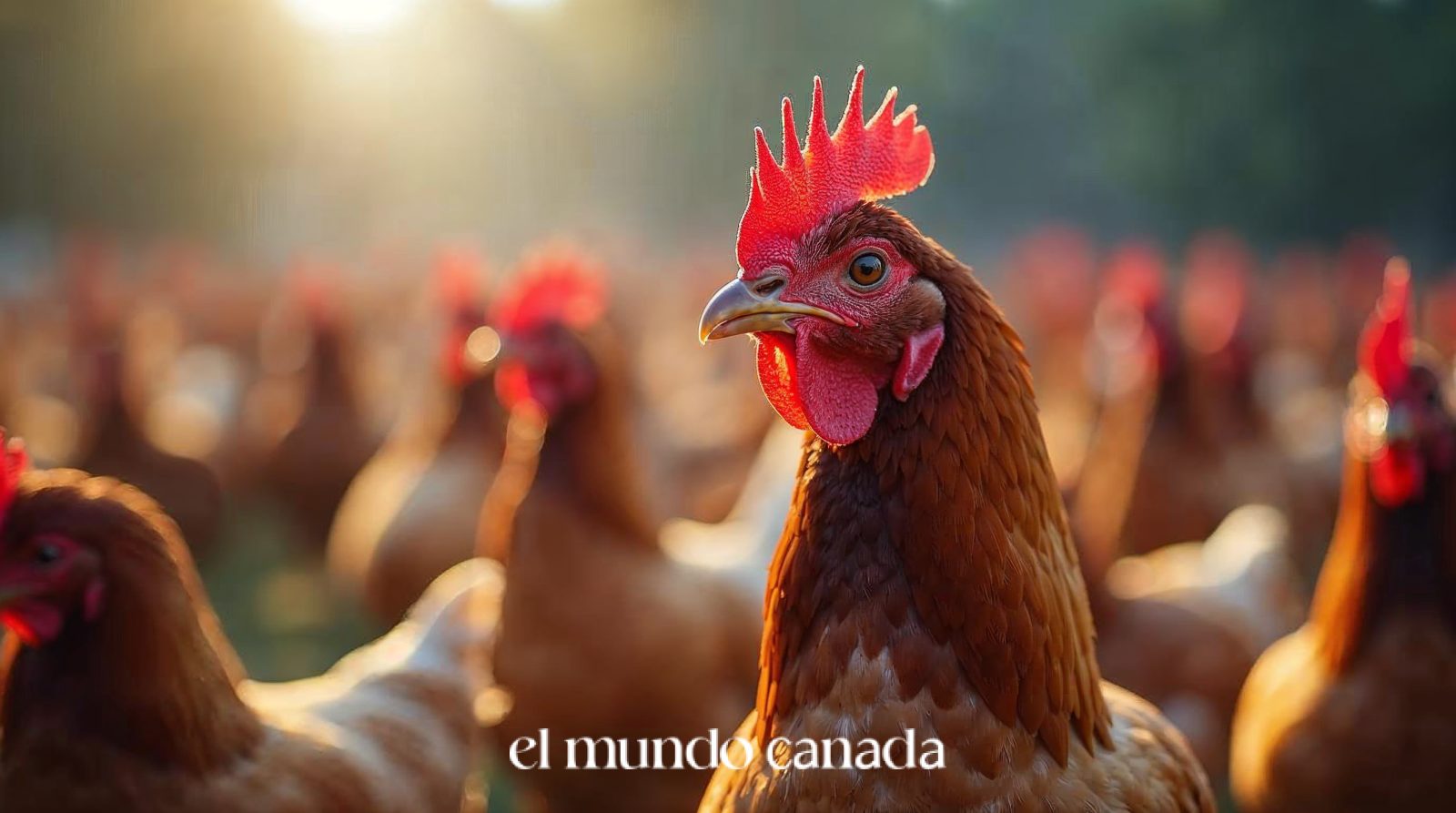
How Canada’s Supply-Managed Poultry Industry Works
Chicken has quietly become the most popular protein choice in Canadian households, and the industry that supplies it runs on a system most consumers never think about: supply management, a regulatory framework that balances production against demand rather than leaving the market entirely to itself. Investments like Sunrise Farms’ new processing facility in Woodstock, Ontario illustrate how that system continues to expand domestic processing capacity.
In this article
- How Canada’s Supply-Managed Poultry Industry Works
- What Supply Management Actually Does
- Why Chicken Consumption Keeps Rising
- Why Processing Capacity Matters
- The Economic Footprint of a Processing Plant
- Modern Processing Standards
- Why Oxford County Specifically
- The Supply Chain Behind Every Chicken Dinner
Canada’s poultry sector operates under a national supply management system that balances production with demand, a structure credited with providing more stable prices for both farmers and consumers than an unregulated market typically produces.
What Supply Management Actually Does
Supply management is the regulatory backbone of Canada’s poultry, egg, and dairy sectors, coordinating production quotas among farmers so that national supply roughly matches national demand rather than swinging between shortage and oversupply. In practice, this means individual farmers operate under production quotas rather than producing without limit, a structure that aims to protect farm income stability while keeping consumer prices more predictable than they’d be in a purely open market. New processing capacity, like a major plant coming online, doesn’t change the underlying quota system, but it does help the industry meet consumption demand domestically rather than relying more heavily on imports.
Why Chicken Consumption Keeps Rising
Canadian chicken consumption has climbed steadily over recent decades, and health-conscious consumers choosing chicken over red meat is a major driver of that trend. As Canada’s population grows through both immigration and natural increase, demand for protein generally, and chicken specifically, continues climbing in a fairly predictable pattern that processors and farmers alike plan around. That predictability is part of what makes large capital investments in new processing capacity viable in the first place — companies are responding to a demand curve that’s proven durable over a long period, not a short-term spike.
Why Processing Capacity Matters
Raising chickens and processing them into retail-ready products are two entirely different stages of the supply chain, and Canada’s processing capacity has to keep pace with production and demand for the whole system to function smoothly. The COVID-19 pandemic exposed vulnerabilities in global food supply chains broadly, and that experience prompted many food processors to invest in strengthening domestic production capabilities specifically, rather than depending on longer, more fragile international supply chains for something as basic as chicken processing.
The Economic Footprint of a Processing Plant
A large-scale poultry processing plant typically employs several hundred workers directly, spanning production line positions through technical, administrative, and management roles, and food processing jobs generally offer more stable, year-round work with benefits than the seasonal agricultural work many rural communities otherwise depend on. The indirect economic effects extend further still: farmers, trucking companies, equipment suppliers, and maintenance contractors all benefit when a major processor sets up operations nearby, and local businesses — restaurants, retailers, and beyond — typically see increased activity once a major new employer establishes itself in a community.
Modern Processing Standards
Newer poultry processing facilities tend to incorporate technology and sustainability features that older plants, built decades ago, simply weren’t designed around. Building from scratch allows companies to implement energy-efficient systems, water recycling, and waste reduction measures from the ground up rather than retrofitting them into aging infrastructure. Food safety standards have also evolved substantially over the years, and modern plants generally feature enhanced sanitation systems, automated monitoring, and quality control measures that meet increasingly stringent regulatory requirements compared to facilities built even a generation earlier.
Why Oxford County Specifically
Oxford County has long served as a hub for agricultural production in southwestern Ontario, with dairy, poultry, and crop farming forming the backbone of the local economy well before any single new plant investment. That existing agricultural infrastructure and workforce is a major reason processors choose to expand in counties like Oxford rather than starting from scratch somewhere with no established farming base — proximity to feed suppliers, existing trucking routes, and a workforce already familiar with agricultural and food processing work all lower the practical barriers to a large new facility succeeding.
The Supply Chain Behind Every Chicken Dinner
What ends up on a dinner plate as a package of chicken breasts represents the tail end of a long chain: quota-regulated farms raising the birds, trucking networks moving live animals to processing facilities, factory-scale processing and packaging operations, and distribution networks getting the final product to grocery retailers and food service companies. Each new processing facility that comes online adds capacity somewhere in that chain, and in an industry structured around supply management rather than open-market competition, that added capacity tends to translate fairly directly into more stable domestic supply rather than dramatic swings in either direction.
