


A contagious cancer affecting brown bullhead catfish in Quebec may have spread hundreds of kilometres to New Brunswick waters, according to researchers from the University of Cambridge and the University of Vermont. On August 7, 2026, scientists confirmed they are awaiting DNA test results that could confirm the alarming expansion of this rare transmissible disease across Canadian freshwater ecosystems.
The discovery marks only the fourth known lineage of naturally-occurring transmissible cancer in the animal kingdom. For the Latin community in Canada, particularly those who enjoy fishing in Quebec and New Brunswick’s abundant lakes and rivers, this scientific development raises important questions about aquatic health and ecosystem safety.
What Is Transmissible Catfish Cancer?
Unlike typical cancers that develop from mutations within an individual organism, transmissible cancer spreads physically from one animal to another. The catfish melanoma functions as a parasitic cell line, passing between fish through direct contact or environmental transmission.
Dr. Julie Dragon, co-lead researcher and associate professor of microbiology and molecular genetics at the University of Vermont, explained the unusual nature of this disease. Genome sequencing revealed that tumours found on different catfish were clone copies of one another rather than separate mutations.
“We don’t think it started in Lake Memphremagog, and we have already confirmed that it does exist in lakes in New Hampshire and Maine.”
This finding distinguishes the catfish cancer from normal tumours, which typically share nearly identical DNA with their host organism with only a few mutated genes.
Discovery Timeline: From Quebec to New Brunswick
The story of this contagious catfish cancer began between 2014 and 2018 when scientists first studied raised black growths on brown bullhead catfish in Lake Memphremagog. This lake straddles the Quebec-Vermont border, making it a shared water body between Canada and the United States.
Researchers initially observed the dark lesions as early as 2012. However, it wasn’t until a study published in July 2026 in the prestigious journal Nature that scientists confirmed the cancer was transmissible. This marked the first documented case of contagious cancer in any fish or freshwater ecosystem worldwide.
The research team described the phenomenon as “a puzzling biological phenomenon” and warned of its “potential to devastate host populations.” This warning has sparked urgent efforts to track the disease’s spread across eastern Canada and the northeastern United States.
New Brunswick Investigation Begins
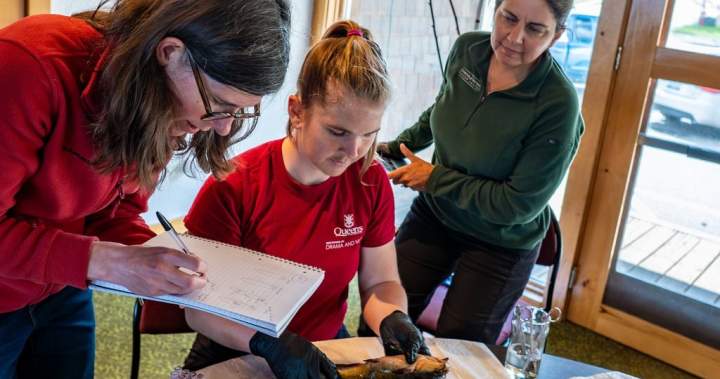
Zoe Clarke, a postdoctoral researcher with the University of Cambridge’s Transmissible Cancer Group, has been leading efforts to determine if the catfish cancer has spread beyond its original location. Her investigation took a significant turn in October 2025 when she received a response from a doctoral student.
The student reported seeing similar lesions on catfish while spending time on a fishing boat in New Brunswick. This observation prompted Clarke to plan an expedition to the Maritime province to collect samples.
In May 2026, Clarke joined Scott Young, a veteran fisherman with four decades of experience on New Brunswick’s lakes and rivers. Young had noticed brown bullhead catfish with dark spots throughout his fishing career but never suspected a contagious disease.
“How the heck did this happen? Why is it here?” Clarke asked, expressing the scientific community’s determination to understand this mystery. “That’s the kind of thing that we’re going to be devoting a lot of our energy to over the next few years.”
DNA Testing Results Expected Within Weeks
The samples collected from New Brunswick waters are currently being analyzed at the Hubbard Center for Genome Studies in New Hampshire. Scientists expect results within the next few weeks that could confirm whether the catfish cancer has indeed spread to Canadian Maritime waters.
If DNA from Clarke’s New Brunswick samples matches the genetic signature of the Lake Memphremagog cancer, it will significantly expand the known geographic range of this transmissible disease. The confirmation would also help researchers trace the origins of the cancer and understand how it spreads across vast distances.
The catfish cancer joins an exclusive and troubling list of transmissible cancers in nature. Before this discovery, scientists had only documented three other lineages:
- Canine transmissible venereal tumour in dogs
- Devil facial tumour disease in Tasmanian devils
- Transmissible cancers in shelled aquatic creatures including clams and mussels
Implications for Canadian Ecosystems
The spread of contagious catfish cancer across multiple jurisdictions raises serious concerns for freshwater ecosystem health in eastern Canada. Brown bullhead catfish serve as an important species in lake and river food chains, and significant population declines could have cascading effects.
For recreational fishers in Quebec and New Brunswick, the discovery doesn’t currently pose known risks to human health. However, scientists are urging anyone who spots catfish with unusual dark lesions to report their observations to local wildlife authorities.
The research also highlights the interconnected nature of North American waterways. Lake Memphremagog’s position on the international border demonstrates how aquatic diseases can potentially cross political boundaries through natural water systems or fish migration patterns.
What Latin Community Fishers Should Know
Many members of Canada’s Latin community enjoy fishing as both recreation and a connection to cultural traditions. The lakes and rivers of Quebec and New Brunswick offer excellent opportunities for freshwater fishing, including catfish species.
While the transmissible catfish cancer is primarily a concern for fish populations rather than human health, fishers should be aware of what to look for. Brown bullhead catfish affected by this disease display characteristic dark spots or raised black growths on their skin.
If you encounter fish with these markings while fishing in eastern Canadian waters, consider documenting the location and reporting it to provincial wildlife agencies. Your observations could help scientists track the spread of this unusual disease and protect aquatic ecosystems.
Ongoing Research and Future Directions
The University of Cambridge and University of Vermont research teams plan to continue their investigation for years to come. Understanding how the cancer originated, why it became transmissible, and how it spreads will require extensive genetic analysis and field research.
Scientists are particularly interested in determining whether the cancer started in Lake Memphremagog or arrived there from elsewhere. The confirmation of cases in New Hampshire and Maine suggests the disease may be more widespread than initially believed.
This research could have broader implications for understanding transmissible cancers in general. Each new case provides scientists with valuable data about how cancers can evolve to spread between individuals, information that could potentially benefit human cancer research as well.
For now, the scientific community awaits the DNA results from New Brunswick with anticipation. The findings will determine the next steps in tracking and potentially controlling this contagious catfish cancer before it can further spread through Canada’s precious freshwater ecosystems.
