


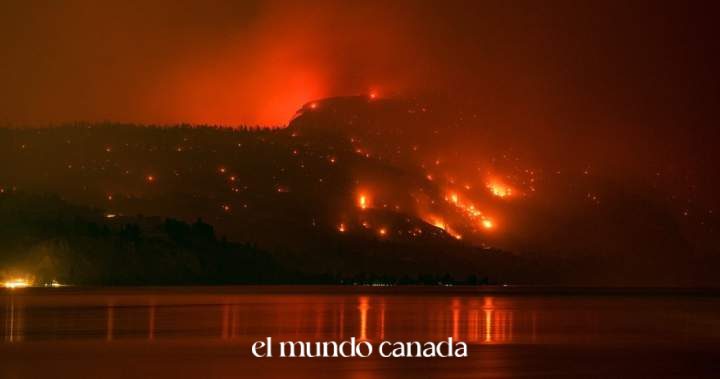
A BC wildfire emergency took a dramatic turn on August 8, 2026, when Erick Thompson, the senior manager of communications for the Regional District of Okanagan-Similkameen, made the difficult decision to evacuate his family from Summerland, B.C. around 1:40 a.m. What made his escape remarkable was his commitment to keep his camera rolling throughout the harrowing journey.
Thompson’s dedication to his role as an information officer meant that even as flames threatened his home, he continued livestreaming on YouTube. His videos have connected thousands of anxious residents with crucial updates about the BC wildfire, evacuation orders, and available support services during this crisis.
Why He Kept Filming During the BC Wildfire
The livestream videos produced by Thompson are notably raw and unfiltered. They capture authentic moments as he answers phone calls, coordinates with colleagues, works on his computer, and occasionally steps away from his desk.
Despite becoming a recognizable public face of the wildfire emergency for viewers, Thompson maintains a humble perspective on his role. Many viewers have expressed gratitude in the livestream’s active chat, but Thompson insists the story isn’t about him personally.
“Just to show that, you know, I’m in the middle of this just like you are and we can be calm,” Thompson explained in an interview on August 9, 2026.
His approach demonstrates how public servants can provide reassurance during emergencies simply by sharing their own experiences authentically with affected communities.
The Dramatic Escape Captured Live
The most intense moment of Thompson’s BC wildfire livestream came when he left the emergency operations centre. He resumed broadcasting from his darkened vehicle after picking up his family to escape the approaching flames.
Thompson described the moment as surreal. He told the director of the district’s emergency operations centre that he felt compelled to continue livestreaming to encourage residents facing similar situations.
With ash raining down around his home, Thompson quickly packed essentials and alerted his neighbours that it was time to evacuate. Even while driving through the night, he continued providing valuable information to viewers.
He reported on backed-up traffic conditions as his family fled south, helping other evacuees understand what to expect on the roads during the chaotic evacuation.
From Local Broadcast to Unexpected Viral Moment
Thompson initially believed only around 30 people were watching his stream during the escape. The reality turned out to be quite different, as his footage spread far beyond the local community.
The next morning, a friend from Halifax called to say she had seen the clip of him leaving his home. Thompson was surprised to learn his evacuation had made national news.
“I said how did you know that? She said it was on the media. And then I realized that that’s probably that dramatic video you see of somebody escaping a wildfire and I didn’t mean it to be that,” Thompson recounted.
Thompson expressed uncertainty about how he feels regarding the moment’s unexpected virality. He emphasized that he doesn’t want recognition for doing anything special.
Dedication to Public Service During Crisis
Thompson’s commitment to his role reflects the dedication of many public information officers across British Columbia during wildfire season. His approach prioritizes getting accurate information to residents who desperately need it.
“I’m doing this because it’s my job and I’m dedicated to getting out the most and best information I can,” Thompson stated.
Despite being personally affected by the evacuation order, Thompson expressed gratitude that his family found safety staying with friends. He acknowledged feeling fortunate that everyone in his household remained safe during the ordeal.
His experience highlights how emergency communication professionals often face the same dangers as the communities they serve while maintaining their professional responsibilities.
Bald Range Fire Triggers State of Emergency
The Bald Range fire has prompted authorities to declare a state of emergency in British Columbia. The blaze has forced approximately 20,000 residents of the Okanagan region to evacuate their homes.
Tragically, one woman has been confirmed dead in connection with the fire. The blaze continues to burn out of control on the western shore of Okanagan Lake, posing ongoing threats to communities in the area.
For Latin families in British Columbia, this emergency serves as a critical reminder about wildfire preparedness. Having evacuation plans ready and staying connected to official information sources can make the difference during fast-moving emergencies.
Thompson’s livestream approach demonstrates how modern communication tools can help bridge the gap between emergency officials and affected residents during crisis situations.
Read more: Essential Emergency Preparedness Guide for BC Families
The BC wildfire situation continues to evolve, and residents are encouraged to monitor official channels for the latest evacuation orders and safety information. Thompson’s example shows that even in the most challenging circumstances, clear communication remains essential for community safety.
As wildfire season intensifies across Western Canada, communities throughout the region are watching the Okanagan situation closely. The dedication shown by information officers like Thompson provides a model for transparent, human-centered emergency communication.
How many people have been evacuated due to the BC wildfire?
Approximately 20,000 residents of the Okanagan region have been forced to evacuate due to the Bald Range fire, which has triggered a state of emergency in British Columbia.
Where is the Bald Range fire burning?
The Bald Range fire continues to burn out of control on the western shore of Okanagan Lake in British Columbia’s Okanagan region.
Why did the information officer continue livestreaming during his evacuation?
📘 Follow El Mundo Canada on our social networks: Facebook | Twitter
Erick Thompson, senior manager of communications for the Regional District of Okanagan-Similkameen, continued livestreaming to show residents that he was experiencing the same situation and to encourage them to remain calm during the emergency.
