


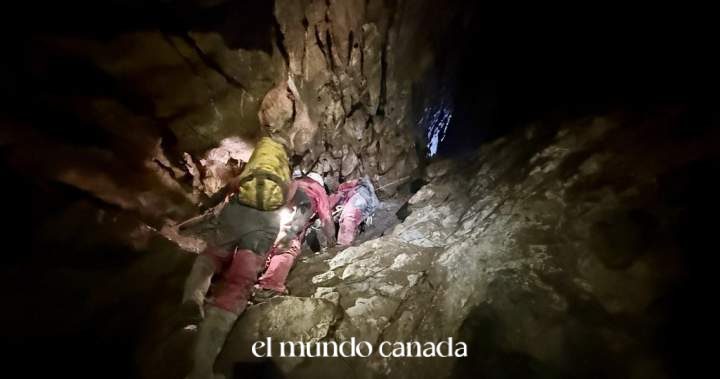
Alberta cave rescue teams achieved a remarkable milestone when they deployed volunteer-built underground radio technology for the first time during a live operation at Rat’s Nest Cave in Canmore, Alberta. The successful rescue of a caver trapped vertically underground showcases the incredible innovation happening within Canada’s search and rescue community.
Caver Trapped at Psych Squeeze
The incident began around 11:30 a.m. on Saturday when the man became pinned in a notoriously tight passage known as the “Psych Squeeze” inside the popular Rat’s Nest Cave. This section of the cave system is well-known among experienced cavers for its challenging narrow passages.
Search and Rescue Alberta immediately coordinated a response, calling in the specialized Alberta/BC Cave Rescue team to handle the complex extraction. The vertical position of the trapped caver made the rescue exceptionally difficult and time-sensitive.
Rescue teams used hammer drills to carefully remove rock around the trapped individual. Progress was painstakingly slow, measured in what rescuers described as “inches per hour.” The delicate operation required extreme precision to avoid injuring the caver.
Groundbreaking Radio Technology Deployed
What made this Alberta cave rescue particularly significant was the first-ever use of a new cave radio system in an actual emergency operation. The technology transmits signals directly through solid rock, solving a longstanding challenge in underground rescue operations.
Traditional communication methods like phones, radios, and GPS systems simply don’t work underground. This has historically left rescue teams operating with limited ability to coordinate between surface crews and those working deep within cave systems.
“By providing reliable text-based communications from deep inside caves to the surface, or between different locations in a cave, teams can now deploy with equipment that is purpose-built by the rescuers who will use them in the field.”
The new system uses technology known as QDX-M, capable of communicating through more than 500 metres of solid rock. This represents a massive leap forward for underground emergency response capabilities across Canada.
Volunteer Innovation Makes the Difference
The cave radio technology was developed entirely by volunteer members of the Alberta/BC Cave Rescue team, which operates as part of Search and Rescue Alberta. These volunteers combined expertise in electrical engineering and amateur radio backgrounds to create something commercially unavailable.
The new radios are smaller and lighter than traditional analog cave radios. Critically, they replace older technology that can no longer be repaired, ensuring rescue teams have reliable equipment for future operations.
According to Search and Rescue Alberta, commercial alternatives at an affordable cost simply don’t exist. The volunteer design and construction work by dedicated cavers has provided an invaluable resource for emergency responders.
Massive Multi-Agency Response
The rescue operation involved an impressive coordination of multiple emergency response agencies working together seamlessly:
- 13 cave rescuers from the specialized Alberta/BC Cave Rescue team
- 10 firefighters providing support on the operation
- 2 Kananaskis Mountain rescue members contributing expertise
The caver was finally freed around 10 p.m. after hours of careful extraction work. He emerged from the cave around midnight, completing what had been nearly a 12-hour ordeal underground.
John Alexander, the CEO of Search and Rescue Alberta, praised the collaborative effort that made the rescue possible.
“This is a display of what can be achieved when multiple emergency response agencies come together in collaboration, and of the incredible innovation and initiative taken by our 1,500 volunteer search and rescue professionals who defy odds and overcome barriers every day, so others may live.”
What Cavers in Canada Should Know
For members of the Latin community in Canada interested in caving and outdoor adventures, this incident highlights both the risks and the incredible safety systems in place. Rat’s Nest Cave in Canmore is a popular destination for guided cave tours and experienced cavers alike.
The Alberta cave rescue success demonstrates that Canada’s volunteer rescue teams are equipped with cutting-edge technology and extensive training. However, cavers should always take precautions when exploring underground environments.
Key safety considerations for anyone considering caving in Alberta include:
- Always inform someone of your planned route and expected return time
- Never explore unfamiliar cave systems alone
- Carry proper lighting equipment with backup options
- Understand your physical limitations before attempting tight passages
- Consider joining organized tours with experienced guides
The Psych Squeeze incident serves as a reminder that even experienced cavers can find themselves in dangerous situations. The difference between tragedy and survival often comes down to preparation, communication, and the dedication of volunteer rescue teams.
Search and Rescue Alberta operates with approximately 1,500 volunteer professionals across the province, ready to respond to emergencies in remote and challenging environments. Their work, including technological innovations like the new cave radio system, continues to save lives throughout Alberta and British Columbia.
What happened at Rat’s Nest Cave in Canmore?
A caver became trapped vertically in a tight passage called the “Psych Squeeze” around 11:30 a.m. on Saturday. Rescue teams used hammer drills to remove rock and freed him by 10 p.m., with him emerging from the cave around midnight.
What new technology was used in this Alberta cave rescue?
Rescue teams deployed a volunteer-built cave radio system using QDX-M technology for the first time in a live operation. This system can communicate through more than 500 metres of solid rock.
How many rescuers were involved in the Rat’s Nest Cave operation?
The rescue involved 13 cave rescuers, 10 firefighters, and 2 Kananaskis Mountain rescue members, all coordinated by Search and Rescue Alberta.
Why is the new cave radio technology important?
Traditional communication methods like phones, radios, and GPS don’t work underground. The new system provides reliable text-based communications through solid rock, a capability not commercially available at affordable cost.
📘 Follow El Mundo Canada on our social networks: Facebook | Twitter
