


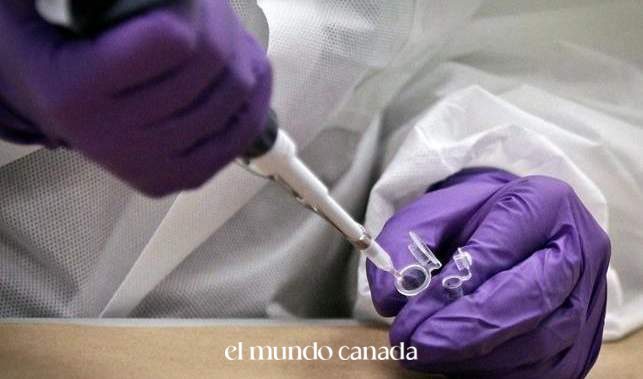
DNA technology has achieved a remarkable breakthrough in a decades-old cold case, finally identifying a New Brunswick woman whose remains were discovered in Ontario. The identification of Brenda Marie LeBlanc demonstrates how genetic genealogy is revolutionizing criminal investigations across Canada, offering hope to families and investigators dealing with unsolved cases.
Niagara Regional Police announced that LeBlanc was identified in 2025 after her remains were found during the demolition of a Niagara Falls home in 2023. Investigators believe the remains may have been at the property since the mid-1990s, making this a case that spanned approximately three decades before resolution.
How DNA Technology Cracked the Case
The case of Brenda Marie LeBlanc was ruled a homicide, but police initially faced an impossible challenge. Without identification, they had no way to trace her history or find potential suspects. Traditional investigative methods proved completely ineffective in this cold case.
Inspector Andrew Knevel of the Niagara Regional Police explained the difficulty investigators faced for years.
“We expended absolutely every traditional investigative means that we could possibly use to try to identify these remains.”
When conventional methods failed, investigators turned to investigative genetic genealogy. This technique uses DNA recovered from remains to locate biological relatives through genetic profiles that have been voluntarily made available for law-enforcement searches.
Police successfully established a familial DNA link and later confirmed it through direct DNA comparison. This breakthrough ultimately identified LeBlanc and opened new avenues of investigation into her life and death.
Genetic Genealogy Transforms Criminal Investigations
Kelly Miles, a forensic biology professor at the University of New Brunswick, says the DNA technology is fundamentally changing how criminal cases are solved across Canada. The science has advanced to a point where investigators can identify individuals through their relatives’ genetic information.
“A perpetrator could be convicted based on DNA that a third or fourth cousin has uploaded. They’ve never done the swab, they’ve never had a DNA test.”
Professor Miles emphasized that this genetic genealogy technique has become an invaluable tool for cases that seemed permanently unsolvable. The technology allows investigators to work backward from DNA evidence to construct family trees and identify individuals.
“This phenomenal technique is so helpful that it’s really opened a lot of investigative doors for cases that have become cold.”
Decades-Old Evidence Remains Viable for Testing
One of the most remarkable aspects of modern DNA technology is its ability to work with extremely old and degraded samples. Advances in forensic science have made it possible to generate DNA profiles from increasingly small and deteriorated biological evidence.
Professor Miles confirmed that biological evidence can remain usable for decades, far longer than many people realize.
“Fifty years, 60 years is not unheard of.”
This means that cold cases from the 1960s, 1970s, and beyond could potentially be solved using preserved evidence. For families of victims who have waited decades for answers, this represents a profound source of hope.
The RCMP says it first used investigative genetic genealogy in New Brunswick in 2020 to identify human remains. The agency employed the technique again in June in another case that was nearly two decades old.
Privacy Concerns Spark Important Debate
The growing use of genetic genealogy has raised significant privacy concerns across Canada. Ontario’s Information and Privacy Commissioner has warned that this DNA technology can reveal biological relationships involving relatives who never consented to having their genetic information used in investigations.
The concern centers on the fact that when someone uploads their DNA to a database for personal genealogy research, they may inadvertently expose their entire extended family to potential police scrutiny. A third or fourth cousin could be identified through genetic connections without ever having submitted their own sample.
Professor Miles acknowledged these concerns but argued that the public safety benefits often outweigh the privacy implications.
“It’s worth a little bit of loss of privacy for the potential gains to not only find the perpetrator but get them off the streets.”
For the Latin community in Canada, understanding these privacy implications is essential. Families considering DNA testing for genealogy purposes should be aware that their genetic information could potentially be accessed for law enforcement purposes.
The Future of Forensic DNA Science
The science of genetic genealogy continues to evolve at a rapid pace. Professor Miles outlined several exciting developments that could further transform criminal investigations in the coming years.
Researchers are currently developing:
- Faster DNA testing methods that can produce results in less time
- Techniques requiring even smaller samples for successful analysis
- Tools capable of predicting physical characteristics from genetic material
Artificial intelligence represents perhaps the most significant potential advancement. AI technology could dramatically reduce the time required to build family trees and conduct genealogical research. Currently, this process can take investigators significant time and resources.
With AI assistance, investigators could potentially trace DNA connections and identify individuals in a fraction of the current timeframe. This would allow more cold cases to be investigated simultaneously and bring faster resolution to grieving families.
What This Means for Canadians
The successful identification of Brenda Marie LeBlanc after approximately 30 years sends a powerful message to both victims’ families and potential perpetrators. Cold cases are no longer permanently unsolvable. DNA evidence preserved from decades-old crimes can now be used to identify both victims and suspects.
For families with missing relatives or unsolved cases in their history, this breakthrough offers renewed hope. The technology that identified LeBlanc could potentially bring answers to hundreds of Canadian families still waiting for resolution.
For the Latin community, understanding these advances in forensic science is particularly important. Many families have relatives who immigrated from different countries, and genetic genealogy can help trace connections across international borders.
The case also highlights the importance of DNA databases in solving crimes. As more people participate in genetic testing for personal reasons, the pool of potential matches for investigators grows larger, making it increasingly difficult for perpetrators to escape justice.
What is investigative genetic genealogy?
Investigative genetic genealogy is a technique that uses DNA recovered from crime scenes or remains to locate biological relatives through genetic profiles voluntarily uploaded to databases. This allows investigators to build family trees and identify unknown individuals.
How long can DNA evidence remain viable for testing?
According to Professor Kelly Miles from the University of New Brunswick, biological evidence can remain usable for 50 to 60 years or more. Advances in forensic science have made it possible to generate DNA profiles from increasingly small and degraded samples.
What are the privacy concerns with genetic genealogy?
Ontario’s Information and Privacy Commissioner has warned that genetic genealogy can reveal biological relationships involving relatives who never consented to having their DNA information used in investigations. A person’s genetic data can implicate distant relatives who never submitted their own samples.
When did Canada first use investigative genetic genealogy?
The RCMP says it first used investigative genetic genealogy in New Brunswick in 2020 to identify human remains. The agency has continued using the technique in subsequent cases.
📘 Follow El Mundo Canada on our social networks: Facebook | Twitter
