


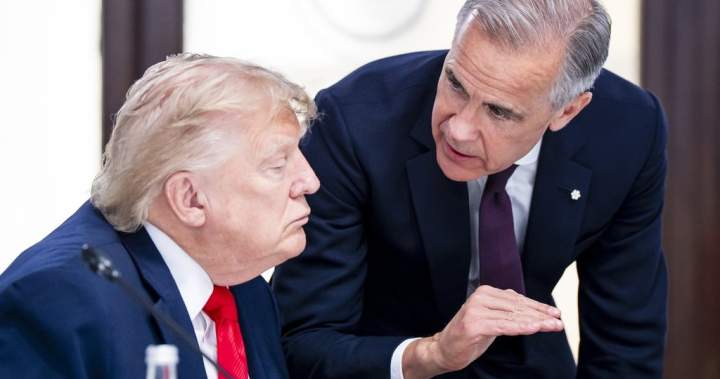
Political tensions are rising in Ottawa as Conservative members of Parliament push for answers regarding Canada’s approach to ongoing trade disputes with the United States. On July 26, 2026, the Conservative shadow minister for Canada-U.S. relations formally requested an emergency meeting to address what many consider a critical gap in the federal government’s communication strategy.
Emergency Meeting Request Puts Pressure on Liberal Government
Shuv Majumdar, the Conservative shadow minister responsible for Canada-U.S. relations, has sent a formal letter to Prime Minister Mark Carney demanding immediate transparency about Ottawa’s Trump negotiation plan. The request calls for an emergency session of the Standing Committee on International Trade to be convened next week, where government officials would be required to present their written strategies for handling the escalating trade conflict.
“Carney must explain how the government will address Trump’s latest tariff threat,” stated Majumdar in his letter to the Prime Minister, emphasizing the urgency of the situation facing Canadian businesses and workers.
This demand comes in direct response to U.S. President Donald Trump’s announcement earlier in the week that his administration would impose 50 percent tariffs on a wide range of Canadian products within 30 days. The Trump negotiation plan, or lack thereof according to Conservative critics, has become a focal point of political debate as Canadians brace for potential economic impacts.
Understanding the Tariff Threat and Its Implications
American officials have outlined several reasons for the proposed tariff increases, creating a complex web of trade issues that Ottawa must navigate carefully. The stated justifications include:
- Provincial bans on American alcohol products that U.S. officials view as protectionist measures
- Canada’s supply-managed dairy system, which has long been a point of contention in bilateral trade discussions
- Quotas imposed on American automobiles entering the Canadian market
For the Latin community in Canada, these trade tensions carry significant implications. Many immigrants and their families work in industries that could be directly affected by retaliatory measures or economic slowdowns resulting from a prolonged trade dispute. From manufacturing jobs in Ontario to agricultural positions in the prairie provinces, the ripple effects of tariff wars can touch households across the country.
What This Means for Canadian Businesses and Workers
The Conservative criticism centers on what they characterize as Prime Minister Carney’s failure to deliver on campaign promises. During his electoral campaign, Carney positioned himself as uniquely qualified to manage relations with the American administration, drawing on his extensive experience in financial leadership. However, opposition members now argue that the government has yielded too readily to American demands without securing meaningful concessions in return.
Small business owners, particularly those involved in cross-border trade, are watching these developments with growing concern. The uncertainty surrounding the Trump negotiation plan affects everything from inventory planning to hiring decisions. For entrepreneurs in the Latin community who have built businesses connecting Canadian and American markets, clarity from Ottawa is not just politically desirable but economically essential.
Key Points for Community Members to Monitor
As this political situation develops, residents should stay informed about several critical aspects of the ongoing dispute:
- The outcome of any emergency committee meeting and whether the government agrees to present written negotiation strategies
- Specific Canadian products targeted by the proposed 50 percent tariffs
- Provincial responses to American concerns about alcohol distribution policies
- Potential retaliatory measures Canada might implement if negotiations fail
- Support programs that may become available for affected industries and workers
The Standing Committee on International Trade has historically served as an important forum for examining Canada’s trade relationships. An emergency session would provide parliamentarians from all parties the opportunity to scrutinize the government’s approach and potentially influence the direction of future negotiations with Washington.
Looking Ahead: What Canadians Can Expect
The 30-day timeline announced by the Trump administration creates a pressing deadline for diplomatic efforts. Whether Prime Minister Carney accepts the Conservative request for an emergency meeting remains to be seen, but the political pressure to demonstrate a coherent Trump negotiation plan will only intensify as the tariff implementation date approaches.
For now, Canadians are encouraged to stay informed through reliable news sources and to contact their local representatives if they have concerns about how trade policies might affect their communities. The coming weeks will be crucial in determining whether Ottawa can navigate these challenging waters while protecting Canadian economic interests and maintaining a functional relationship with its largest trading partner.
