


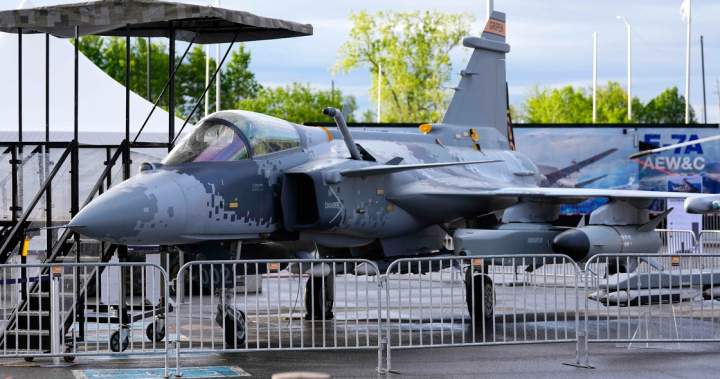
Swedish aerospace and defense company Saab has made a compelling offer to the Canadian government, announcing that pilot training programs would be established on Canadian soil if Ottawa decides to purchase its Gripen fighter jets. The announcement, made on July 17, 2026, represents a significant development in Canada’s ongoing deliberations about its future fighter jet fleet.
Partnership with Canadian Defense Company CAE
Saab revealed that it has entered into a strategic partnership with CAE, a prominent Canadian company specializing in simulation technologies and training solutions. This collaboration would ensure that critical aspects of Canada’s fighter jet program remain under domestic control, addressing potential concerns about sovereignty and operational security.
The companies stated that the deal would mean critical operational and mission systems information would stay in Canada under Canadian control.
This commitment directly addresses one of the key considerations that Canadian defense officials have been weighing as they evaluate their options for modernizing the country’s aging fleet of fighter aircraft. The promise of keeping sensitive military technology and training within Canada’s borders could prove to be a decisive factor in the government’s final decision.
Context of the Fighter Jet Review
The Saab proposal comes at a pivotal moment for Canadian defense procurement. Prime Minister Mark Carney’s government has been conducting a comprehensive review of whether to proceed with the existing contract to purchase 88 F-35 fighter jets from American manufacturer Lockheed Martin. This review was initiated following the return of U.S. President Donald Trump to office and the subsequent escalation of trade tensions between the two neighboring countries.
The Liberal government has remained tight-lipped about when a final decision will be announced, leaving defense contractors like Saab an opportunity to present alternative solutions that might better align with Canada’s evolving geopolitical considerations.
What Saab Is Offering Canada
The Swedish manufacturer has been actively courting Ottawa with an increasingly attractive package of incentives. Earlier in the spring of 2026, Saab announced that some of its Gripen jets destined for Ukraine could potentially be manufactured in Canada if the government decides to add the aircraft to its fleet. Combined with the pilot training commitment announced on July 17, 2026, the offer includes:
- Comprehensive domestic pilot training programs
- Advanced flight simulation facilities operated within Canada
- Ongoing support and maintenance programs
- Potential manufacturing of Gripen jets on Canadian soil
- Canadian control over critical operational and mission systems
- Partnership with established Canadian defense company CAE
These offerings represent a substantial commitment to Canadian economic and industrial interests, potentially creating numerous high-skilled jobs in the aerospace and defense sectors.
Foreign Minister Joly’s Engagement with Sweden
Canada’s Foreign Affairs Minister has previously indicated that conversations with Sweden regarding the Gripen fighter jet deal would continue. This diplomatic engagement suggests that Ottawa is seriously considering alternatives to the American F-35, particularly in light of the strained trade relationship with the United States.
The Gripen E represents the latest evolution of Saab’s fighter jet technology, featuring advanced avionics, reduced operational costs compared to some competitors, and a reputation for reliability. For Canada’s military needs, particularly in Arctic surveillance and air defense, the Gripen could present a viable alternative to American aircraft.
Implications for Canadian Defense Policy
The decision about which fighter jet to purchase extends far beyond simple military considerations. It touches on questions of national sovereignty, economic development, diplomatic relationships, and Canada’s position in an increasingly complex global security environment.
For the Latin community in Canada, many of whom have connections to countries that operate various fighter jet platforms, this decision will have implications for Canada’s international relationships and its standing as a reliable defense partner. The outcome of this procurement process will shape Canadian defense policy for decades to come.
As the Carney government continues its review, defense industry observers and Canadian citizens alike await a decision that will define the future of the country’s air defense capabilities while potentially reshaping its relationship with traditional allies and new partners in the process.
