


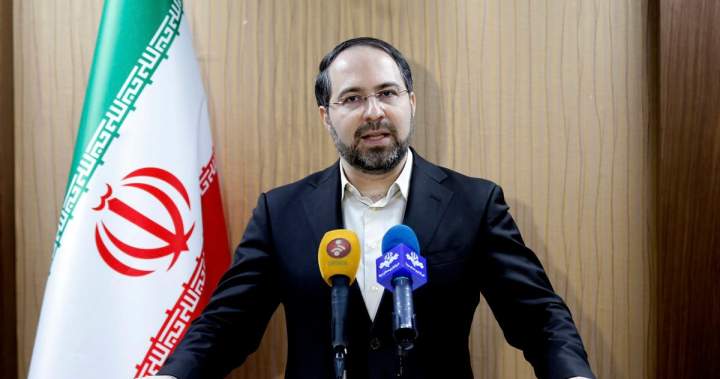
A former high-ranking official from Iran’s government who was discovered living in Canada is now battling to prevent his removal from the country, according to recently obtained court documents. Seyed Salman Samani, who previously served as Iran’s deputy interior minister, has filed an appeal with the Federal Court arguing that his deportation would violate his fundamental rights.
Legal Battle Unfolds in Federal Court
On July 1, 2026, Samani submitted a court application in Toronto challenging an Immigration, Refugees and Citizenship Canada decision from June 19 that denied his request to postpone his removal to Iran. The 45-year-old former government spokesperson characterized the decision as both unlawfully made and patently unreasonable, requesting that the court overturn the ruling entirely.
In an unusual move, Samani simultaneously filed an anonymity order notice with the court, asking that his identity be concealed from all documents related to his appeal. Citing the high-profile nature of his case, he requested to be identified only through randomized initials such as A.B. or X.Y. The court has not yet issued a decision on either matter.
One of Dozens of Regime Members Found in Canada
Samani is among nearly three dozen alleged senior members of Iran’s repressive government who have been identified living within Canadian borders, according to federal immigration officials. Despite the Immigration and Refugee Board ordering his deportation more than two years ago, court records indicate he remains in the country.
“The subject demonstrated his commitment and loyalty to the regime throughout his career,” stated a Canada Border Services Agency report on Samani obtained through official channels.
The CBSA has declined to provide comments on this specific case, maintaining standard protocol regarding individual deportation proceedings.
A Career Politician With Deep Government Ties
According to the CBSA’s detailed report, Samani served as a career politician who held numerous government positions in Iran between 2007 and 2021. His roles placed him in significant positions of power within the Iranian government structure.
Key findings from the CBSA investigation include:
- Samani held significant influence on the exercise of government power
- His position was only two levels removed from the President of Iran
- As Ministry of Interior spokesperson, he served as a conduit for state propaganda
- He was responsible for disseminating information aligned with government narratives
- His role involved suppressing dissenting views and opposition voices
The CBSA report further alleged that Samani’s department was responsible for deploying agents to attack political protests and for frequent violations of speech and assembly rights throughout Iran.
Journey to Canada and Deportation Proceedings
After departing the Iranian government in August 2021, Samani traveled to Canada using a visitor visa that had been issued in Ankara, Turkey. His presence in the country went largely unnoticed until immigration authorities began intensifying their efforts to identify regime members.
In 2024, Samani became one of the first Iranian regime members to face a deportation hearing before the Refugee Board under Canada’s ban on senior Iranian officials. During his hearing, he attempted to minimize his importance within the government structure and denied any personal involvement in human rights abuses.
Canada’s Ongoing Challenge With Iranian Officials
The Canadian government implemented a ban in 2022 prohibiting all senior Iranian government officials from entering the country. However, immigration officials have faced significant challenges in actually removing those already present on Canadian soil.
The statistics paint a concerning picture for advocates calling for stronger enforcement:
- 34 suspected regime members have been identified by the CBSA for possible deportation
- Only one individual has actually been returned to Iran to date
- Iranian-Canadian communities have repeatedly called for improved screening measures
- Concerns persist that Canada may become a safe haven for regime members
Iranian-Canadian advocacy groups have long expressed frustration over what they perceive as inadequate vetting processes and slow deportation procedures. Many community members argue that allowing former regime officials to remain in Canada sends the wrong message to victims of human rights abuses in Iran.
As Samani’s case continues to wind through the federal court system, it represents a critical test of Canada’s commitment to holding Iranian officials accountable while navigating complex legal protections available to all individuals facing deportation. The outcome could set important precedents for the remaining cases involving suspected regime members currently residing in the country.
