


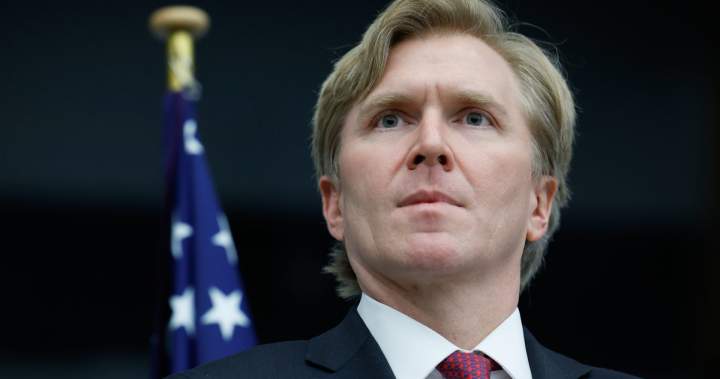
A high-ranking member of the Trump administration has launched a pointed critique against the growing international discussion surrounding a “middle powers” strategy, dismissing it as an unhelpful distraction from more pressing geopolitical realities. The comments, made on July 15, 2026, appear to directly challenge diplomatic efforts championed by Canadian Prime Minister Mark Carney.
Pentagon Official Questions Allied Strategy
U.S. Undersecretary of Defense for Policy Elbridge Colby took to social media platform X to share his administration’s perspective on recent discussions about middle-sized nations forming strategic alliances independent of superpower influence. His remarks represent the most direct pushback yet against the coalition-building efforts that several allied nations have been pursuing.
“From our point of view, a collective middle powers strategy is based on a faulty understanding of international relations. We are flexible realists. So, we view the international scene through the prism of interest, geography, economics, military power, etc. ‘Middle powers’ don’t have a coherent basis for alignment.”
Colby also addressed speculation that frustration with American foreign policy might lead allied nations to seek defense equipment from alternative sources. He firmly rejected this notion, characterizing such concerns as overblown and impractical.
Defense Industry Access Called a ‘Privilege’
The Pentagon official made clear that the Trump administration views access to American military technology and defense industrial capabilities as something nations must earn rather than expect. This stance has significant implications for countries that have traditionally relied on American defense partnerships.
Colby outlined several key points in his assessment:
- The American defense industrial base remains the dominant force in global military equipment markets
- Allied nations attempting to create alternative supply chains are “wasting valuable time, money, and political capital”
- The administration welcomes allied investment in their own defense capabilities, but only when collaborative with American interests
- Any attempt to replicate or replace American defense industry dominance is viewed as futile
Despite the sharp rhetoric, Colby did encourage allied nations to increase their defense spending and invest in their own capabilities. However, he emphasized that such investments should complement rather than compete with American defense priorities.
Direct Challenge to Canadian Diplomatic Efforts
While Colby did not mention specific countries or leaders by name, his comments appear to be a direct response to Prime Minister Mark Carney’s diplomatic initiatives. Carney has been a vocal advocate for middle powers cooperation since his speech at the World Economic Forum in Davos earlier in 2026.
During that January address, Carney articulated a vision for nations like Canada to work together to protect their interests in an increasingly unpredictable global environment dominated by superpowers. He argued that collective action was essential for countries that lack the individual leverage to negotiate with larger powers.
“Our view is the middle powers must act together because if we’re not at the table, we’re on the menu. But I’d also say that great powers can afford, for now, to go it alone. They have the market size, the military capacity and the leverage to dictate terms. Middle powers do not.”
Carney has continued promoting this strategy in subsequent international appearances, including during a visit to Australia in March 2026 where he emphasized that middle powers possess more influence than many recognize.
Canada’s Response and Ongoing Efforts
Canadian officials have indicated that despite American skepticism, the middle powers strategy is already producing concrete results. David Lametti, serving as Canada’s Ambassador to the United Nations, stated on July 2, 2026, that the framework Carney outlined has begun materializing through various bilateral and multilateral arrangements.
Lametti described the approach as flexible and issue-specific, establishing different types of relationships tailored to particular challenges. He noted that this pragmatic methodology aligns with Prime Minister Carney’s original vision for cooperation outside traditional institutional frameworks.
For Canadians and the broader Latin community in Canada, these developments carry significant implications. Trade relationships, defense cooperation, and diplomatic alignments may all be affected as tensions between the traditional American alliance system and emerging middle power coalitions continue to evolve. The coming months will likely reveal whether this rhetorical clash translates into substantive policy changes affecting Canada’s relationship with its southern neighbor.
