


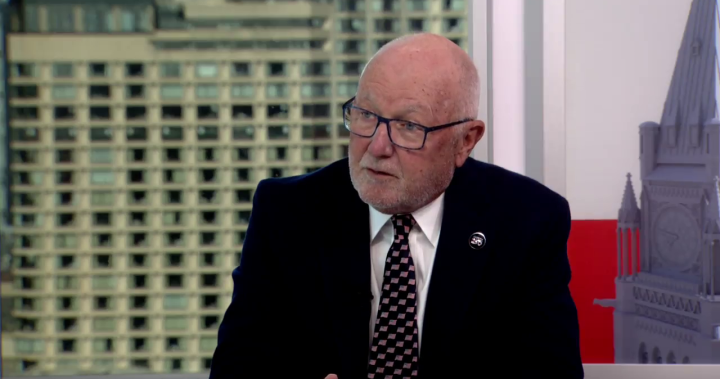
The diplomatic relationship between Canada and the United States faces renewed tension as President Donald Trump has issued stern warnings about imposing new tariffs on Canada, this time citing the ongoing wildfire smoke crisis that has affected air quality across multiple American cities. U.S. Ambassador to Canada Pete Hoekstra confirmed on July 17, 2026, that these threats should be taken with the utmost seriousness.
Ambassador Hoekstra Defends Presidential Position
In an exclusive interview conducted just 30 minutes after President Trump’s social media post, Ambassador Hoekstra made it clear that the administration is prepared to take action. The ambassador defended the president’s stance, emphasizing that Canada must be held accountable for what the administration considers inadequate forest management practices.
“The president is saying, yeah, I’m holding Canada accountable. We need to fix this. There are potential consequences if we don’t get to a resolution,” Hoekstra stated during the interview.
While Hoekstra declined to specify the potential size of any tariffs or reveal the legal mechanisms the administration might employ, his message was unambiguous. The ambassador warned that dismissing presidential threats would be unwise, stating that not taking the president of the United States seriously is something nations do at their own risk.
Economic and Environmental Impact on American Cities
The wildfire smoke originating from Canadian forests has created significant disruptions across the United States. Several major metropolitan areas have been affected by the hazardous air quality conditions, including:
- Detroit, Michigan – experiencing severe air quality warnings
- Washington, D.C. – government operations affected by smoke conditions
- Chicago, Illinois – residents advised to limit outdoor activities
- New Jersey – potential World Cup final postponement under consideration
Ambassador Hoekstra outlined numerous economic consequences that American communities are experiencing due to the cross-border smoke. Businesses have been forced to close their doors because employers feel it is unsafe for workers to report to their jobs. The tourism industry has suffered significant losses, and even agricultural operations have been impacted, with reports that bees are unable to pollinate effectively under these conditions.
Congressional Representatives Join the Criticism
The frustration with Canada extends beyond the White House and into the halls of Congress. A group of Republican House members sent a formal letter to Prime Minister Mark Carney during the week of July 17, 2026, demanding immediate action from the Canadian government. The representatives who signed the letter include:
- Representative Jack Bergman
- Representative John James
- Representative Lisa McClain
- Representative John Moolenaar
The lawmakers did not mince words in their communication, asserting that American citizens are paying the health price for what they characterized as Canadian inaction that occurs year after year. They argued that national sovereignty comes with responsibility, particularly the obligation to prevent foreseeable disasters from crossing into another country’s airspace.
World Cup Final Could Face Postponement
In a development that could have international sporting implications, Ambassador Hoekstra revealed that President Trump will not hesitate to request a postponement of the World Cup final scheduled for Sunday if wildfire smoke continues to blanket New Jersey. This potential action demonstrates how seriously the administration is treating the air quality crisis and its willingness to take unprecedented steps in response.
This is not the first time President Trump has threatened additional tariffs against Canada over policy disagreements. Previous threats included a proposed 10 percent levy connected to the Ontario government’s anti-tariff advertising campaign, though those particular threats were never implemented. However, Ambassador Hoekstra’s comments suggest that the current situation may be viewed differently by the administration.
Ontario Premier Doug Ford responded to the American criticism by suggesting that the United States should offer wildfire support rather than simply complaining about smoke crossing the international border. The Ford government has also defended its spending on forest fire prevention and response measures as smoke continues to affect communities on both sides of the border.
For the Latin community in Canada, these developments represent another chapter in the ongoing trade tensions that have characterized recent Canada-U.S. relations. The outcome of this dispute could have significant implications for Canadian exports and the broader economic relationship between the two nations.
