


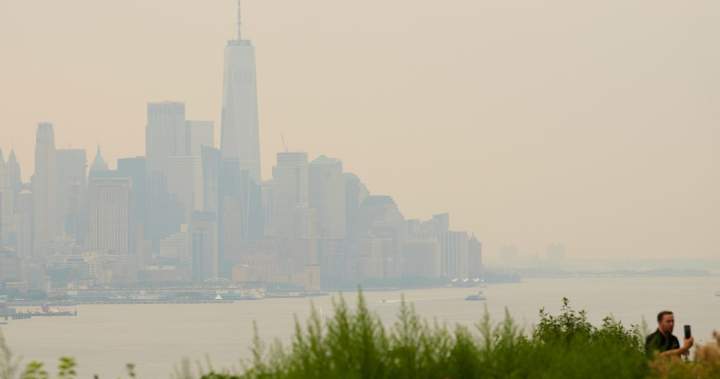
Tensions between Canada and the United States have escalated once again, this time over wildfire smoke drifting across the border and affecting air quality in American communities. On July 16, 2026, a group of Republican members of the U.S. House of Representatives sent a strongly-worded letter to Prime Minister Mark Carney demanding immediate action to address what they describe as Canadian negligence in forest management.
American Lawmakers Express Frustration Over Cross-Border Smoke
Representatives Jack Bergman, John James, Lisa McClain, and John Moolenaar jointly authored the letter, which was reportedly sent on Wednesday. The lawmakers made it clear that their patience has worn thin after years of dealing with smoke from Canadian wildfires affecting their constituents in Michigan and surrounding areas.
“American lungs are paying the price for Canadian inaction, year after year. Sovereignty comes with responsibility, and the responsibility to prevent a foreseeable disaster from crossing into another country’s airspace has not been met.”
This is not the first time these representatives have raised concerns about Canadian wildfire smoke. According to the letter, Representatives James and Bergman each sent separate communications to the Canadian government last year expressing similar complaints. However, they now feel compelled to act jointly because, as they stated, “a year has passed, the season has come around again, and nothing has changed except that our patience has run out.”
Context of Sovereignty Comments Amid Political Tensions
The pointed reference to Canadian sovereignty carries additional weight given the current political climate between the two nations. U.S. President Donald Trump has repeatedly threatened to make Canada the “51st state” and has also made threats regarding the annexation of Greenland. The letter’s language appears to echo these sentiments while focusing specifically on the wildfire issue.
The lawmakers went further, suggesting that the United States might take unilateral action if Canada fails to address the problem adequately. Their letter outlined several potential responses that the U.S. government might consider:
- Direct involvement by American agencies in cross-border fuel reduction efforts
- Enhanced firefighting capacity deployed from the United States
- Independent action to protect American citizens from cross-border smoke
- Exploring alternative measures if diplomatic solutions prove insufficient
The letter concluded with a stark warning, stating that “We are done accepting apologies in place of action. If Canada will not manage its forests to prevent these fires, the United States will look elsewhere, and act on our own, to protect our people.”
Canada Faces Unprecedented Wildfire Challenges
Canada has been battling some of the most severe wildfire seasons on record in recent years. The Canadian government has taken steps to bolster its firefighting capabilities, including leasing additional fire-fighting aircraft in May 2026 to combat this year’s wildfire season. Despite these efforts, numerous communities continue to face evacuation orders as homes and entire livelihoods are destroyed by the flames.
The current situation in Northern Ontario has been particularly devastating, with severe wildfires forcing evacuations and destroying infrastructure in multiple communities. Collins First Nation has been especially hard hit, with residents forced to flee as essential infrastructure was wiped out by the advancing fires.
Environment Canada has issued air quality alerts for dozens of communities across the country, including major urban centers like Toronto. The smoke has transformed skies across wide swaths of the nation and has indeed drifted southward into Michigan and other parts of the northern United States, triggering health concerns on both sides of the border.
Canadian Government Response Pending
As of the publication of this story, neither the Prime Minister’s Office nor Global Affairs Canada had responded to requests for comment on the letter from American lawmakers. The lack of immediate response may indicate that Canadian officials are carefully considering their reply to what many observers see as an unusually aggressive diplomatic communication.
For the Latin community in Canada, many of whom work in sectors affected by wildfire evacuations or live in communities experiencing poor air quality, the situation underscores the broader challenges facing the country during an increasingly severe fire season. Health officials continue to advise residents in affected areas to limit outdoor activities and monitor local air quality reports.
The diplomatic tension between the two neighbors serves as a reminder that environmental challenges increasingly transcend national borders, creating complex political situations that require cooperation rather than confrontation to resolve effectively.
