


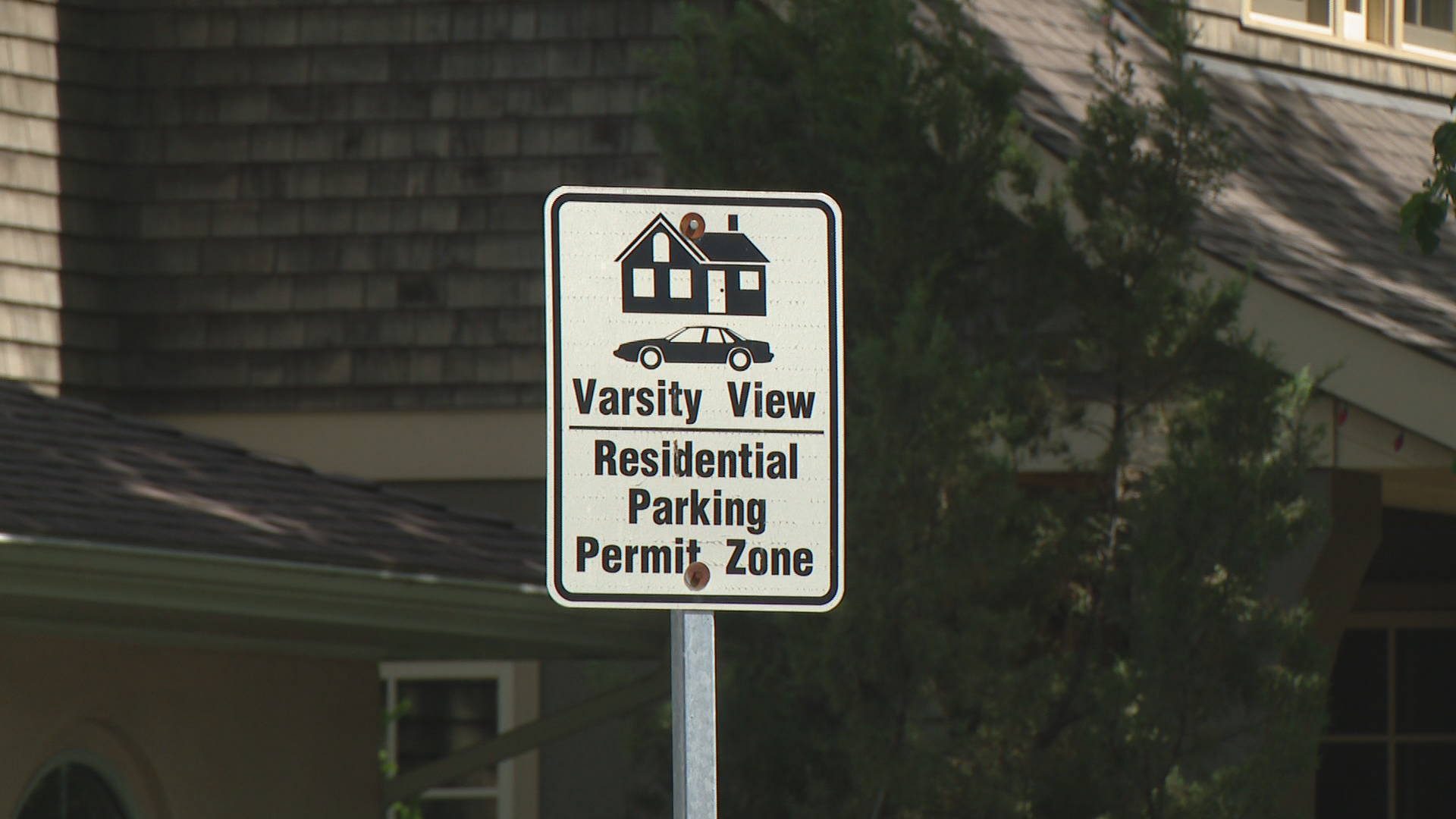
Homeowners in Saskatoon’s Varsity View neighbourhood are voicing strong opposition to proposed increases in residential parking permit fees that could see costs jump by as much as four times the current rate.
What Changes Are Being Proposed?
The city’s residential parking program, which has maintained the same pricing structure since its launch in 1999, is undergoing a comprehensive review. Currently, residents pay just $25 annually for a permit allowing unlimited street parking. Under the new proposals, that fee could rise to between $75 and $100, depending on which pricing model the city adopts.
City officials are considering two different approaches: a congestion-based model with tiered pricing where second permits cost $120 and third permits cost $200, or a flat-rate option charging $100 for all permits regardless of quantity. Visitor permits would also double from $25 to $50, while daily temporary permits could increase fivefold from $1 to $5.
Why Is the City Considering These Changes?
According to Matt Grazier, Saskatoon’s community standards director, the program currently operates at a significant deficit. City data reveals the parking program cost approximately $291,850 last year while generating only $68,500 in revenue. Rising fuel costs, vehicle expenses, and modern enforcement technology including camera-equipped patrol vehicles have all contributed to increased operational expenses.
Residents Feel Unfairly Burdened
Clinton Ekdahl, president-elect of the Varsity View Community Association, argues that neighbourhood residents are bearing an unfair burden. He points out that workers from nearby Royal University Hospital and University of Saskatchewan students frequently park on residential streets to avoid institutional parking fees, often moving their vehicles every two hours to circumvent time restrictions. Despite already paying some of the highest property taxes in the city, local homeowners frequently struggle to find parking near their own homes.
The Saskatchewan Health Authority has acknowledged residents’ frustrations with the limited street parking situation as discussions about the proposed changes continue within the community.
