


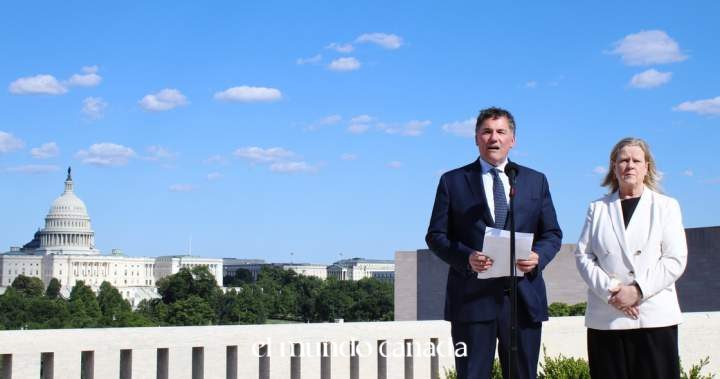
The US-Canada trade deal negotiations have entered their most critical phase as Ottawa and Washington race against a midnight deadline on August 21, 2026. Without a finalized agreement, Canada faces sweeping 50 per cent tariffs on goods worth billions of dollars. The stakes couldn’t be higher for Canadian workers, businesses, and the Latin community employed across key industrial sectors.
Canada-U.S. Trade Minister Dominic LeBlanc is scheduled to meet with U.S. Trade Representative Jamieson Greer on the morning of Friday, August 21. This follows intensive negotiations in Washington, D.C. where Canadian officials have been working to finalize the finer points of a tentative trade agreement. The American tariffs were initially expected to take effect on Wednesday, but U.S. President Donald Trump delayed the levies for three days citing a deal that was in the works.
Negotiations Reach Critical Stage
Minister LeBlanc and chief negotiator Janice Charette have been leading the Canadian delegation in Washington. After a meeting with Greer that lasted approximately three hours on Thursday afternoon, LeBlanc expressed cautious optimism about the progress being made.
“We’re very close, we continue to make progress.”
According to a source with direct knowledge of the talks, the United States could reduce steel and aluminum tariffs from 50 per cent to 25 per cent. Additionally, auto tariffs could drop from 25 per cent to 15 per cent. Two additional sources confirmed to Global News that tariff relief for Canada’s softwood lumber industry is also being discussed at the negotiating table.
What Tariff Changes Could Mean for Workers
The potential US-Canada trade deal carries enormous implications for Canadian industries and the workers who depend on them. The steel sector, aluminum production, automotive manufacturing, and lumber operations employ thousands of Canadians, including many members of the Latin community who have built careers in these vital industries.
If the midnight deadline passes without an agreement, the full 50 per cent tariffs would make Canadian exports significantly more expensive in the American market. This could lead to reduced production, layoffs, and potential plant closures across multiple provinces.
Conservative Leader Pierre Poilievre has been vocal about the potential consequences of accepting a deal with remaining sectoral tariffs. He warned that keeping tariffs on steel, aluminum, automobiles, and lumber would be completely unacceptable.
“Mr. Carney, keep your promise. Fight for Canada. Don’t take a bad deal. We expect a good deal, like you promised.”
Poilievre emphasized that further tariffs would lead to the “de-industrialization of our economy” and result in jobs in key sectors moving south of the border to the United States.
The Alcohol Boycott Controversy
One of the most contentious issues affecting the US-Canada trade deal negotiations has been provincial boycotts of American alcohol. These measures have been a major trade irritant for President Trump, who pointed to what he called “discriminatory” measures when he announced fresh tariffs on Canada last month.
During a virtual meeting with Canada’s premiers on Wednesday, Prime Minister Mark Carney asked provincial leaders to put U.S. alcohol back on their shelves to help the deal progress. Several premiers confirmed this request was made directly by the Prime Minister.
Manitoba Premier Wab Kinew offered a skeptical perspective on the trade negotiations and the reliability of any agreement with the current U.S. administration. He expressed concern about the unpredictable nature of American trade policy.
“(We could have) the best deal in the world today. (If) things go off the rail in Iran for him next month, who is to say he’s not going to try and whack us on the head again?”
Premier Kinew announced he was not restoring U.S. alcohol to Manitoba’s shelves on Thursday. He acknowledged that Prime Minister Carney had clearly asked the provinces to reinstate American liquor and even offered to take the blame for the decision.
Provinces Remain Cautious About Deal
The provincial response to the trade negotiations has been measured and strategic. Kinew noted that the provinces reserve the right to remove American alcohol from shelves again if circumstances change. His reasoning reflects broader concerns about the stability of any agreement.
“We reserve the right to take it back off again, because we know that this guy is very erratic, the American president. And he may go back on his word, as he’s done countless times.”
The Manitoba Premier also acknowledged that some sectoral tariffs are likely to remain in place despite any new trade agreement. This assessment aligns with concerns raised by Conservative Leader Poilievre about the potential long-term damage to Canadian manufacturing.
For Canadian workers in affected industries, the uncertainty surrounding these negotiations creates significant anxiety. Many Latin American immigrants have found stable employment in manufacturing, steel production, and automotive plants across Ontario, Quebec, and other provinces.
What Happens After Midnight
The midnight deadline on August 21, 2026 represents a crucial moment in Canada-U.S. relations. If Minister LeBlanc and Trade Representative Greer can finalize the agreement, Canadian industries could see significant tariff relief on key exports including steel, aluminum, and automobiles.
However, even with an agreement in place, the lingering sectoral tariffs could continue to impact Canadian competitiveness. The potential reduction from 50 per cent to 25 per cent on steel and aluminum would still represent a significant cost burden compared to tariff-free trade under previous arrangements.
The softwood lumber discussions are particularly important for British Columbia and other provinces with significant forestry industries. Thousands of workers in these communities depend on access to the American housing market for their livelihoods.
Canadians should monitor the situation closely as the deadline approaches. The outcome will affect prices, employment, and economic stability across multiple sectors. For the Latin community working in manufacturing and industrial sectors, the results could directly impact job security and future opportunities.
What tariffs does Canada face without a trade deal?
Without a finalized agreement by the midnight deadline, Canada faces 50 per cent tariffs on goods worth billions of dollars. These tariffs would affect multiple sectors including steel, aluminum, automobiles, and potentially lumber.
What tariff reductions are being negotiated?
According to sources with knowledge of the talks, the U.S. could reduce steel and aluminum tariffs from 50 per cent to 25 per cent, and auto tariffs from 25 per cent to 15 per cent. Softwood lumber relief is also being discussed.
Why is American alcohol being discussed in trade talks?
Provincial boycotts of American alcohol have been a major trade irritant for President Trump. He called these measures “discriminatory” when announcing tariffs on Canada. Prime Minister Carney asked premiers to restore U.S. alcohol to help negotiations.
When is the deadline for the Canada-U.S. trade deal?
The deadline is midnight on August 21, 2026. The tariffs were originally expected on Wednesday but were delayed by President Trump for three days to allow negotiations to continue.
📘 Follow El Mundo Canada on our social networks: Facebook | Twitter
