


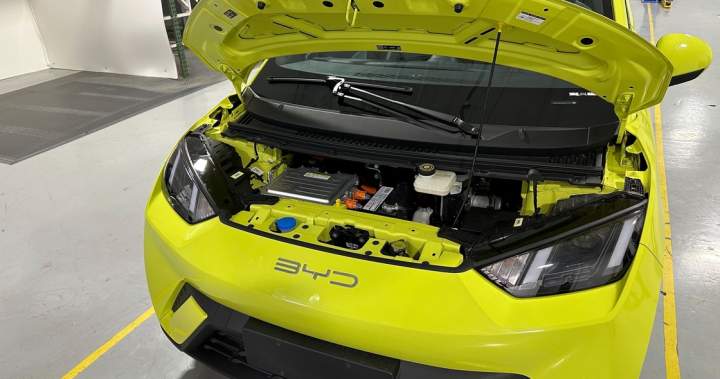
The growing presence of Chinese electric vehicles in the North American market has become a pivotal issue in ongoing trade negotiations between Mexico, the United States, and Canada. Mexico’s Secretary of Foreign Affairs Roberto Velasco Alvarez confirmed on July 17, 2026, during a visit to Ottawa, that discussions surrounding Chinese EVs are now firmly embedded in the trilateral trade talks.
Mexico Addresses Chinese EV Concerns in Ottawa Meetings
Secretary Alvarez met with Canadian Foreign Affairs Minister Anita Anand in the Canadian capital to discuss bilateral relations and the broader framework of North American trade. When questioned about whether Chinese electric vehicles sold in Mexico could pose obstacles to extending the Canada-United States-Mexico Agreement, Alvarez acknowledged the topic’s significance in current negotiations.
“Of course, this is part of the USMCA talks, and we continue to look for ways as well to lower the tariffs that the United States has implemented on Mexico,” stated Secretary Alvarez during the press conference.
The trade agreement, known as USMCA in the United States and T-MEC in Mexico, serves as the foundation for virtually all free trade across the North American continent. Its future has been uncertain since early July 2026, when United States Trade Representative Jamieson Greer announced that Washington would not renew the agreement in its current form.
Annual Reviews Replace Automatic Extension
The decision by the United States has triggered a significant shift in how the trade deal will be managed moving forward. Instead of a straightforward extension, the agreement will now face annual reviews as negotiations continue between the three nations. This rolling review process could extend for up to a decade, after which the agreement would expire if no extension is reached.
The key points of contention in current negotiations include:
- Chinese electric vehicle imports into Mexico, which now represent approximately 20 percent of the country’s auto market
- Canada’s agreement to allow up to 49,000 Chinese EVs annually at a preferential tariff rate of 6.1 percent
- Concerns from the Trump administration about North America becoming an entry point for Chinese automotive products
- Tariffs imposed by the United States on Mexican goods
Minister Anand addressed Canadian import policies, noting that the 49,000 Chinese electric vehicles permitted entry each year would constitute less than three percent of the Canadian automotive market. She emphasized the importance of establishing clear boundaries while recognizing the deeply integrated nature of North American trade relationships.
Mexico Clarifies Its Position on Chinese Manufacturing
Secretary Alvarez provided important context regarding Mexico’s relationship with Chinese automakers. He explained that Mexico’s imports primarily serve the lowest-cost vehicle sector of the domestic market, rather than representing a broader strategic shift toward Chinese manufacturing.
“We don’t have a large manufacture of Chinese vehicles in Mexico right now. I don’t think there’s more than one Chinese manufacturer in Mexico. At this point, we import vehicles from China for mainly the lowest cost vehicle sector of our market,” Alvarez clarified.
When asked whether Mexico might consider abandoning the trilateral framework in favor of a bilateral agreement exclusively with the United States, Alvarez firmly dismissed such speculation. He reaffirmed Mexico’s commitment to the three-party structure while acknowledging that each country maintains separate bilateral concerns that require individual attention.
What This Means for the Latin Community in Canada
For Latin Americans living in Canada, these trade negotiations carry significant implications. The automotive industry employs thousands of workers across North America, many of whom have family connections throughout the region. Any disruption to the trade agreement could affect employment opportunities, consumer prices for vehicles, and the overall economic relationship between the three nations.
The ongoing discussions also highlight the delicate balance that Canada must maintain between its economic relationship with China and its partnership with the United States. As negotiations continue, both Canada and Mexico appear committed to preserving the trilateral framework that has governed North American trade for years.
Trade experts will be watching closely as the annual review process unfolds, with the electric vehicle sector likely to remain at the forefront of discussions for the foreseeable future.
