


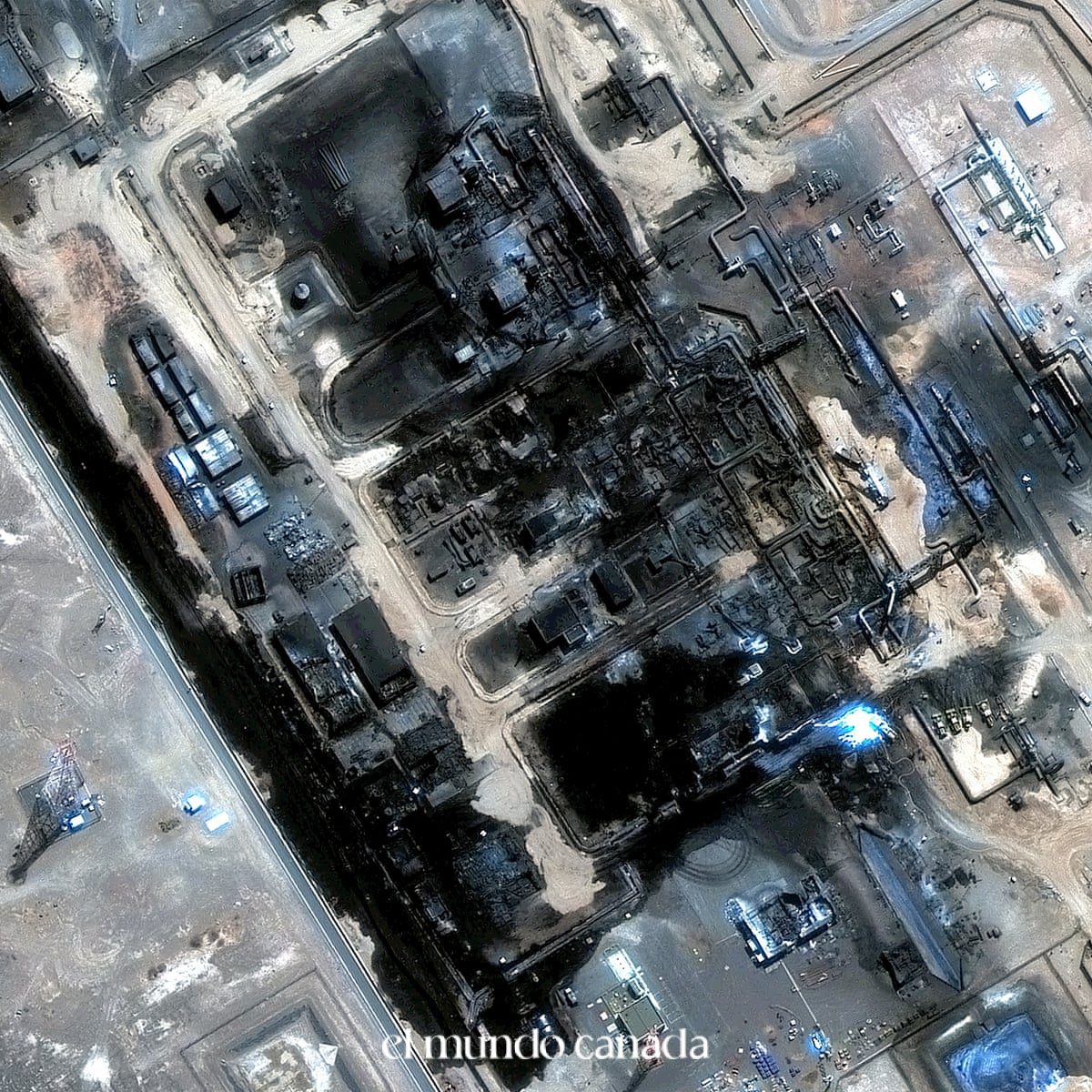
A devastating drone attack on September 11, 2026, has left Saudi Arabia’s critical east-west pipeline severely damaged, threatening to cut off 4% of the world’s oil supply within days. Satellite images released on September 13 reveal a charred and badly damaged pumping station at al-Mesabaah, raising alarm bells across global energy markets and putting pressure on fuel prices that affect consumers worldwide, including Canadians.
Satellite Images Reveal Extensive Damage
The satellite imagery released by Vantor on Sunday night paints a grim picture of the destruction. The pumping station along the 1,200-kilometer (745-mile) pipeline appears extensively charred, with visible structural damage that experts say could take significant time to repair.
Saudi Arabia has blamed the attack on drones launched by militants in Iraq. However, Riyadh has remained tight-lipped about the full extent of the damage and how long repairs might take.
Industry sources speaking to Reuters provided varying estimates. One source suggested repairs could take up to six weeks, while another indicated the pipeline might resume partial operations sooner while work continues.
Global Oil Supply Crisis Deepens
The pipeline attack couldn’t have come at a worse time for global energy markets. On September 13, the international oil benchmark Brent crude rose more than 3.4% to reach $108 per barrel, a level not seen since May.
For the past six months, this critical pipeline has been Saudi Arabia’s lifeline. It allowed the world’s biggest oil exporter to bypass the wartime shutdown of the Strait of Hormuz, which has crippled exports from neighboring countries.
The pipeline has been rerouting approximately 4 million barrels per day to the port of Yanbu on the Red Sea. This represents roughly 4% of global supply, making any disruption a significant concern for energy markets worldwide.
Saudi Oil Stocks Running Low
The situation is becoming increasingly urgent. According to three industry sources familiar with Saudi exports, the port of Yanbu now has stocks to maintain exports for just five to seven days with the pipeline offline.
Saudi Arabia also maintains stocks at Egypt’s ports of Ain Sukhna on the Red Sea and Sidi Kerir on the Mediterranean, which could supply customers for several additional days.
However, all four industry sources agreed on a critical point: these stocks are not full and will ultimately run out without the east-west pipeline resuming operations.
Houthi Forces Expand Regional Control
The pipeline attack comes amid escalating regional tensions. Yemen’s Iran-aligned Houthi forces have intensified their campaign, launching attacks on targets in Saudi Arabia while simultaneously capturing the strategic island of Perim in the Bab al-Mandab strait.
This expansion gives the Houthis greater control over the narrow waterway, which is crucial for international shipping. The development adds another layer of complexity to an already volatile situation in the region.
The combination of the pipeline damage and Houthi advances has created a perfect storm for global energy supply concerns.
Diplomatic Efforts Face Setbacks
As oil prices climbed, hopes for a quick diplomatic resolution dimmed. Oman’s foreign minister, Sayyid Badr Albusaidi, announced late on September 13 that a scheduled regional meeting had been postponed.
“[The meeting has been postponed] in the interests of consensus.”
Iranian officials had indicated they would attend the gathering with Gulf Arab states to present an agreement with Oman on governing shipping routes through the Strait of Hormuz.
Before the current conflict, the strait was free to transit. Now, Iran requires vessels to follow new protocols, adding friction to global shipping routes.
Impact on Canadian Consumers
For Canadians, including the Latin community across the country, this crisis has direct implications. Rising global oil prices typically translate to higher costs at the pump and increased prices for goods transported by fuel-dependent vehicles.
The current supply crunch has already pushed global fuel prices to record highs and spurred inflation around the world. Canada, despite being an oil-producing nation, is not immune to these global market forces.
Energy economists warn that continued disruption to Saudi exports could sustain elevated prices well into the fall months, affecting household budgets during the transition to winter heating season.
What Happens Next
The coming days will be critical. Saudi Arabia’s government media office and energy ministry have not yet responded to requests for comment about the timeline for repairs.
Market watchers will be closely monitoring several key indicators: official statements from Riyadh, progress on diplomatic negotiations, and any changes in Houthi military activities in the region.
The fate of nearly 4 million barrels per day hangs in the balance. If the pipeline remains offline beyond the current stock levels at Yanbu and Egyptian ports, the global supply crunch could intensify significantly.
Frequently Asked Questions
How much oil flows through the damaged Saudi pipeline?
The east-west pipeline normally carries approximately 4 million barrels per day to the port of Yanbu on the Red Sea, representing about 4% of global oil supply.
How long might repairs to the Saudi pipeline take?
Industry sources provided varying estimates, with one suggesting up to six weeks for full repairs, while another indicated partial operations could resume sooner while work continues.
Why is this pipeline so important for global oil supply?
For the past six months, the pipeline has allowed Saudi Arabia to bypass the wartime shutdown of the Strait of Hormuz, maintaining exports that would otherwise be blocked. Without it, Yanbu has stocks for only five to seven days of exports.
What caused the jump in oil prices?
On September 13, 2026, Brent crude rose more than 3.4% to $108 per barrel following the pipeline attack, reaching levels not seen since May due to concerns about supply disruptions.
The regional meeting that was postponed on September 14 remains unscheduled pending further diplomatic consultations. Saudi officials are expected to provide updates on pipeline repair progress in the coming days, with energy markets closely watching for any indication of when the critical 4 million barrel per day flow might resume to Yanbu.
📘 Follow El Mundo Canada on our social networks: Facebook | Twitter | Instagram
