


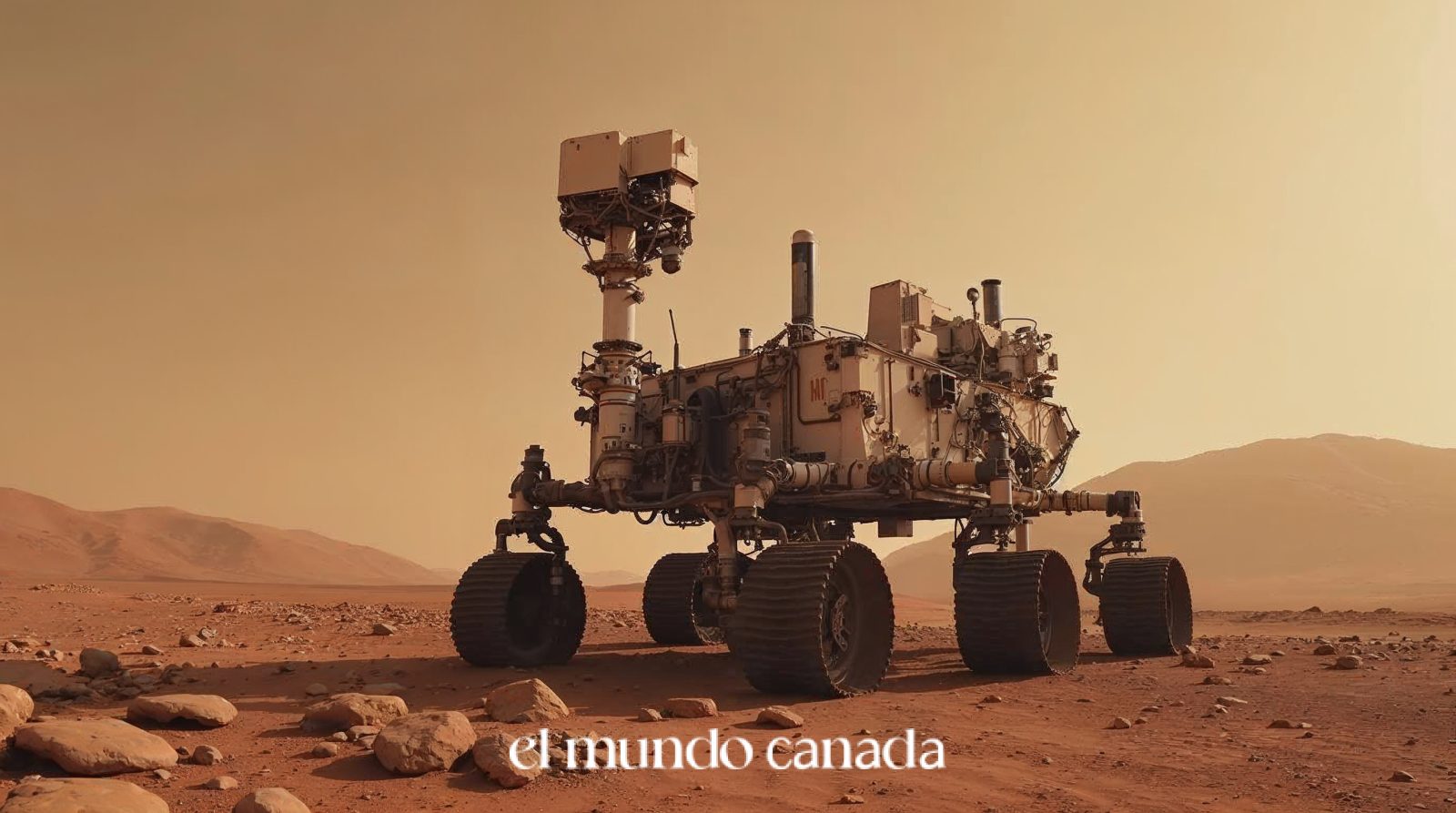
NASA’s Curiosity rover has achieved a remarkable milestone, operating on the Martian surface for nearly 14 years while continuing to send valuable scientific data and breathtaking images back to Earth. The robotic explorer, which landed on Mars in August 2012, recently transmitted a new postcard showcasing the alien landscape it has called home for over a decade, demonstrating the incredible durability of NASA engineering and the ongoing quest to understand our planetary neighbor.
This latest transmission from the Curiosity rover represents more than just another photograph from Mars. It symbolizes humanity’s persistent effort to explore beyond our home planet and gather crucial information about the Red Planet’s geology, climate, and potential for past microbial life. For space enthusiasts across Canada and the Latin community watching developments in planetary exploration, this milestone offers an opportunity to reflect on how far Mars exploration has come.
The Curiosity Mission: A Journey Across Mars
The Curiosity rover launched from Cape Canaveral, Florida, on November 26, 2011, embarking on an eight-month journey through space before touching down in Gale Crater on August 6, 2012. The landing site was carefully selected because scientists believed the crater once held water, making it an ideal location to search for signs of ancient Martian habitability.
Weighing approximately 900 kilograms and roughly the size of a small SUV, Curiosity is equipped with 17 cameras and a sophisticated suite of scientific instruments. The rover’s primary mission was initially planned for two Earth years, but NASA has extended operations multiple times due to the vehicle’s continued functionality and the wealth of scientific discoveries it keeps making.
Throughout its journey, Curiosity has traveled more than 30 kilometers across the Martian terrain, climbing the lower slopes of Mount Sharp, a 5-kilometer-tall mountain in the center of Gale Crater. Each layer of rock the rover examines tells a different chapter of Mars’ geological history, providing scientists with unprecedented insights into how the planet evolved over billions of years.
Major Scientific Discoveries from the Red Planet
The Curiosity rover has fundamentally transformed our understanding of Mars through numerous groundbreaking discoveries. One of the most significant findings came early in the mission when the rover detected evidence of an ancient streambed, confirming that water once flowed across the Martian surface. This discovery was crucial because liquid water is considered essential for life as we know it.
Analysis of rock samples collected by Curiosity has revealed the presence of organic molecules, the building blocks of life. While this doesn’t prove that Mars ever hosted living organisms, it demonstrates that the planet had the chemical ingredients necessary for life to potentially emerge. The rover also detected seasonal variations in methane levels in the Martian atmosphere, a finding that continues to puzzle scientists.
Additionally, Curiosity has measured radiation levels on the Martian surface, providing critical data for planning future human missions. Understanding the radiation environment is essential for designing habitats and spacesuits that will protect astronauts during extended stays on Mars. The rover has also studied Martian weather patterns, dust storms, and atmospheric composition.
An Engineering Marvel Built to Last
The remarkable longevity of the Curiosity rover speaks to the exceptional engineering behind the mission. Unlike its predecessors, Spirit and Opportunity, which relied on solar panels, Curiosity is powered by a radioisotope thermoelectric generator that converts heat from the decay of plutonium-238 into electricity. This power source allows the rover to operate through Martian dust storms that would cripple solar-powered vehicles.
The rover’s wheels have shown significant wear over the years, developing holes and cracks from rolling over sharp Martian rocks. NASA engineers have adapted by programming the rover to drive backward over particularly rough terrain and carefully selecting routes to minimize further damage. Despite this wear, Curiosity continues to function effectively.
Read more: Toronto Police Officer Linked to Shooter-for-Hire Attacks
The rover’s computer systems have also required creative problem-solving. When its primary computer experienced memory issues, controllers switched to a backup system. The team regularly updates Curiosity’s software to improve its autonomous driving capabilities and scientific operations, essentially upgrading the robot from millions of kilometers away.
The Future of Mars Exploration
Curiosity is no longer alone on Mars. NASA’s Perseverance rover, which landed in February 2021, is conducting its own investigations in Jezero Crater. Perseverance is collecting rock samples that a future mission will retrieve and return to Earth for detailed analysis. The Ingenuity helicopter, which accompanied Perseverance, demonstrated that powered flight is possible in the thin Martian atmosphere.
Looking ahead, NASA and international partners are developing plans for human missions to Mars, potentially in the 2030s or 2040s. The data collected by Curiosity over nearly 14 years will be invaluable for planning where astronauts should land, what resources might be available, and what hazards they might face. Canada has been an active participant in space exploration, contributing technology and expertise to various missions.
For the Latin community in Canada interested in space science, several universities offer programs in planetary science, aerospace engineering, and related fields. The Canadian Space Agency also provides opportunities for students and professionals to participate in space missions and research projects.
How Canadians Can Connect with Space Exploration
Space enthusiasts across Canada have numerous ways to engage with Mars exploration and astronomy more broadly. The Canada Aviation and Space Museum in Ottawa features exhibits on planetary exploration, while planetariums in Toronto, Vancouver, Montreal, and other cities regularly host programs about Mars and other celestial bodies.
NASA makes much of the Curiosity data publicly available, allowing amateur scientists and students to explore raw images and scientific measurements. Several citizen science projects invite volunteers to help analyze Martian features and contribute to ongoing research. These programs provide accessible entry points for anyone curious about space exploration.
Educational institutions across Canada are increasingly offering courses and programs related to space science. From astronomy clubs at community colleges to graduate research programs at major universities, opportunities exist for people at all levels to deepen their understanding of our solar system. Those interested in learning more about how to register a small business in Canada related to space technology or education can find resources through various government programs.
How long has Curiosity been on Mars?
The Curiosity rover landed on Mars on August 6, 2012, meaning it has been operating on the Martian surface for nearly 14 years. This far exceeds its original two-year mission timeline.
What has Curiosity discovered on Mars?
Curiosity has made numerous discoveries including evidence of ancient water on Mars, organic molecules in rock samples, seasonal variations in atmospheric methane, and detailed measurements of radiation levels on the Martian surface.
How is Curiosity powered?
Unlike solar-powered rovers, Curiosity uses a radioisotope thermoelectric generator that converts heat from decaying plutonium-238 into electricity. This allows the rover to operate continuously regardless of dust storms or seasonal changes.
Is Curiosity still operational?
Yes, Curiosity remains fully operational as of September 2026, continuing to send scientific data and images back to Earth while exploring Mount Sharp in Gale Crater.
What other rovers are currently on Mars?
NASA’s Perseverance rover is also currently operating on Mars, having landed in Jezero Crater in February 2021. Perseverance is collecting rock samples for future return to Earth.
📘 Follow El Mundo Canada on our social networks: Facebook | Twitter | Instagram
As Curiosity approaches the 15-year mark on Mars in August 2027, scientists continue to push the rover toward new terrain that promises additional discoveries. The mission team has outlined exploration targets extending through 2028, ensuring this pioneering robot will keep revealing secrets of the Red Planet for years to come.
Share this article with friends and family interested in space exploration and Mars discoveries. Follow El Mundo Canada for more science and technology news relevant to the Latin community in Canada.
