


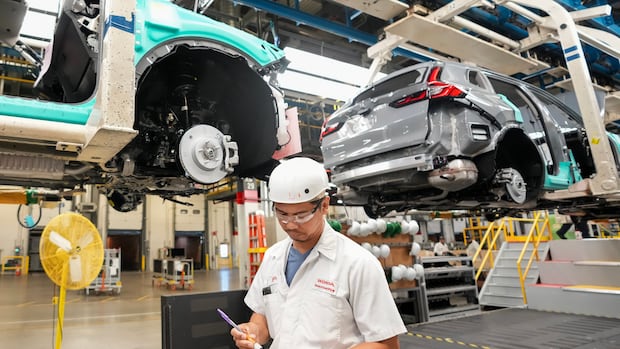
Honda has indefinitely suspended construction of its massive electric vehicle facility in Ontario, marking one of the most significant casualties of the ongoing trade tensions between Canada and the United States. The Japanese automaker announced the decision on May 14, 2026, citing profound uncertainty surrounding U.S. tariffs that have disrupted the North American automotive industry.
The $15 billion electric vehicle manufacturing complex in Alliston, Ontario, was poised to become one of the largest EV investments in Canadian history. Honda’s decision sends shockwaves through the Canadian economy and raises serious questions about the future of automotive manufacturing in the country.
Why Honda Halted the Ontario EV Project
Tariff Uncertainty Drives the Decision
Honda executives pointed directly to the unpredictable trade environment as the primary factor behind the suspension. The company had announced the ambitious EV hub project in April 2024, with plans to create thousands of jobs and transform Ontario into a major electric vehicle production center.
However, the imposition of U.S. tariffs on Canadian-made vehicles has fundamentally altered the business case for the investment. Without clarity on whether vehicles manufactured in Canada can access the American market without punitive duties, Honda cannot justify moving forward with construction.
The current trade environment makes it impossible to plan long-term manufacturing investments with confidence, according to industry analysts.
Timeline and Investment at Stake
The Alliston facility was scheduled to begin production by 2028, representing Honda’s largest single investment in Canadian manufacturing history. The project included:
- A new electric vehicle assembly plant
- Battery manufacturing facilities
- Component production operations
- Research and development centers
Honda had already begun preliminary site work and hired contractors for the initial construction phases. The suspension affects hundreds of construction workers immediately and threatens the thousands of permanent jobs the facility would have created.
Impact on Canadian Automotive Industry
Economic Ripple Effects
The suspension delivers a significant blow to Canada’s automotive sector, which has worked aggressively to position itself as a leader in EV manufacturing in North America. Federal and provincial governments had committed substantial incentives to attract the Honda investment.
Ontario Premier Doug Ford called the news “deeply disappointing” and blamed ongoing trade disputes for undermining Canadian competitiveness. The project represented a cornerstone of Canada’s strategy to transition its traditional automotive manufacturing base toward electric vehicles.
Supply Chain Disruptions
Beyond the direct impact on Alliston, the suspension affects dozens of suppliers who had begun preparing to support the new facility. Many Canadian auto parts manufacturers had invested in their own capacity expansions anticipating Honda’s demand for components.
The automotive supply chain disruption extends to:
- Battery component suppliers
- Electrical system manufacturers
- Raw material processors
- Logistics and transportation companies
Broader Context: Trade War Impacts on Auto Manufacturing
North American Production Under Pressure
Honda’s decision reflects a broader crisis facing North American auto manufacturing as trade tensions reshape the industry landscape. Other automakers have similarly paused or reconsidered Canadian investments while awaiting clarity on tariff policies.
The integrated nature of North American automotive production, where vehicles and parts cross borders multiple times during manufacturing, makes the industry particularly vulnerable to trade barriers.
Other Automakers Watching Closely
Industry observers note that Honda’s move could influence decisions by other manufacturers considering Canadian investments. The precedent of suspending a major project due to tariff uncertainty may discourage future commitments until trade relations stabilize.
General Motors, Ford, and Stellantis all operate significant Canadian facilities and face similar calculations about future investments. The electric vehicle transition requires massive capital expenditures, and companies need predictable market access to justify these commitments.
What Happens Next for Honda Canada
Existing Operations Continue
Honda emphasized that its current Canadian operations remain unaffected by the suspension. The company’s existing Alliston manufacturing complex, which produces the CR-V and Civic models, continues operating normally.
The automaker employs approximately 4,000 workers at its current Ontario facilities and has not announced any changes to these positions. However, the suspended EV project would have significantly expanded Honda’s Canadian workforce.
Conditions for Resuming Construction
Honda indicated it would reconsider the project if trade conditions improve. The company did not specify what changes would need to occur but suggested that removal or significant reduction of tariffs affecting Canadian-made vehicles would be necessary.
“We remain committed to electrification and to our Canadian operations,” Honda stated. “However, we cannot proceed with investments of this magnitude without reasonable certainty about market access.”
Government Response and Political Fallout
Federal and Provincial Reactions
Canadian government officials expressed frustration with the suspension while acknowledging the difficult position facing automakers. Innovation Minister François-Philippe Champagne pledged to continue working with Honda and advocating for resolution of trade disputes.
The federal government had offered significant EV manufacturing incentives to attract the Honda investment, matching aggressive packages offered by U.S. states competing for similar projects. Those commitments now remain in limbo alongside the suspended project.
Calls for Trade Resolution
Business groups and labor unions united in calling for urgent action to resolve the tariff disputes threatening Canadian manufacturing. The suspension provides concrete evidence of the economic damage caused by prolonged trade uncertainty.
Conclusion
Honda’s indefinite suspension of its $15 billion EV plant in Ontario represents a watershed moment for Canadian automotive manufacturing. The decision demonstrates how trade policy uncertainty can halt even the most ambitious industrial projects, regardless of the underlying economic fundamentals.
For Canada’s EV manufacturing ambitions, the path forward now depends heavily on resolving trade tensions with the United States. Workers, suppliers, and communities that anticipated benefiting from the Honda investment must now wait for diplomatic solutions that remain uncertain. Stakeholders across the automotive industry should monitor trade negotiations closely, as their outcomes will determine whether projects like Honda’s Alliston facility ever move from suspension to reality.
