


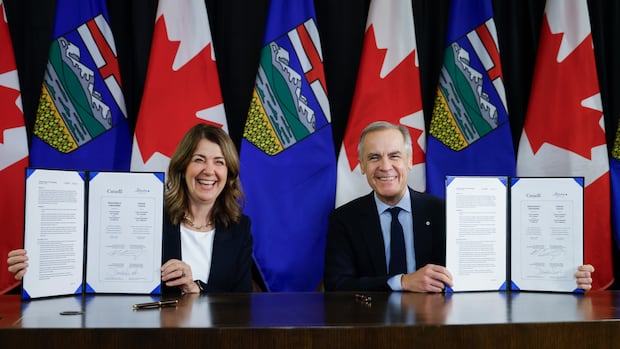
Ottawa and Alberta stand on the verge of a historic carbon pricing deal that could reshape the nation’s climate policy landscape for the next 15 years. The two governments have reached a memorandum of understanding that would see carbon prices rise to $130 per tonne by 2040, marking a significant shift in the contentious relationship between federal and provincial authorities on environmental policy.
This potential agreement signals a new era of federal-provincial cooperation on climate action, ending years of legal battles and political friction over carbon taxation. The deal represents a compromise that both sides hope will provide economic certainty while maintaining Canada’s commitment to reducing greenhouse gas emissions.
What the Carbon Pricing Agreement Includes
Price Trajectory and Timeline
The proposed memorandum of understanding outlines a gradual increase in carbon pricing over the coming decades. Under the framework, Alberta would implement its own carbon pricing system that aligns with federal benchmarks while maintaining provincial control over implementation.
The $130 per tonne target by 2040 represents a measured approach compared to some projections that suggested prices could climb significantly higher. This ceiling provides businesses and consumers with long-term predictability for investment decisions and household budgeting.
The agreement also includes provisions for regular reviews, allowing both governments to assess the policy’s effectiveness and make adjustments based on economic conditions and emissions reduction progress.
Provincial Autonomy and Federal Standards
One of the most significant aspects of this Alberta carbon tax agreement centers on jurisdiction. Alberta has long argued that natural resources fall under provincial authority, making federal carbon pricing an overreach of constitutional powers.
The new framework appears to address these concerns by granting Alberta greater flexibility in how it collects and redistributes carbon revenues. The province would maintain authority over its industrial emissions system while meeting federally established environmental targets.
This approach mirrors arrangements previously made with other provinces, creating a patchwork system where provinces can design their own programs as long as they meet minimum federal standards.
Political Implications of the Deal
A Shift in Conservative Climate Strategy
The timing of this agreement carries significant political weight. Alberta Premier Danielle Smith, a vocal critic of federal carbon pricing, has positioned herself as a defender of provincial rights and the oil and gas sector.
Her government’s willingness to negotiate a carbon pricing framework suggests a pragmatic shift in approach. Rather than continuing costly legal challenges, Alberta appears ready to accept carbon pricing in exchange for greater provincial control and a defined price ceiling.
This move could influence other Conservative provincial leaders who have opposed federal climate policies. It demonstrates that negotiation rather than confrontation can yield results acceptable to resource-dependent provinces.
Federal Government Perspective
For Ottawa, the agreement represents a victory in maintaining a national approach to carbon pricing while accommodating provincial concerns. The federal government has faced intense criticism from multiple provinces over its climate policies, with some calling the carbon tax economically damaging.
Securing Alberta’s cooperation—the province with the largest oil and gas sector in Canada—provides significant political cover for continued climate action. It also undermines arguments that federal carbon pricing is unworkable or unconstitutional.
Economic Impact on Alberta’s Energy Sector
Industry Response and Investment Certainty
The oil and gas carbon pricing provisions within this deal will directly affect Alberta’s dominant industry. Energy companies have long requested regulatory certainty to plan major capital investments, which often span decades.
A defined carbon price trajectory to 2040 allows producers to factor these costs into long-term project economics. This predictability may actually encourage investment by removing one source of policy uncertainty that has plagued the sector.
Industry groups have generally responded cautiously to the news, awaiting final details before offering full assessments. However, initial reactions suggest relief that a framework has emerged rather than continued political uncertainty.
Consumer and Household Effects
For Alberta families, the agreement’s impact will depend heavily on how the province structures rebates and exemptions. Current federal carbon pricing includes rebate programs designed to offset costs for most households.
Alberta’s system under this new framework would need to include similar provisions to maintain public support. The province could design rebates that reflect regional energy needs, potentially providing larger returns to rural households or those in colder regions.
Economists note that carbon pricing typically affects lower-income households more significantly as a percentage of income, making rebate design crucial for maintaining fairness.
Environmental Assessment and Climate Targets
Emissions Reduction Projections
Environmental groups have offered mixed reactions to the proposed Canadian climate policy framework. While some welcome any carbon pricing agreement as progress, others argue the $130 per tonne ceiling falls short of what scientists recommend for meaningful emissions reductions.
Research suggests that carbon prices may need to reach $200 per tonne or higher by 2040 to align with Paris Agreement targets. The proposed ceiling could limit Canada’s ability to meet its international commitments without additional regulatory measures.
However, supporters argue that a stable, implemented policy delivers better results than higher theoretical prices that face constant political opposition and potential repeal.
Complementary Climate Measures
The agreement reportedly includes provisions for additional climate measures beyond carbon pricing alone. These may include investments in clean technology, emissions standards for specific industries, and support for carbon capture and storage projects.
Alberta has invested heavily in carbon capture technology, viewing it as essential for maintaining oil and gas production while reducing emissions. Federal support for these initiatives could form a key component of the broader deal.
What Happens Next
Ratification and Implementation Timeline
The memorandum of understanding requires formal approval from both governments before taking effect. Alberta’s legislature would need to pass enabling legislation, while federal officials must ensure the provincial system meets national benchmarks.
Implementation could begin as early as 2026, though full transition may take longer depending on administrative requirements. Both governments have expressed commitment to moving quickly to provide certainty for businesses and households.
Potential Challenges Ahead
Despite the apparent breakthrough, obstacles remain. Political changes at either level of government could threaten the agreement’s longevity, and final details must still be negotiated before the deal becomes official policy.
