


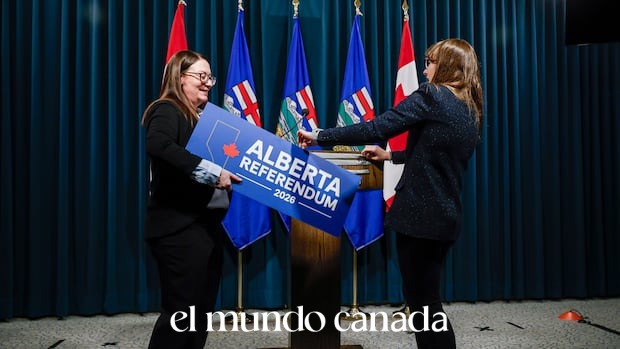
The question of whether a province can leave Canada has resurfaced amid growing political tensions and renewed separatist rhetoric in several regions. While some politicians suggest that provinces hold the unilateral right to secede, Canadian constitutional law tells a far more complex story.
Understanding the legal framework surrounding provincial separation is essential for anyone following Canadian politics today. The answer involves landmark Supreme Court decisions, constitutional requirements, and political negotiations that make leaving Canada anything but straightforward.
The Supreme Court’s Landmark 1998 Ruling
The most authoritative answer to whether a province can leave Canada comes from the Supreme Court of Canada’s 1998 Reference re Secession of Quebec. This historic ruling established the legal foundation for any future separation attempts.
The Supreme Court determined that no province possesses the unilateral right to secede from Canada under either Canadian constitutional law or international law. This means a province cannot simply hold a referendum, declare independence, and walk away.
However, the court did not slam the door entirely on separation. It ruled that if a province held a referendum with a clear question and received a clear majority in favor of secession, the federal government and other provinces would have a constitutional obligation to negotiate.
The Clarity Act: Ottawa’s Response
Following the Supreme Court’s ruling, the federal government passed the Clarity Act in 2000. This legislation established the rules for any future secession referendum.
Under the Clarity Act, the House of Commons holds the power to determine whether a referendum question is sufficiently clear. Parliament also decides whether the majority achieved constitutes a clear expression of the population’s will.
The Act does not specify exact thresholds for what constitutes a clear majority. This deliberate ambiguity gives the federal government significant discretion in evaluating any referendum result.
Critics argue this approach gives Ottawa too much control over the process. Supporters counter that constitutional changes affecting the entire country require federal oversight.
Quebec’s Counter-Legislation
Quebec responded to the Clarity Act with its own legislation. The province passed Bill 99 in 2000, asserting that Quebecers alone have the right to determine their political future.
Bill 99 declares that a simple majority of 50% plus one vote would be sufficient to trigger secession negotiations. This directly contradicts the federal Clarity Act’s requirements.
The constitutional validity of Bill 99 remained contested for years. In 2024, the Quebec Court of Appeal largely upheld the law, though the tension between provincial and federal legislation remains unresolved.
This legal standoff demonstrates the ongoing disagreement between Quebec and Ottawa over who controls the rules of separation.
What Would Separation Actually Require?
Even with a successful referendum, actual separation would require constitutional amendments. The Supreme Court made clear that secession involves fundamental changes to Canada’s constitutional framework.
Any amendment removing a province from Confederation would likely require approval under the general amending formula. This means consent from Parliament plus at least seven provinces representing 50% of the population.
Some constitutional scholars argue that unanimous consent from all provinces might be necessary for such a fundamental change. This requirement would make separation extraordinarily difficult to achieve legally.
Beyond constitutional hurdles, negotiators would need to address numerous practical matters:
- Division of national debt
- Border arrangements
- Currency and economic agreements
- Indigenous treaty obligations
- Military assets and defense
- Citizenship for residents
These negotiations could take years or even decades to complete.
Indigenous Rights Complicate the Picture
Any secession discussion must address Indigenous peoples’ rights and title. First Nations, Métis, and Inuit communities hold constitutionally protected rights that predate Confederation.
Many Indigenous nations have expressed that they would not automatically follow a province out of Canada. Some communities might choose to remain part of Canada, potentially fragmenting any separating province’s territory.
The Supreme Court’s 1998 ruling acknowledged that Indigenous peoples would need to be part of any secession negotiations. Their rights cannot be simply overridden by provincial referendum results.
Recent Separatist Sentiments Across Provinces
While Quebec’s independence movement is most well-known, separatist sentiments have emerged in other provinces. Alberta has seen growing Wexit discussions, particularly following disputes over energy policy and equalization payments.
Some Alberta politicians have promoted the Alberta Sovereignty Act, passed in 2022, which allows the province to ignore federal laws it deems unconstitutional. Legal experts widely consider this approach constitutionally invalid.
Saskatchewan has experienced similar frustrations with federal policies. However, polling consistently shows that actual support for separation remains relatively low across Western Canada.
International Recognition Matters
Even if a province somehow achieved domestic agreement on separation, it would need international recognition to function as an independent nation. The Supreme Court noted that international law does not support unilateral secession for regions within stable democracies.
Other countries would likely hesitate to recognize a breakaway province that departed without following proper constitutional procedures. Without international recognition, a newly declared country would struggle to conduct trade, diplomacy, or join international organizations.
The international community generally respects existing national boundaries and constitutional processes. A province that ignored Canadian law would face significant obstacles on the world stage.
The Bottom Line on Provincial Separation
Canadian law provides a pathway for provincial separation, but it is neither simple nor unilateral. A province cannot just decide to leave Canada through a referendum alone.
The process requires a clear question, a clear majority, good-faith constitutional negotiations, potential amendments requiring multi-provincial consent, and resolution of countless practical matters. Indigenous rights add another essential layer of complexity.
For those tracking this issue, understanding these legal realities helps separate political rhetoric from constitutional fact. The framework exists, but it demands cooperation, negotiation, and respect for Canada’s constitutional order.
