


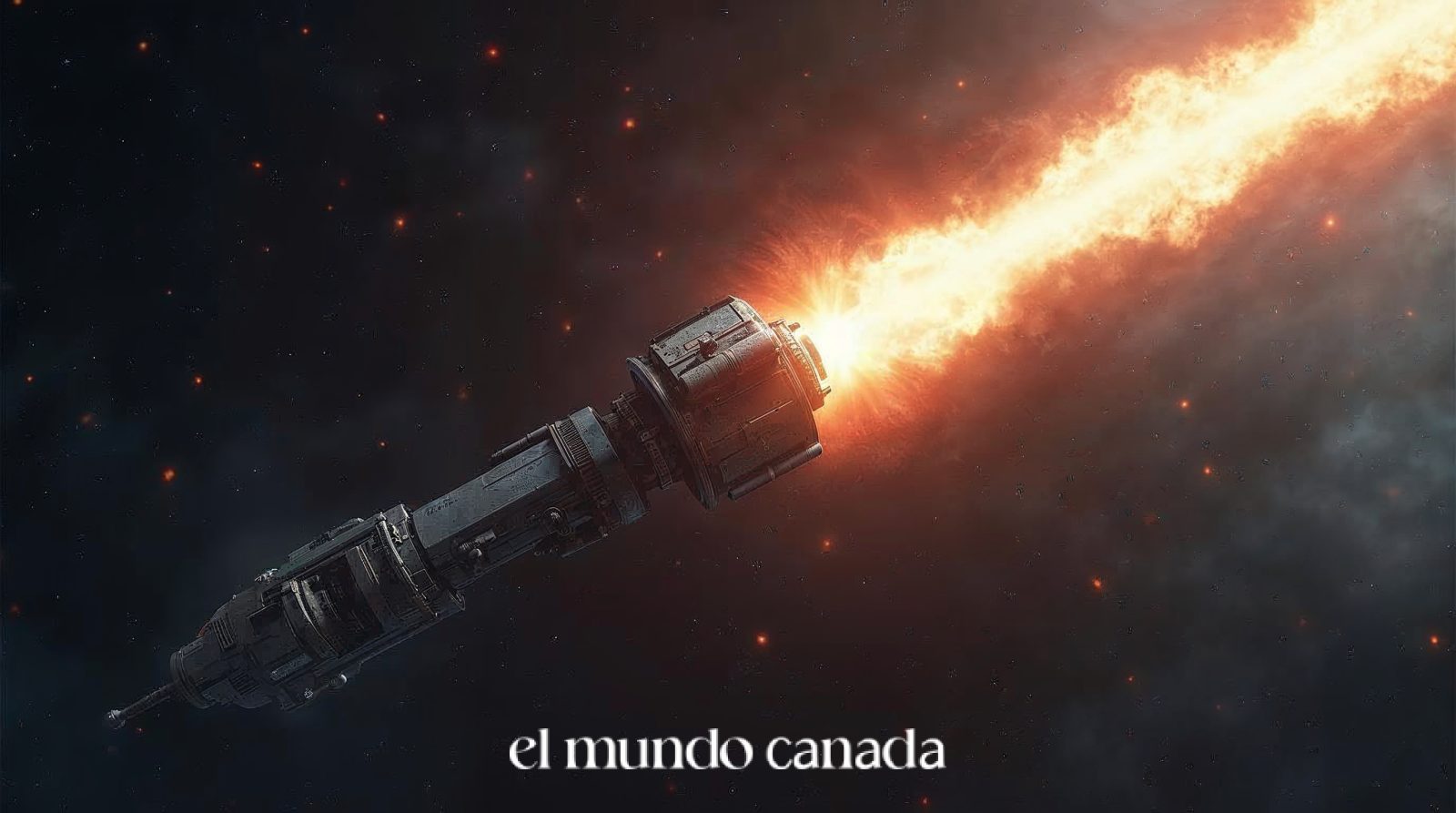
The United States has officially acknowledged deploying weapons in space for the first time in history, a development with significant implications for Canada’s defense posture and the future of NORAD. U.S. Air Force Secretary Troy Meink announced on Monday, September 14, 2026, that the Space Force now possesses “on-orbit space control weapons” capable of protecting American forces from hostile actions. For Canada, which shares continental defense responsibilities with the United States through NORAD, this unprecedented disclosure raises critical questions about North American aerospace security and Ottawa’s role in space defense.
The announcement came during the Air and Space Cyber Conference, where Secretary Meink outlined a broader strategy to modernize both the Air Force and Space Force in response to advancing technologies from U.S. adversaries, the rise of artificial intelligence, and the growing deployment of autonomous weapons systems. While Meink confirmed the existence of these orbital weapons, he deliberately withheld specific details about what type of space-based armaments have been deployed or when this deployment occurred.
Implications for Canada and NORAD
Canada’s position as the only partner nation in NORAD makes this announcement particularly significant for Ottawa. The binational command, which monitors aerospace and maritime approaches to North America, now operates alongside an acknowledged U.S. space weapons capability. Canadian defense officials face growing pressure to clarify whether Canada was consulted on these deployments and how they affect the ongoing NORAD modernization efforts that both nations committed to in recent years.
The Canadian Armed Forces, including the many Latino-Canadians serving in uniform, may see their operational environment transformed as space becomes an increasingly militarized domain. Canada’s Department of National Defence has been investing in space-based surveillance capabilities, but the question of whether Canada should develop or participate in offensive space systems remains politically sensitive in Ottawa.
Strategic Ambiguity Around US Space Weapons
Juliana Suess, an expert in space security at the German Institute of International and Security Affairs, explained that the deliberate vagueness serves a strategic purpose. The space weapons capabilities could range from reversible interference methods, such as signal jamming, to kinetic weapons with permanently destructive effects on enemy satellites and space infrastructure.
“This could be anything. The only thing that we know is that it is based in space, so this is not a sort of missile based on Earth that could hit a satellite in orbit.”
The acknowledgment is historically significant because it represents the first official disclosure of a U.S. orbital weapon capability. This comes after years of counterspace development and testing by the United States, China, and Russia. The space domain has increasingly become a contested battleground as nations recognize the strategic importance of satellite networks for communications, navigation, and military intelligence.
International Response to Space Militarization
The disclosure is expected to trigger diplomatic responses from major global powers. According to Suess, both Russia and China could respond by demonstrating their own space capabilities, as they have done in the past through anti-satellite tests and orbital maneuvers. However, she anticipates their immediate reaction will be diplomatic, accusing Washington of militarizing space and preparing for extraterrestrial conflict.
The question now becomes whether other nations will follow the U.S. example and become more transparent about their own space-based military activities. For decades, major powers have maintained ambiguity about their counterspace programs, neither confirming nor denying the existence of weapons platforms in orbit. This American disclosure could fundamentally change the international dialogue around space warfare.
As global tensions rise, this development connects to broader shifts in international alliances. Canada and other NATO allies are increasingly reassessing their defense partnerships, as highlighted in recent diplomatic efforts where PM Carney’s Europe trip focused on Canada seeking new allies amid changing transatlantic dynamics.
Read more
PM Carney Europe Trip: Canada Seeks New Allies Amid US Row
Destabilizing Effects on Global Security
Victoria Samson, Chief Director at the Secure World Foundation, offered a more cautious assessment of the announcement’s implications. She noted that the timing and motivation behind the disclosure remain unclear, suggesting multiple possible explanations for why the Pentagon chose this moment to go public.
“It is possible it’s meant to be used as a deterrent effect for adversaries to think twice before interfering with US space systems. I also believe that it’s meant to solidify the Space Force as a warfighting branch, as opposed to a military branch that supports other branches. In general this is a very destabilizing statement by the United States.”
The characterization of this announcement as “destabilizing” underscores the concerns among arms control experts and space policy analysts. The space domain has traditionally been governed by the 1967 Outer Space Treaty, which prohibits weapons of mass destruction in orbit but does not explicitly ban conventional weapons. The U.S. acknowledgment could accelerate an arms race in space among major powers.
Future Air Force Vision: Autonomous Systems
Beyond space weapons, Secretary Meink outlined an ambitious vision for transforming U.S. military capabilities through autonomous systems and artificial intelligence. He described a rapidly accelerating threat environment where adversaries are exploiting new technologies, arguing that the United States must increase combat power faster and more affordably.
“We will dramatically increase our combat power by adding large numbers of highly autonomous systems. Because of the steps we’re taking today, we’ll have a radically different-looking Air Force by 2032.”
The 2032 timeline indicates a six-year transformation plan that will fundamentally reshape how the U.S. Air Force operates. This includes integrating cheaper weapons, autonomous drones, and AI-driven combat systems that can respond to threats more rapidly than human operators alone.
Lessons from Ukraine: Modern Warfare Evolution
The shift toward autonomous systems and AI reflects lessons learned from the ongoing conflict in Ukraine. The fighting has demonstrated how modern warfare is evolving toward drone-based combat, autonomous weapons, and hybrid attacks that combine cyber operations with kinetic strikes. Ukraine’s drone playbook has proven highly effective against Russian forces, prompting NATO allies to reassess their defense investments.
Governments worldwide are now reconsidering what weapons and defense systems they need to protect against an increased threat from hybrid warfare. The emphasis on affordability and mass production of autonomous systems suggests a move away from expensive, high-end platforms toward distributed capabilities that can overwhelm enemy defenses.
The commercial space sector has also played a role in this transformation. The successful public listing of SpaceX earlier in 2026 — described as the largest IPO ever — has attracted significant investor interest in space-related technologies. This commercial investment is accelerating the development of capabilities that have both civilian and military applications.
What types of space weapons did the US deploy?
The U.S. Air Force did not specify the exact type of space weapons deployed. According to Juliana Suess of the German Institute of International and Security Affairs, the capabilities could range from reversible interference like jamming to kinetic weapons with permanently destructive effects. The strategic ambiguity is deliberate.
Why is this announcement considered destabilizing?
Victoria Samson of the Secure World Foundation called it “a very destabilizing statement” because it officially acknowledges U.S. orbital weapon capability for the first time. This could trigger responses from Russia and China and potentially accelerate a space arms race among major powers.
How does this affect Canada and NORAD?
Canada, as the only partner nation in NORAD, faces important questions about how U.S. space weapons affect continental defense cooperation. Canadian defense officials must consider whether Ottawa was consulted and how this impacts ongoing NORAD modernization efforts and Canada’s own space policy.
What is the timeline for Air Force transformation?
Air Force Secretary Troy Meink stated that the U.S. Air Force will have a “radically different-looking” force by 2032. This includes deploying large numbers of highly autonomous systems and cheaper weapons to increase combat power affordably.
📘 Follow El Mundo Canada on our social networks: Facebook | Twitter | Instagram
The September 14, 2026 announcement represents a turning point in space militarization policy. As Secretary Meink outlined during the Air and Space Cyber Conference, the U.S. military is preparing for a fundamentally different threat environment by 2032, with autonomous systems and space-based weapons playing central roles in national defense strategy. For Canada and Canadians, understanding these developments is essential as the nation navigates its defense relationship with the United States in an era of accelerating space militarization.
Share this article with your community. Follow El Mundo Canadá on social media for the latest international news affecting Canadians.
