


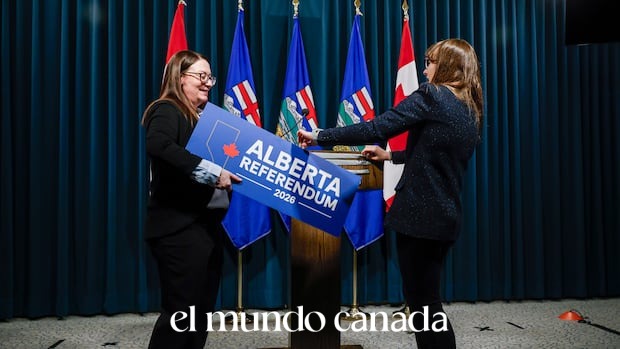
The question of whether a province can leave Canada has resurfaced amid rising political tensions and separatist rhetoric across the country. From Alberta’s frustrations with federal energy policy to Quebec’s historic sovereignty movement, the debate continues to captivate Canadians.
But can a province actually separate from Canada? The short answer is complex. Canadian law doesn’t explicitly prohibit secession, but it certainly doesn’t make it easy. Understanding the legal framework requires examining constitutional principles, Supreme Court rulings, and federal legislation that together create a rigorous process for any province contemplating independence.
The Constitution Remains Silent on Secession
Canada’s Constitution contains no provision addressing provincial separation. The founding document, the Constitution Act of 1867, established the federation but never anticipated that a province might want to leave.
This silence created legal uncertainty for decades. When Quebec held sovereignty referendums in 1980 and 1995, no clear legal pathway existed to guide the process.
The 1995 Quebec referendum came remarkably close to success, with the “No” side winning by just 50.58% to 49.42%. This narrow margin prompted the federal government to seek constitutional clarity.
The Supreme Court’s Landmark 1998 Reference
Following the near-miss of 1995, the federal government asked the Supreme Court of Canada to rule on the legality of unilateral secession. The resulting 1998 Secession Reference became one of the most important constitutional decisions in Canadian history.
The Court delivered a nuanced verdict. It ruled that no province has the right to separate unilaterally under either Canadian or international law. However, the justices didn’t slam the door shut entirely.
The Duty to Negotiate
The Supreme Court established that if a province held a referendum with a clear question and achieved a clear majority in favor of secession, the federal government and other provinces would have a constitutional duty to negotiate.
This duty to negotiate doesn’t guarantee independence. It simply requires good-faith discussions about the terms of separation, including issues like:
- Division of national debt
- Border demarcation
- Indigenous rights and treaties
- Citizenship for residents
- Economic arrangements
The Court emphasized that secession would require a constitutional amendment, meaning it couldn’t happen through a simple provincial vote alone.
The Clarity Act: Federal Ground Rules
In response to the Supreme Court’s ruling, Parliament passed the Clarity Act in 2000. This legislation gave the federal government significant control over the separation process.
Under the Clarity Act, the House of Commons determines whether a referendum question is sufficiently clear. Vague or confusing questions would not trigger negotiation obligations.
What Counts as a Clear Majority?
The Act deliberately avoids defining what constitutes a “clear majority.” This ambiguity gives Parliament flexibility but also creates uncertainty.
Most constitutional experts believe a simple 50% plus one vote would likely prove insufficient. The federal government would probably require a supermajority—perhaps 60% or higher—before acknowledging a mandate for secession negotiations.
Quebec’s National Assembly rejected the Clarity Act, passing its own legislation asserting that 50% plus one should suffice. This disagreement remains unresolved.
Indigenous Rights Add Complexity
Any secession scenario must address Indigenous peoples’ rights. First Nations, Métis, and Inuit communities hold constitutionally protected rights under Section 35 of the Constitution Act, 1982.
Many Indigenous nations signed treaties with the British Crown, not with individual provinces. Their consent would likely be required for any territorial changes affecting their lands.
Some Indigenous communities have explicitly stated they would remain part of Canada even if a province voted to leave. This raises profound questions about territorial integrity and the principle of self-determination.
Competing Claims to Self-Determination
International law recognizes peoples’ right to self-determination, but this principle has limits. The Supreme Court noted that self-determination typically applies to colonized peoples or those facing severe oppression—not to provinces within functioning democracies.
Canadian provinces enjoy substantial autonomy and democratic representation, making international recognition of unilateral secession unlikely.
Current Separatist Movements
While Quebec’s sovereignty movement has quieted since its peak in the 1990s, Western alienation has fueled new discussions about separation.
Alberta’s provincial government has clashed repeatedly with Ottawa over energy policy, carbon pricing, and equalization payments. Some advocacy groups promote “Wexit”—Western Canadian independence—though polling suggests limited public support.
Saskatchewan has also expressed frustration with federal policies, and Premier Scott Moe has championed greater provincial autonomy.
However, separatist parties remain marginal in Western Canada. Most political scientists view these movements as pressure tactics rather than genuine independence campaigns.
What Would Actually Happen?
If a province seriously pursued separation today, the process would likely unfold over years or even decades.
First, a provincial government would need to hold a referendum with an unambiguous question. Then, assuming a sufficiently large majority voted “Yes,” negotiations would begin.
These negotiations would involve all provinces, the federal government, and Indigenous nations. Any resulting agreement would require a constitutional amendment, likely under the unanimity formula requiring consent from Parliament and all provincial legislatures.
The economic consequences would be severe. A separating province would lose access to federal transfers, face trade barriers, and need to establish its own currency, military, and international agreements.
Conclusion
Canadian law makes provincial separation extraordinarily difficult but not technically impossible. The Supreme Court’s 1998 ruling established that negotiation must follow a clear referendum result, while the Clarity Act gave Parliament gatekeeping authority over the process. Indigenous rights, constitutional amendment requirements, and practical challenges create additional barriers. For now, separation remains a theoretical possibility rather than a realistic prospect—but the legal framework exists should any province ever achieve the political will and public support to pursue it seriously.
