


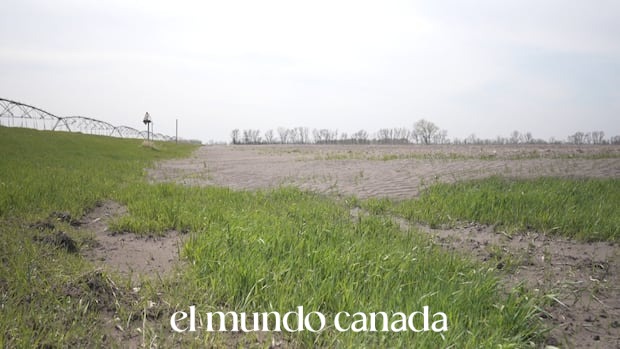
A Manitoba municipality faces a significant financial burden after strong spring winds swept valuable topsoil from agricultural fields into roadside ditches, creating potential flooding hazards. The Manitoba topsoil erosion cleanup effort in the Rural Municipality of Montcalm has already cost taxpayers tens of thousands of dollars, highlighting the ongoing challenge of soil conservation in prairie farmland.
The situation underscores a growing concern among agricultural communities across the Canadian Prairies, where wind erosion continues to strip fertile land of its most productive layer while creating infrastructure problems for local governments.
Winds Strip Fields, Fill Ditches with Valuable Soil
The Rural Municipality of Montcalm, located in southern Manitoba near the U.S. border, experienced severe wind erosion events this spring that deposited massive amounts of topsoil into drainage ditches throughout the region.
Reeve Marc Bamakearts told reporters that the municipality has spent approximately $50,000 so far on cleanup efforts. The work involves removing soil from ditches to restore proper drainage function before the spring melt and potential rainfall events.
“It’s a significant cost to the municipality,” Bamakearts explained, noting that the expense ultimately falls on local ratepayers.
The problem extends beyond simple cleanup costs. When ditches fill with soil, they lose their capacity to channel water away from roads and fields, increasing the risk of spring flooding and road damage.
Why Topsoil Erosion Threatens Prairie Agriculture
Topsoil represents the most nutrient-rich layer of agricultural land, typically taking hundreds of years to form naturally. When wind strips this layer from fields, farmers lose the foundation of their productivity.
Several factors contribute to wind erosion on prairie farmland:
- Lack of ground cover during spring months
- Dry soil conditions that allow particles to become airborne
- High wind events common to the prairies
- Tillage practices that leave soil exposed
The loss creates a double burden for rural communities. Farmers watch their most valuable growing medium blow away while municipalities must spend public funds removing that same soil from infrastructure.
Flood Risk Compounds the Problem
The timing of this erosion event creates additional urgency for Montcalm officials. With spring runoff season approaching, clogged ditches pose a serious flood risk to both roads and adjacent properties.
Proper drainage infrastructure plays a critical role in managing water flow across Manitoba’s flat landscape. When ditches fill with soil, water has nowhere to go, potentially causing:
- Road washouts and structural damage
- Field flooding that delays planting
- Property damage to rural homes and buildings
- Increased maintenance costs throughout the season
Municipal crews must work quickly to restore ditch capacity before significant precipitation events occur. This time pressure often increases cleanup costs as crews work extended hours or hire additional contractors.
Prevention Versus Cleanup: A Costly Equation
Agricultural experts emphasize that preventing soil erosion costs far less than cleaning up after it occurs. Several soil conservation techniques can significantly reduce wind erosion on prairie fields.
Cover crops planted after harvest provide ground cover that anchors soil during vulnerable periods. Shelterbelt trees break wind patterns and reduce soil movement across fields. Reduced tillage practices leave crop residue on the surface, protecting soil from wind.
However, implementing these practices requires investment and changes to traditional farming methods. Some farmers face economic pressures that make conservation investments difficult.
The Manitoba government offers several programs to support soil conservation efforts, though uptake varies across the province.
Municipal Leaders Call for Shared Responsibility
Reeve Baakearts suggested that the cost of cleanup should not fall entirely on municipal taxpayers. He indicated that conversations about shared responsibility between landowners, municipalities, and provincial authorities may be necessary.
The issue touches on complex questions about land management practices and who bears responsibility when private land use creates public costs. Similar debates occur across agricultural regions dealing with erosion, drainage, and environmental management.
Some jurisdictions have implemented bylaws requiring landowners to maintain certain soil conservation practices, though enforcement remains challenging in rural areas with limited resources.
Climate Patterns May Worsen Future Events
Climate researchers note that changing weather patterns may increase the frequency and severity of wind erosion events across the Canadian Prairies in coming decades.
Drier spring conditions, combined with more intense wind events, create ideal conditions for soil movement. This suggests that municipalities like Montcalm may face recurring cleanup costs unless prevention measures become more widespread.
Agricultural adaptation strategies increasingly emphasize building soil health and resilience as both a productivity measure and a risk management tool. Healthy soils with strong structure resist erosion better than degraded soils.
Balancing Costs and Conservation
The situation in Montcalm serves as a reminder of the interconnected nature of agricultural practices and public infrastructure. What happens on private farmland directly affects public roads, drainage systems, and municipal budgets.
Finding sustainable solutions will require cooperation between farmers, municipal governments, and provincial authorities. Investment in soil conservation today could prevent significant costs tomorrow while preserving the agricultural productivity that drives Manitoba’s rural economy.
For residents of affected municipalities, the message is clear: topsoil erosion represents more than an environmental concern—it carries real financial consequences for entire communities.
