


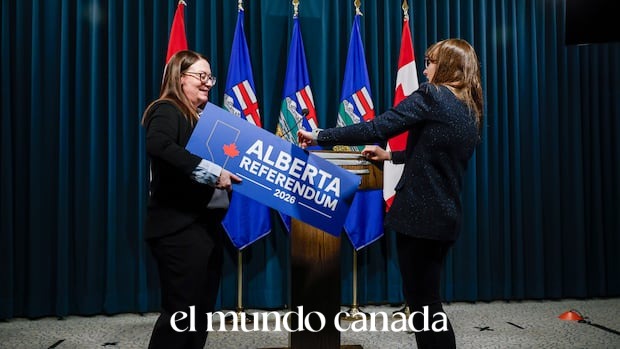
The question of whether a province can leave Canada has resurfaced in political discourse, particularly as regional tensions and separatist sentiments periodically flare across the country. From Quebec’s historic referendums to Alberta’s recent frustrations with federal policies, the idea of provincial secession remains a topic that captures national attention.
But can a province legally separate from Canada? The short answer is complex. Canadian law does not provide a straightforward path to secession, yet it doesn’t entirely close the door either. Understanding the legal framework requires examining constitutional principles, landmark Supreme Court rulings, and federal legislation designed specifically to address this contentious issue.
The Constitutional Framework for Secession
Canada’s Constitution Offers No Exit Clause
Unlike some international agreements, Canada’s Constitution contains no provision allowing a province to unilaterally withdraw from Confederation. The Constitution Act of 1867, which established Canada as a federal state, created a union intended to be permanent.
This absence of an explicit secession mechanism means any province seeking independence would face significant legal hurdles. The constitution requires amendments for fundamental changes to the federation, and these amendments demand substantial agreement from other provinces and the federal government.
Provincial governments cannot simply hold a vote and declare independence. The legal reality proves far more complicated than political rhetoric often suggests.
The 1998 Supreme Court Reference: A Landmark Decision
What the Secession Reference Established
The Supreme Court of Canada addressed the secession question directly in 1998 through the Reference re Secession of Quebec. This landmark ruling came after decades of separatist movements in Quebec, including two referendums on sovereignty.
The court’s decision established several crucial principles that continue to govern any discussion of provincial separation:
First, the court ruled that no province has a unilateral right to secede under Canadian constitutional law. A province cannot simply declare independence and expect legal recognition.
Second, the court determined that international law does not grant Quebec—or any Canadian province—a right to unilateral secession. The principle of self-determination in international law applies primarily to colonial peoples or those suffering extreme oppression, not to provinces within established democratic federations.
Third, and perhaps most significantly, the court stated that if a province held a referendum with a clear question and received a clear majority in favor of secession, the federal government and other provinces would have a constitutional obligation to negotiate.
The Duty to Negotiate
This obligation to negotiate represents a uniquely Canadian approach to the secession question. The Supreme Court recognized that while unilateral secession is illegal, democratic expression cannot be ignored.
If a province clearly expressed its desire to leave, all parties would need to engage in good-faith negotiations addressing incredibly complex issues: division of national debt, border arrangements, minority rights protection, Indigenous treaties, and countless other matters.
However, the court emphasized that negotiations don’t guarantee secession would occur. All parties must agree, and the process would require constitutional amendments following established procedures.
The Clarity Act: Federal Response to the Ruling
Setting the Ground Rules
Following the Supreme Court’s 1998 decision, the federal government passed the Clarity Act in 2000. This legislation attempted to define what constitutes a clear question and clear majority in any future secession referendum.
Under the Clarity Act, the House of Commons determines whether a referendum question is sufficiently clear. The act explicitly states that questions merely asking for a mandate to negotiate are inadequate. Any question must plainly ask whether a province should cease being part of Canada.
The legislation also gives Parliament authority to assess whether any referendum result represents a clear expression of the population’s will. Notably, the act does not specify an exact percentage threshold for a clear majority.
Critics argue this gives the federal government too much power over what should be a democratic process. Supporters contend it provides necessary safeguards against ambiguous outcomes that could create political chaos.
Quebec’s Response: Bill 99
A Provincial Counterpoint
Quebec’s National Assembly responded to the Clarity Act by passing Bill 99 in 2000. This legislation asserts that Quebecers alone have the right to determine their political future and that a simple majority of 50 percent plus one should suffice for any referendum decision.
This provincial law directly contradicts federal legislation, setting up a potential constitutional conflict that has never been fully resolved. The tension between these competing frameworks highlights the continued controversy surrounding secession procedures.
Courts have since upheld portions of Bill 99, though questions remain about how these conflicting laws would interact during an actual secession attempt.
What Would Secession Actually Require?
The Practical Reality
Beyond legal frameworks, any province seeking separation would face enormous practical challenges. Constitutional amendments allowing secession would likely require approval from Parliament, the Senate, and at least seven provinces representing 50 percent of Canada’s population—possibly even unanimous provincial consent for such a fundamental change.
Negotiations would need to address:
- Division of the national debt (currently exceeding $1 trillion)
- Status of federal properties and military installations
- Rights of Indigenous peoples whose treaties are with the Crown
- Border arrangements and trade relationships
- Citizenship questions for residents
- Currency and economic transitions
The complexity alone suggests any secession process would take years, if not decades, to complete.
Current Political Climate
Separatist Sentiments Today
While Quebec separatism has declined from its peak, other regions have expressed frustration with Confederation. Alberta has seen growing separatist movements, often called Wexit, driven by disputes over energy policy, equalization payments, and perceived federal overreach.
However, polling consistently shows most Canadians—including majorities in historically separatist regions—prefer remaining within Confederation. Political scientists note that separatist sentiments often reflect negotiating positions rather than genuine independence movements.
Conclusion
The question of whether a province can leave Canada has no simple answer. Canadian law does not permit unilateral secession, but it does recognize that democratic expression must be taken seriously. Any province pursuing separation would need to secure a clear referendum result, engage in complex negotiations, and ultimately achieve constitutional amendments—a process with no guaranteed outcome.
