


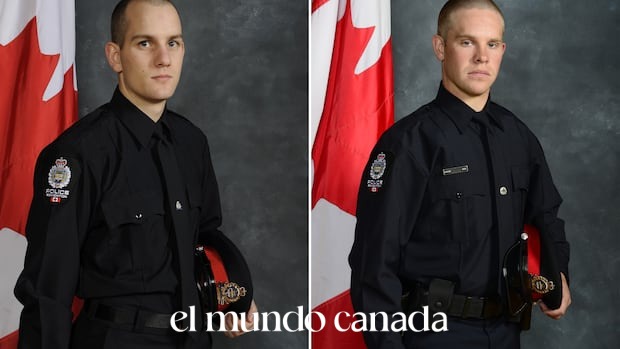
A Canadian court is set to deliver a pivotal verdict that could reshape how the justice system handles illegal firearms trafficking linked to officer deaths. Judge Kevin Feth will announce his decision on Tuesday regarding Jarome Chicken, the man accused of selling the gun used to fatally shoot two Edmonton Police Service constables in March 2023.
The case has drawn national attention as prosecutors argue that individuals who supply weapons used in violent crimes should bear responsibility for the resulting deaths. This landmark trial represents one of the most significant legal tests of firearm trafficking accountability in Canadian history.
The Tragic Events of March 2023
Two Officers Lost in the Line of Duty
Constables Travis Jordan and Brett Ryan responded to a domestic disturbance call on March 16, 2023, in what would become one of the deadliest days in Edmonton Police Service history. The officers arrived at a northwest Edmonton residence to investigate reports of a family dispute.
Upon entering the home, both constables were ambushed and fatally shot by 16-year-old Deng Mabiour. A third victim, the teenager’s mother, also died in the violent incident. Mabiour then turned the weapon on himself.
The tragedy sent shockwaves through the Edmonton community and sparked renewed debates about illegal gun sales and their consequences.
The Weapon’s Origin
Investigators traced the firearm used in the killings back to Jarome Chicken through extensive forensic analysis and witness testimony. According to Crown prosecutors, Chicken sold the gun to Mabiour approximately two months before the fatal shooting occurred.
The sale allegedly took place through underground channels, circumventing all legal firearm transfer requirements in Canada. This illegal transaction became the foundation of the manslaughter charges against Chicken.
The Manslaughter Case Against Jarome Chicken
Crown’s Arguments and Legal Strategy
The prosecution built its case on the principle that gun trafficking carries foreseeable deadly consequences. Crown attorneys argued that Chicken knew or should have known that selling a firearm illegally, particularly to a minor, created a substantial risk of harm.
Prosecutors emphasized that the chain of events leading to the officers’ deaths began with Chicken’s decision to profit from an illegal weapons sale. They contended that this choice made him criminally responsible for the resulting fatalities.
The Crown’s case relied on establishing that the deaths were a reasonably foreseeable consequence of the illegal sale. This legal threshold represents the key question Judge Feth must answer in his verdict.
Defense Position and Counterarguments
Chicken’s defense team challenged the prosecution’s interpretation of foreseeability. They argued that their client could not have predicted the specific violent acts that occurred months after the alleged sale.
The defense maintained that holding Chicken responsible for murders committed by another individual stretches the bounds of Canadian manslaughter law. They questioned whether the prosecution successfully proved the necessary causal connection between the sale and the deaths.
Broader Implications for Firearms Law
Setting Legal Precedent
Legal experts across Canada are watching this case closely. A conviction could establish important precedent for gun crime accountability, potentially influencing how prosecutors approach similar cases nationwide.
The verdict may clarify the extent to which individuals involved in illegal firearms distribution can face charges for violent crimes committed with those weapons. This clarification could have far-reaching effects on future prosecutions.
Impact on Illegal Gun Trade
Law enforcement officials hope that a conviction would send a strong message to those involved in underground weapons trafficking. The case highlights the deadly pipeline between illegal gun sellers and violent criminals.
Police associations have advocated for stricter consequences for firearms traffickers, arguing that current penalties fail to reflect the serious harm these activities cause. This trial represents a test of whether existing manslaughter provisions can address this gap.
Community Response and Police Reaction
Edmonton Police Service Statement
The Edmonton Police Service has maintained a respectful silence during the trial proceedings while supporting the families of the fallen officers. The department previously described Jordan and Ryan as dedicated professionals who exemplified the best of policing.
Both officers left behind grieving families and colleagues who continue to honor their memory. The verdict will provide some measure of closure regardless of the outcome.
Victim Impact and Public Interest
The case has generated significant public interest in police officer memorial efforts and discussions about protecting first responders. Community members have organized vigils and fundraisers to support the officers’ families throughout the legal process.
Advocacy groups focused on gun violence prevention have also followed the trial, viewing it as a potential turning point in addressing firearms trafficking.
What Happens Next
Verdict Delivery
Judge Kevin Feth will deliver his ruling on Tuesday following weeks of deliberation. The judge must weigh complex questions about causation, foreseeability, and criminal responsibility.
If convicted of manslaughter charges, Chicken faces potentially significant prison time. Canadian manslaughter convictions involving firearms carry enhanced sentencing provisions.
Potential Appeals
Regardless of the verdict, legal observers anticipate possible appeals. The novel application of manslaughter law to firearms trafficking means either side may seek review from higher courts.
The case could eventually reach the Alberta Court of Appeal or even the Supreme Court of Canada, depending on the initial ruling and subsequent legal challenges.
The upcoming verdict represents a watershed moment for Canadian criminal law and firearms regulation. Judge Feth’s decision will determine whether Jarome Chicken bears legal responsibility for the deaths of Constables Travis Jordan and Brett Ryan. Beyond this individual case, the ruling may reshape how courts approach accountability for illegal gun sales that result in violent deaths. The Edmonton community and legal observers nationwide await Tuesday’s announcement with keen interest.
