


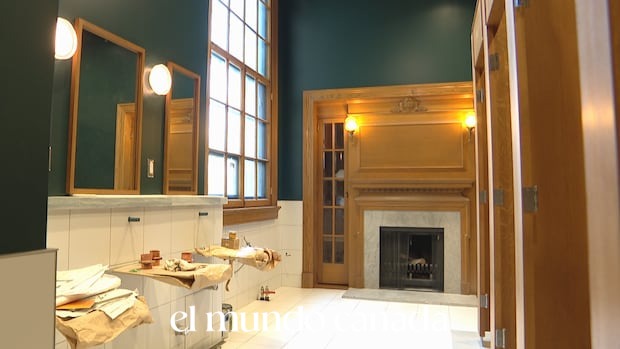
The Saskatchewan legislature has finally installed a dedicated washroom for female MLAs near the legislative chamber—114 years after the building first opened its doors. This historic addition marks a significant milestone for gender equity in one of Canada’s oldest provincial government buildings.
The renovation project addresses a long-standing infrastructure gap that forced women politicians to walk significant distances or share inadequate facilities while their male counterparts enjoyed convenient access to washrooms steps away from the chamber floor.
A Century-Long Wait for Basic Facilities
When the Saskatchewan Legislative Building opened in 1912, women could not vote or hold public office. The architects designed the space exclusively with male legislators in mind, placing men’s washrooms in prime locations near the chamber.
Even as women gained political rights and began winning seats in the legislature, the building’s infrastructure remained frozen in time. Female MLAs had to navigate hallways and stairs to reach distant washrooms during breaks in legislative sessions.
Deputy Premier Jim Reiter acknowledged the overdue nature of this project during recent comments to media. The renovation represents more than just construction—it symbolizes the province’s commitment to making political spaces accessible and welcoming for all elected representatives.
Details of the Renovation Project
The new washroom facility occupies space on the chamber level, providing female MLAs with the same convenient access their male colleagues have enjoyed for over a century. Construction crews completed the renovation as part of ongoing building maintenance and modernization efforts.
The project required careful planning to preserve the heritage character of the legislative building while meeting modern accessibility standards. Workers balanced historical preservation requirements with practical functionality needs.
Provincial officials have not disclosed the exact cost of the renovation, though sources indicate it fell within standard building maintenance budgets. The Saskatchewan Legislative Assembly Service manages ongoing facility improvements throughout the heritage structure.
Women’s Representation in Saskatchewan Politics
The washroom addition arrives during a period of gradual progress for women’s political representation in Saskatchewan. While female legislators remain underrepresented compared to the general population, their numbers have grown steadily over recent decades.
Saskatchewan elected its first female MLA, Gladys Chicken, in 1952—four decades after the legislature building opened. Since then, women have served in various cabinet positions and leadership roles within both major political parties.
Current statistics show women hold approximately 25-30% of seats in the Saskatchewan legislature. Advocacy groups continue pushing for greater representation and improved workplace conditions for female politicians.
Why Infrastructure Matters for Gender Equity
This renovation highlights how physical infrastructure can create invisible barriers to participation in public life. When buildings lack basic amenities for certain groups, they send subtle messages about who belongs in those spaces.
Researchers studying gender and politics have documented how inadequate facilities affect women’s experiences in legislatures across Canada and internationally. Simple inconveniences accumulate over time, potentially discouraging women from seeking or remaining in elected office.
The Saskatchewan improvement joins similar renovations in other provincial legislatures and the federal Parliament. These projects recognize that true equality requires examining and updating the physical environments where democracy unfolds.
Dr. Melanee Thomas, a political scientist studying gender and Canadian politics, has noted that such infrastructure changes, while seemingly small, carry important symbolic weight. They demonstrate institutional commitment to including women as full participants in political life.
Reactions from Current and Former MLAs
Female members of the Saskatchewan legislature have welcomed the new facility. Several noted the practical improvements it brings to their daily work routines during session periods.
Current MLAs described the previous situation as an accepted inconvenience they rarely discussed publicly. The renovation validates concerns some had raised privately over the years about workplace equity in the legislature.
Former female MLAs also expressed satisfaction at the change, even though they will not personally benefit from it. Many voiced hope that improved facilities would help attract more women to seek provincial office in future elections.
Male colleagues have generally expressed support for the renovation, with several acknowledging surprise upon learning about the disparity that existed for so long.
Broader Context Across Canada
Saskatchewan is not alone in addressing historical infrastructure gaps in legislative buildings. Several provinces have undertaken similar projects to modernize facilities originally designed without women in mind.
The federal Parliament buildings in Ottawa have undergone extensive renovations partly aimed at improving gender equity in physical spaces. The Centre Block rehabilitation project includes considerations for modern workplace needs of all MPs.
Provincial legislatures in British Columbia, Ontario, and Quebec have all examined their facilities through a gender equity lens in recent years. These assessments often reveal assumptions baked into architecture from earlier eras.
Looking Ahead
The Saskatchewan legislature washroom project represents one step in ongoing efforts to make political institutions more welcoming for diverse participants. Building administrators continue evaluating other potential improvements throughout the heritage structure.
Advocates emphasize that physical infrastructure changes must accompany broader cultural shifts to meaningfully increase women’s political participation. Facilities matter, but so do recruitment efforts, workplace policies, and public attitudes toward women in leadership.
As Saskatchewan prepares for future elections, the updated legislature building stands ready to accommodate whoever voters choose to represent them—regardless of gender.
