


Historic Renovation Brings Gender Equity to Provincial Government Building
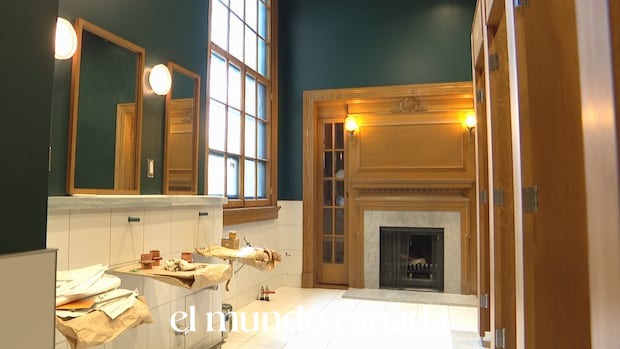
For more than a century, female politicians in Saskatchewan’s Legislative Building had to navigate a basic logistical challenge their male counterparts never faced: finding a nearby washroom. That finally changed this month when the Saskatchewan legislature women washroom opened near the chamber floor, marking a significant milestone for gender equity in Canadian politics.
The dedicated facility for female MLAs arrived 114 years after the building first opened its doors in 1912. At that time, the idea of women serving as elected officials remained nearly inconceivable, and building planners designed the space exclusively with men in mind.
A Long-Overdue Renovation
The new washroom sits adjacent to the legislative chamber, providing female MLAs with the same convenient access their male colleagues have always enjoyed. Previously, women serving in the Saskatchewan legislature had to travel to different floors or distant corners of the building to find appropriate facilities.
This renovation addresses a practical inequality that persisted for decades despite increasing numbers of women entering provincial politics.
Nicole Sarauer, NDP MLA for Regina Douglas Park, expressed relief at the completion of the project. The improvement means female legislators no longer lose valuable time during tight voting schedules or important debates.
The timing between bells calling MLAs to vote can be extremely limited. Male politicians could quickly use nearby facilities and return to their seats, while women faced a genuine disadvantage in making it back in time.
Saskatchewan’s Progress on Gender Representation
The Saskatchewan Legislative Assembly has seen gradual increases in female representation over the past several decades. However, the building’s infrastructure failed to keep pace with this demographic shift.
When the Legislative Building opened in Regina in 1912, Saskatchewan had not yet granted women the right to vote. Women gained provincial voting rights in 1916, making Saskatchewan one of the first provinces to extend this democratic privilege.
Despite this progressive history on voting rights, the physical spaces within government buildings remained stubbornly unchanged. The washroom renovation represents a tangible acknowledgment that women belong in political leadership roles.
Currently, women hold approximately 28 percent of seats in the Saskatchewan Legislative Assembly. While this percentage continues to grow, advocates argue that physical barriers and outdated infrastructure can subtly discourage women from pursuing or remaining in political careers.
Infrastructure Barriers in Politics
The Saskatchewan situation reflects a broader pattern across Canadian legislatures and government buildings. Many historic structures were designed during eras when women’s participation in public life faced severe restrictions.
Parliament buildings across the country have undergone similar renovations in recent years to accommodate changing demographics. The federal Parliament in Ottawa completed washroom additions for female MPs as part of broader accessibility improvements.
These infrastructure updates carry symbolic weight beyond their practical function. They signal institutional recognition that governance spaces must serve all elected representatives equally.
Experts in political science note that seemingly minor inconveniences can accumulate into significant barriers. When women must work harder than men to perform basic functions of their jobs, it sends a message about whose presence the institution was designed to accommodate.
The Renovation Process
The Saskatchewan government approved the washroom renovation as part of ongoing maintenance and modernization efforts within the Legislative Building. The project required careful planning to preserve the historic character of the 1912 structure while adding modern amenities.
Heritage considerations played a significant role in the design process. The Legislative Building holds National Historic Site status, meaning any modifications must respect its architectural integrity.
Workers completed the renovation with minimal disruption to legislative proceedings. The new facility includes modern fixtures and accessibility features that meet current building codes.
Government officials have not released specific cost figures for the project, but similar renovations in other provincial legislatures have typically ranged from modest investments to more substantial expenditures depending on structural requirements.
Reactions from Provincial Politicians
Female MLAs from both major parties welcomed the improvement. The renovation received bipartisan support, with members across the political spectrum acknowledging its necessity.
Several current and former female legislators shared stories about the challenges posed by the previous arrangement. Some recalled rushing through hallways during critical votes, while others described the subtle embarrassment of having to explain their delayed arrivals.
Male colleagues also expressed support for the change. Many acknowledged they had never fully considered how the building’s design created unequal conditions for their female counterparts.
The renovation arrives as Saskatchewan continues debating broader questions about gender equity in politics. Discussions about nomination processes, campaign financing, and work-life balance for politicians remain active topics.
Looking Ahead: Modernizing Democratic Spaces
The Saskatchewan washroom renovation joins a growing list of infrastructure improvements aimed at making legislative buildings more inclusive. Accessibility upgrades for people with disabilities, modernized technology systems, and improved security measures have transformed many Canadian government buildings in recent years.
Advocates suggest that physical infrastructure represents just one aspect of creating welcoming political environments. They emphasize the need for continued attention to workplace culture, family-friendly scheduling, and harassment prevention policies.
The Saskatchewan Legislative Assembly continues evaluating additional improvements to the historic building. Future projects may address other accessibility concerns and modernization needs while preserving the structure’s heritage significance.
The opening of a dedicated women’s washroom in Saskatchewan’s legislature marks the end of a 114-year oversight in the province’s most important democratic building. While the renovation addresses a practical need, it also carries powerful symbolic meaning about women’s rightful place in political leadership. As more provinces examine their own legislative infrastructure, Saskatchewan’s example demonstrates that progress sometimes requires attention to the most fundamental details of how government buildings serve those who work within them.
